
Climate Change News

Climate Change News

bank decarbonization
Carbon Markets

U.S. vs UK bank decarbonization

The UK and the U.S. are both major global financial hubs, with a lot at stake when it comes to achieving Net Zero. In this article, we dive into the differences between U.S. and UK bank decarbonization strategies. Climate disclosures UK banks are widely considered to be ahead of others when it comes to climate-related disclosures, most likely because of the proactivity of their regulators. The UK Prudential Regulation Authority (PRA) was the first financial regulator to publish supervisory expectations on the management of climate-related financial risk in 2019. The Authority regularly remings banks that they are expected to assess their exposure to climate-related financial risks in the way they assess other drivers of financial risks. In the U.S., the Securities and Exchange Commission published a proposal for climate risk disclosures in March 2022, and is expected to finalize it by the end of the year. These and the PRA’s disclosure expectations are aligned with the recommendations of the Task Force on Climate-Related Financial Disclosures (TCFD), which were published in 2017 to help the financial sector adapt to climate change. These have been widely supported across the industry, but according to the 2021 TCFD Status Report, adoption is much broader in Europe, with 50% of listed companies having published TCFD-aligned financial reports in 2020, compared to 20% in North America.  Operational decarbonization In the banking sector, scope 1 and 2 emissions represent only a small fraction of total carbon footprint, with much more coming from lending (scope 3). As such, carbon neutrality in banks’ own emissions from operations and energy is generally the first milestone to be achieved.  In the UK, NatWest and Barclays have been carbon-neutral in scope 1 and 2 emissions since 2020. Lloyd’s Bank already uses 100% renewable energy and plans to reach Net Zero operational emissions by 2030. HSBC is also working towards a Net Zero by 2030 target for its own operations, while Standard Chartered plans to reach this goal by 2025. Meanwhile in the U.S, Wells Fargo and Bank of America achieved carbon neutrality for their own operations in 2019, while JP Morgan reached this goal in 2020 and Morgan Stanley plans to be carbon neutral in 2022.  Here it’s interesting to look at the wording used by banks: in the UK, Net Zero tends to be the preferred target, which involves a drastic reduction in emissions before carbon offsets can be used to “neutralize” remaining emissions. This target is more difficult to achieve, but much more effective to combat climate change. In the U.S, banks seem to prefer reaching the words “carbon neutrality”, which can be achieved mostly through carbon offsetting, with no minimum reduction. They reached their carbon neutrality goal earlier than UK banks, and are now focusing on reducing their operational emissions. Citi is the only large U.S. bank with a Net Zero target for its own operations (by 2030). Funding for fossil fuels U.S. banks are among the biggest financiers of fossil fuels worldwide. The Banking on Climate Chaos report exposes the ‘Dirty Dozen’, the 12 banks that have financed the most fossil fuels since the signing of the Paris Agreement. Five of those are American, including four at the top of the list: JP Morgan (US$382B), Citi (US$285B), Wells Fargo (US$272B) and Bank of America (US$232B). Morgan Stanley is the last of the 12, with US$137B. In April 2022, Wells Fargo, Bank of America and Citigroup all proposed changes to their fossil fuel funding policies, but were only backed by around 11-13% of shareholders.   Meanwhile, only one UK bank (Barclays) made the Dirty Dozen list, with US$167B of funding to fossil fuels since 2016. But even though the amount of financing to polluting industries is lower than in the U.S, banks in the UK did not fare much better than their American counterparts when it comes to their strategy to decarbonize lending. Only Lloyd’s Banking Group has made some exclusions from its portfolio: new oil field developments and companies involved in the exploration or development of oil sands can no longer receive funding from the bank. On the other hand, all large banks in the UK and in the U.S. have exclusion policies in place for coal financing, with UK institutions tending to be stricter than in the U.S. Customer carbon offsetting  In addition to the above efforts, several banks have launched carbon tracking tools for their private customers, promoting individual climate action. This is particularly common in Australia, with Commonwealth Bank and Westpac both offering this feature. But none of the large U.S. banks analyzed in this article appear to offer this option. In the UK, NatWest has partnered with CoGo to offer customers a summary of their carbon footprint, as well as tips to reduce it, through its banking app. However, few banks also give their clients the option to offset their carbon footprint. In Spain, Santander Bank has launched a new feature that allows customers not only to track and reduce their carbon emissions, but to offset them via the ClimateTrade platform. The bank has plans to roll out the service for its UK customers in the coming months. ClimateTrade’s API can be integrated into any banking application or website to present users with a summary of their emissions, calculated according to their card and direct debit transactions. It then gives customers the option to offset this footprint directly from their account by contributing to sustainable projects worldwide. All projects offered by ClimateTrade are certified by internationally recognized standards like Verra, Gold Standard of the CDM, and aligned with the UN Sustainable Development Goals. Additionally, all transactions are fully traceable thanks to blockchain technology. If you would like to know more about ClimateTrade’s solutions for the banking sector, get in touch with our experts.


carbon footprint measurement
Carbon Markets

The evolution of carbon footprint measurement

The practice of calculating carbon footprint is not old, yet it has already changed and adapted to new demands and technologies. Discover the history of carbon footprint measurement in this article. Humans have always known that their activities had an impact on the Earth and its resources, but it wasn’t until the 1990s that the concept of a ‘footprint’ first emerged. At the time, researchers started talking of our ‘ecological footprint’, which represented our use of resources compared to the Earth’s ability to renew them. Today, this concept is well understood thanks to Earth Overshoot Day, the day when all the resources the planet can produce in a year run out and we begin to live on future resources. This year, Earth Overshoot Day fell on July 28, a few days earlier than in 2021 and almost a whole month earlier than in 2005. The birth of the carbon footprint The concept of carbon footprint was born as part of the ecological footprint, as one indicator of our impact on the Earth. But the idea gained popularity in 2003 when oil and gas company BP launched an advertising campaign asking people on the street what their carbon footprint was. The ad encouraged people to calculate their personal carbon footprint – using BP’s calculator – to find ways to reduce it, with the slogan “It’s a start”. Because of that, the focus of the carbon footprint remained largely on individuals, despite companies (and especially oil and gas companies like GP) emitting much more problematic levels of emissions. In 2015, with the signing of the Paris Agreement, governments were able to analyze precise data about their countries’ carbon footprint, and the focus shifted to companies. Nowadays, much of the public and regulatory scrutiny regarding the carbon footprint is on corporations, with activists regularly denouncing the hypocrisy of campaigns such as BP’s. The discovery of global warming Scientists discovered that levels of carbon dioxide in the atmosphere could change the Earth’s climate in the 1800s, when investigating what had caused the Ice Age – that’s when the term ‘greenhouse effect’ was born. At the dawn of the 20th century, Swedish scientists Arvid Högbom and Svante Arrhenius were the first to estimate the amount of CO2 emitted from the burning of coal, and to warn about the warming effect of an increase in emissions.  But their theories were viewed with much skepticism until the 1950s, as World War II and the Cold War created a need for high military technology, leading to an increase in government funding for science. The scientific community discovered that the mechanisms thought to prevent global warming (such as the ocean’s absorbing effect) were not effective enough, and that emissions had already increased much more rapidly than previously thought. Still, their warnings were ignored as industrialization picked up pace. It’s only in the 1990s that people started to pay more attention to what scientists were saying about the climate, and to ask their governments for action. Severn Cullis-Suzuki’s passionate speech about climate change at the Rio Summit 1992 is a clear example of this shift. Corporate carbon footprint measurement As climate change became a more and more central concern in international conferences, certain pioneer companies began calculating and disclosing the environmental impact associated with their activities or products. Patagonia was one of the first to conduct a survey of its environmental footprint in 1991, and now the company plans to be carbon-neutral by 2025 – much earlier than most others. Since the 2010s, the number of companies calculating and disclosing their carbon footprint has increased dramatically and today, it has become a requirement imposed by regulators or investors in most countries. The way companies calculate carbon footprint is quite simple: they multiply each of their activities with the ‘emission factor’ of that activity. But the precision of this calculation has evolved greatly in recent years, as more data becomes available.  In 2001, the Greenhouse Gas Protocol was published, after a decade of development. It established standards and rules for the calculation of carbon emissions according to their scopes: direct emissions (scope 1), emissions from energy use (scope 2) and indirect emissions (scope 3). To this day, the GHG Protocol remains the tool most used by companies to calculate their carbon footprint. Carbon footprint calculators Despite being based on a simple formula, carbon footprint calculation is a complex exercise, particularly for companies. That’s why in general, they hire environmental experts or consultants to assess GHG emissions across their operations. But as data and our ability to process it improves, this exercise is becoming easier to automate. For instance, ClimateTrade offers sector-specific carbon footprint calculators for mobility, airlines and buildings, having digitized the data points included in the GHG Protocol. This means that companies simply have to enter data into the calculator to find out what their carbon footprint is. In the coming years, we expect automated calculators to grow more precise and more specialized in different sectors, becoming the preferred option for companies. However they conduct their carbon footprint calculations, companies then need to have the result audited to ensure accuracy, before they can report it to regulators and take measures to reduce and offset their impact.

summer holiday carbon
Climate Change News

Let’s talk about the carbon footprint of our summer holidays

A week-long European family trip generates close to one ton of carbon emissions. In this article, we explain how the carbon footprint of summer holidays can be reduced and mitigated. Four people flying from Paris to Barcelona and staying there a week as tourists generate about 900 kg of greenhouse gases. To get to this result, ClimateTrade added up flights, taxis, hotel nights, restaurant meals and typical tourist activities. The largest portion (95%) of this footprint comes from flights, so where the tourists come from is the main determinant of the amount of emissions they generate on their summer holidays. It would take 4,000 square meters of forest and one entire year to absorb the carbon emissions of one family’s vacation. And with 71% of Europeans expected to take a summer holiday in 2022, the carbon bill is growing faster than what the planet can absorb. Globally, tourism is estimated to be responsible for about 8% of carbon emissions. So what can we do to reduce this footprint? Tips for a low-carbon summer trip Transportation: to fly or not to fly? There are several things tourists can do to reduce the carbon emissions associated with their holidays. Since most of the footprint comes from transportation, this is the first area to look at. Flights are notorious for emitting enormous amounts of greenhouse gases, so if you can, take the train instead: you would automatically cut your emissions by about three-quarters. And if you really can’t avoid the plane, make sure you offset the carbon footprint of your flight. Most airlines now offer this service, thanks to automated calculators and technological platforms like ClimateTrade. Once at your destination, try to move around by public transport instead of taxis, or use carbon-neutral mobility providers like Cabify. Accommodation: the smaller, the better Second, look for an energy-efficient accommodation option. The carbon footprint of hotel stays has dropped by about 10% since 2015, mostly due to energy efficiency improvements, but it is important to understand where this footprint comes from in order to choose where to stay. Things like energy, building size, geographic location, the presence of heating or cooling systems, the presence of restaurants, bars or catering facilities, the type of food consumed, the presence of laundry or a swimming pool all add carbon emissions to an accommodation’s total. Therefore, hotels or hostels with smaller rooms and fewer services tend to have a smaller footprint.  Some hotels also give guests the option to offset the CO2 emissions of their stay: that’s the case of Melia Hotels International, which integrated the ClimateTrade API into its rewards system. Food: What to eat when eating out The carbon footprint of a restaurant meal is estimated to be between 3kg and 8 kg, but most of us don’t realize how much what we eat affects global warming. At COP26, attendees were shown the carbon footprint of every dish on the menu, helping them make better decisions. When CO2 information appears on menus, it is clear that plant-based meals have a much smaller impact on the climate than meat. For instance, a vegetable hotpot has a footprint of 100 g, while a traditional Scottish meal of sheep meat with vegetables and potatoes generates about 3.3 kg. According to WWF, we need to get the carbon footprint of our food consumption down to around 4 kg per day in order to meet the goal of the Paris Agreement. So when you’re eating out a lot, you can lower your carbon footprint by choosing more plant-based alternatives and avoiding red meat. Food waste is another important factor in emissions from this sector, so choose restaurants with normal portion sizes and make sure you finish your meal. You could also try going to zero-waste restaurants, which are increasing in popularity around the world. Activities: Get moving! As for tourist activities, the best way to limit your carbon footprint is to get active: rent a bike to discover your destination, go for a hike or take a swim in the sea. These are great ways to enjoy your holiday without generating CO2 emissions.

U.S. climate bill
Climate Change News

Senate passes most ambitious U.S. climate bill to date

The United States Senate passed the Inflation Reduction Act yesterday (August 7), the most ambitious climate bill ever adopted in the country. The bill, which is expected to be signed into law in the coming weeks, allocates US$349B to climate and green energy projects, and could lead to an estimated 40% reduction in the country’s greenhouse gas emissions by 2030 (from a 2005 baseline). Climate budget distribution According to Moody’s Analytics, two-thirds of the US$349B will be distributed in the form of federal tax credits that create incentives to produce electricity from clean energy sources, invest in renewable energy technologies, and address climate change through carbon sequestration, renewable fuel production, and clean energy manufacturing. The other one-third includes government funds to support conservation practices that help to mitigate GHG emissions, particularly from agriculture and forestry, and adopt clean energy technologies and energy efficiency in housing. In reaction to the passing of the bill in the Senate, Francisco Benedito, CEO of ClimateTrade, comments: “The Inflation Reduction Act is a historic opportunity both for the United States and the world. The bill will have a tremendous impact in tackling the climate crisis. It will put the U.S. in a leadership position by taking action and reducing emissions up to 41% and generating over a million additional jobs by 2030. We at ClimateTrade are very excited about this bill and look forward to putting climate front and center for our business community.” Reducing electricity costs The bill also aims to reduce the cost of electricity and make the U.S. energy self-sufficient: in the first half of 2022, the rise in gas prices that resulted from the Ukraine-Russia war led to a dramatic increase in electricity prices throughout the U.S., between 13% (in the Southwest region) and 135% (in the New York region), according to the Energy Information Administration. In total, the bill sets aside US$739B of tax money to make life more affordable for Americans through energy investments and healthcare cost reduction measures. Much of the budget for this reform is expected to come from higher taxes on corporations. The Inflation Reduction Act was supported by all 51 Democrats and opposed by all 50 Republicans in the Senate.  Climate regulations in the U.S. This is the latest in a series of attempts to regulate climate action in the United States. In March 2022, the Securities and Exchange Commission (SEC) published proposed rules for climate-related risk and greenhouse gas disclosure for listed companies in the country. It then opened a period of public consultation that was due to end in June, and expects to finalize the regulation by the end of this year. The proposed rules include the mandatory reporting of Scope 1, 2 and 3 emissions, as well as any material impacts climate-related risks can have on the company’s business, strategy and outlook, such as physical and regulatory exposures. ClimateTrade can help you navigate these regulatory changes and support your company’s transition to Net Zero. Get in touch with our experts to discuss your needs.

LACCW 2022
Carbon Markets

LACCW 2022: Regional hope counters lack of global climate ambition

Back from the Latin America and Caribbean Climate Week (LACCW 2022), our Co-Founder and Head of Impact José Lindo shares his thoughts.   Op-ed by José Lindo, ClimateTrade Co-Founder and Head of Impact   The event that many of us call pre-COP took place last week in Santo Domingo, organized by UNFCCC, UNEP and the World Bank Group with the support of the government of the Dominican Republic. These regional climate weeks provide countries and all their stakeholders with a dedicated forum to discuss solutions to the particular climate threats of their region, in their own language and culture. And considering how difficult it has been to reach global climate agreements, regional summits like these are likely to become key to actually implementing policies that may be localized, but will also be much more ambitious and effective in fighting climate change. Silence regarding a global carbon price I hoped for more climate ambition from the UN and from countries in the implementation of the measures of the Glasgow Pact, particularly since the responsibility of fossil fuels in the climate crisis was highlighted there like never before. But when it comes to decarbonization plans that go beyond the theoretical, as well as a global, ethical and fair GHG price, the radio silence continues. Big plans and renewable energy budgets sound great, but they distract from the real issue: the climate crisis is not being treated with the same urgency or financial resources as the Ukraine geopolitical crisis or the pandemic. The UNFCCC Secretary’s reaction to this issue seems very appropriate to me: at LACCW, he welcomed the initiatives of cities, subnational states, carbon markets, impact investors and tech companies, promoting a new paradigm of decentralization. Cities and private sector initiatives This spark of new hope has an appealing acronym: BINGO, or Business and Industry Non-Governmental Organizations: hundreds of thousands of companies, organizations and private climate investors that are acting fast to counter the urgency of the crisis. It appears as though scaling up the voluntary carbon market is easier than getting 200 countries to sign off on an appropriate global carbon price. We have made the implementation of Article 6 incredibly complicated, getting lost in never-ending debates about which mechanism to use to finance it: Core Carbon Principles (CCP), Emissions Trading Schemes (ETS), International Transferred Mitigation Outcomes (ITMOs) or maybe Carbon Removals Obligations (CRO)? This is causing policy paralysis and inaction, meanwhile several market players – including ClimateTrade – have been designing entire infrastructures aligned with the Paris Agreement and the need for decentralization in governance, financing and the execution of mitigation and decarbonization projects. Empowering local mechanisms If legislative independence and greater climate ambition can be found in cities, let’s create local mechanisms without waiting for clear global rules or a fair carbon price. ClimateTrade’s DLT technology is ready and functional: now let’s form new coalitions and partnerships. I’m leaving LACCW hopeful about the multidisciplinary, Ibero-American, public-private team we are trusting to accelerate ambition, but there remain many tough months and years ahead considering the current geopolitical situation. “Collective action or collective suicide”: I couldn’t agree more with Antonio Gutierres, the UN Secretary General. At ClimateTrade the choice has always been clear – action all the way – and because of that, I beg global leaders to give us freedom and empower us in our efforts.

heat waves
Climate Change News

5 actions the world must take to mitigate heat waves and wildfires

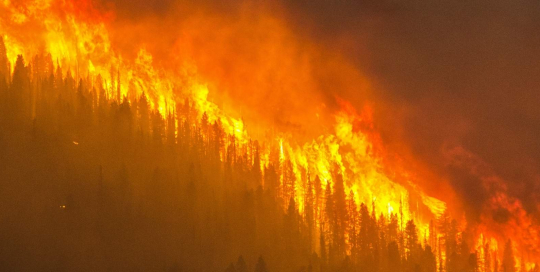
A very real consequence of global warming, heat waves and wildfires are not inevitable.  Like everything related to climate change, mitigating them requires drastic and decisive action from governments, companies and individuals. In this article, we explore five initiatives that could have a direct positive impact on the frequency and intensity of these extreme weather events in the coming years.  1. Address carbon emissions Our first and most urgent priority in combating the effects of climate change should be to combat climate change itself, and that can only be achieved by dramatically reducing the world’s carbon footprint. Countries have been trying to create the right mechanisms for this to happen since the Paris Agreement, but progress is alarmingly slow.  In the meantime, the private sector has a crucial role to play. Each company should calculate its carbon footprint, take measures to reduce it and offset the remaining emissions. 2. Protect and restore forests Forests are amazing carbon sinks that can help us lower emissions: it is estimated that planting 2 billion acres of trees would help capture two thirds of global CO2 emissions (about 205 billion tons) But they also regulate and stabilize the climate. The Brazilian Amazon lost 18 trees per second in 2021, and the country’s climate reached unprecedented extremes, between droughts, wildfires and torrential rains that affected economic activity and killed hundreds of people. If we want to fight heat waves, we need to protect and restore the world’s forests. That’s why many of the carbon offsetting projects on the ClimateTrade marketplace focus on reforestation. 3. Make cities greener Data suggests that removing greenery and creating areas of intense traffic, such as roundabouts, generates so-called “heat islands” where the temperature can be as much as 12°C higher than in other parts of cities. These islands spread extreme heat in surrounding neighbourhoods, putting their residents at risk. In order to protect vulnerable people and improve quality of life within cities, it is crucial to add tree cover and reduce traffic in urban areas.  4. Support regenerative agriculture In traditional agriculture, fields are stripped of trees and native vegetation to plant only one type of crop, supporting growth with chemical pesticides and fertilizers. Over time, these practices erode the soil and affect its health and its ability to retain water. This threatens food security and creates an environment ripe for droughts and wildfires. Additionally, both crops and farmers become much more vulnerable to heat waves in these conditions. In regenerative agriculture, several types of crops and trees are planted in the same field to support a healthy and balanced ecosystem. This diversity reduces the need for chemicals and helps to regulate the local climate, providing better living conditions for plants, animals and agricultural workers. Supporting the food sector’s transition to regenerative agriculture is a very effective way to mitigate the extreme weather events that result from climate change. 5. Eat less meat As seen above, deforestation is directly associated with the worsening of climate change, and beef production is the main driver of deforestation worldwide. In the Amazon, it is common for farmers to burn large areas of forest illegally to create space for raising cattle – a lucrative activity.  By eating less meat and reducing demand, we can remove incentives for this type of deforestation. It is a simple action that any one of us can take today to fight climate change and lower the frequency and intensity of heat waves.

Other Categories

Consultia ClimateTrade
ClimateTrade News

Consultia Business Travel launches Destinux Green in alliance with ClimateTrade

Consultia’s new Destinux Green carbon offsetting functionality was developed in collaboration with ClimateTrade.   Madrid, October 19 2022.- Consultia Business Travel, a Spanish company specialized in end-to-end business travel management, has launched Destinux Green, a functionality allowing companies to offset their carbon footprint on its Destinux platform. Destinux Green also provides a traceable carbon offsetting certificate, and companies that offset the entirety of the emissions generated over a year can obtain the Destinux Green label issued by Destinux. Destinux therefore becomes the first corporate travel platform through which a company can verify and offset its carbon footprint, as well as receiving a certificate for this activity, in just one click. Offsetting through Destinux Green can be done by contributing to a selection of environmental and social responsibility projects among which the company can choose. Destinux Green improves the image of an organization in the eyes of its clients, users and consumers; it saves costs and increases the motivation of environmentally-conscious employees. The application, exclusive to Destinux, has been developed with ClimateTrade and uses blockchain technology, which brings transparency to the entire emissions offsetting process, thus generating trust and ensuring the real impact of carbon offsetting activities. Upon concluding a transaction, an offsetting certificate is issued with information about the chosen project and a traceable blockchain key, as well as the official certificate of cancellation of the credits in its corresponding registry. “The carbon offset projects available on ClimateTrade are certified by the most reputable global standards and aligned with the Sustainable Development Goals, which guarantees their real impact in the fight against climate change,” explains Francisco Benedito, CEO of the company. Sustainability is a very important aspect for companies that are increasingly looking for systems that allow them to minimize their environmental impact. In the words of Carlos Martínez, CEO of Consultia Business Travel: “The technology implemented by Destinux makes it easier for organizations to meet their sustainability goals quickly and easily. They can, through an innovative system, offset CO2 emissions by supporting climate action projects and meet their environmental objectives, managing all their business trips in a comprehensive, transparent and sustainable manner.”   About Consultia Business Travel Consultia Business Travel® is a Spanish company specialized in the full management of business trips (Travel Management Company). It offers a differentiated solution based on software in the cloud (Destinux®) and a personalized advice service (Personal Travel Assistant), providing a comprehensive solution for managing business travel. In addition, it manages companies’ meetings, incentives, congresses and events (MICE) needs. The company, with Spanish capital and founded in 2010, currently has offices in Spain and Portugal. The company has integrated nearly 3 million hotels, more than 600 airlines, 27 car rental companies distributed throughout the world, and private transfers in more than 160 countries, RENFE and taxis and VTC in more of 90 states, achieving online connectivity and efficiency that stand out in the business travel market.   About ClimateTrade ClimateTrade is a blockchain-based climate pioneer, aiming to empower large-scale decarbonization through constant innovation. The ClimateTrade marketplace allows companies to offset their climate impact by purchasing carbon, plastic and biodiversity offsets, as well as renewable energy certificates directly from project developers. The ClimateTrade API, Widget and Whitelabel allow clients to integrate marketplace functionalities into their own platform, making their products climate-positive. ClimateTrade is also spearheading disruptive innovation around the digital certification of carbon mitigation projects and supporting the digitization of national carbon registries.