Climate Change News
It’s Time to Move on From Fossil Fuels—What was their Impact in 2023?
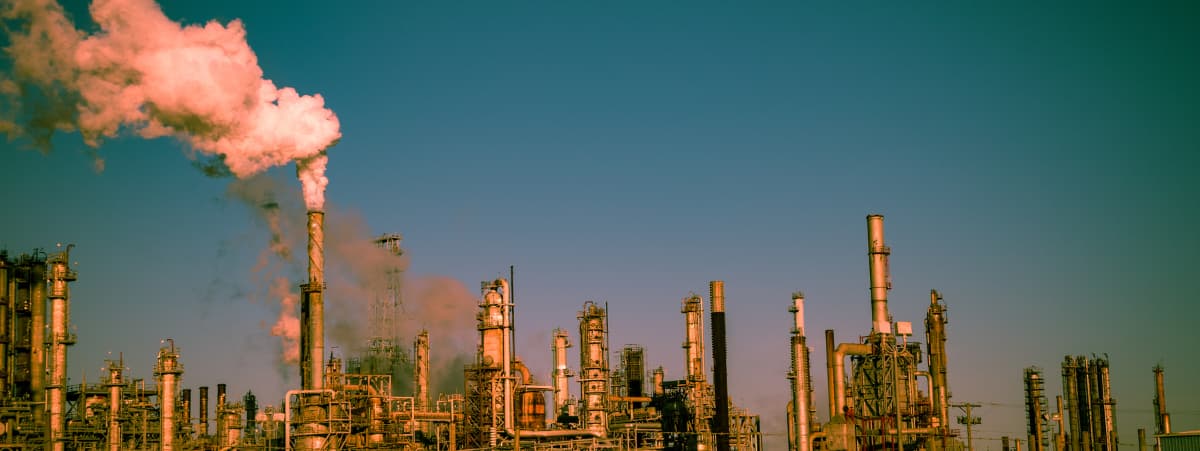
The annual Global Carbon Budget reported a 1.1% increase in fossil fuels, carbon dioxide (CO2) emissions, reaching 36.8 billion tonnes in 2023

The annual Global Carbon Budget reported a 1.1% increase in fossil fuels, carbon dioxide (CO2) emissions, reaching 36.8 billion tonnes in 2023
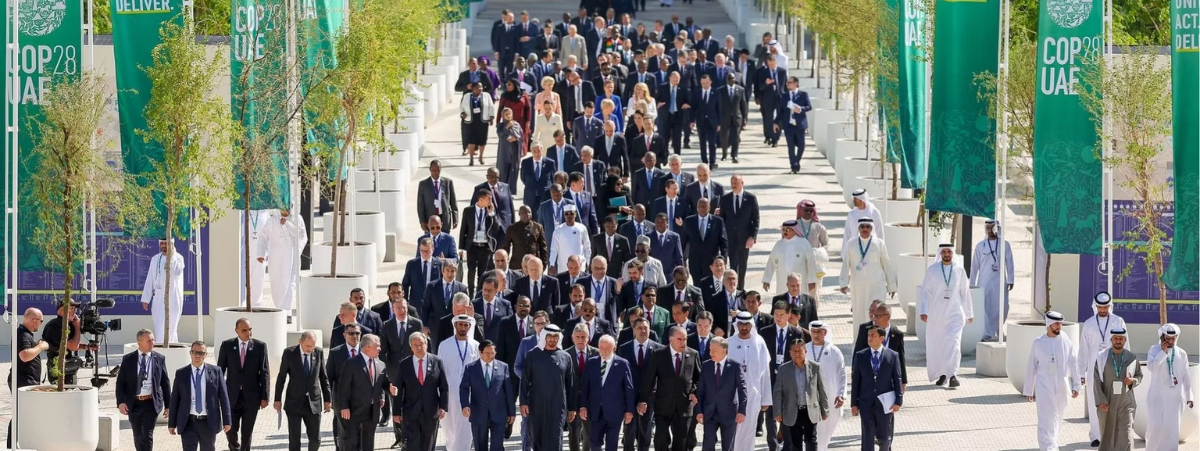
As the UN Climate Summit, COP28, draws to a close, the urgency of addressing the climate crisis is more apparent than ever.

In 2015 world leaders made a promise to reach the 17 sustainable development goals by 2030. We are halfway there and only 15% of SDG’s are on track. So what’s next?
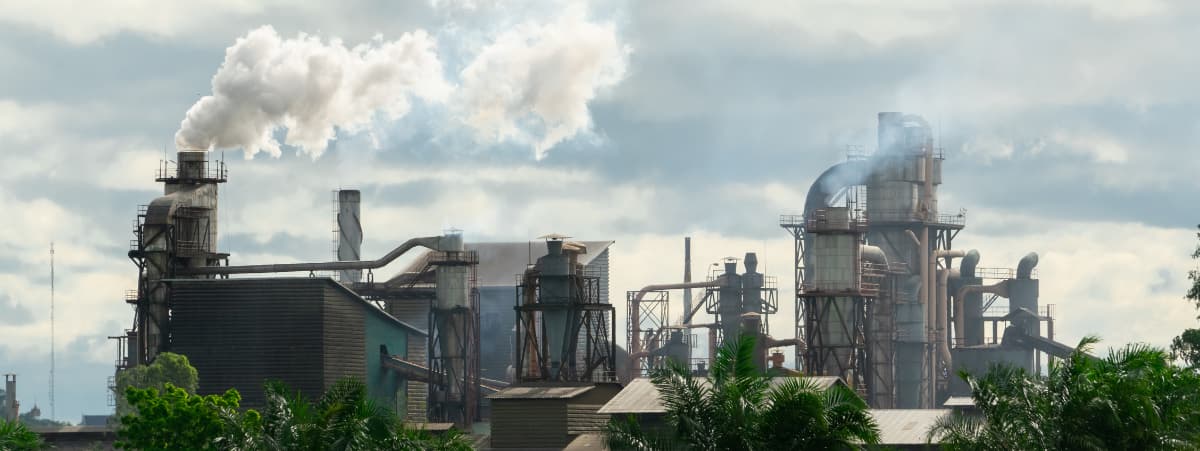
The European Union enters the transitional phase of its climate action strategy (CBAM), while it faces pressure to tackle carbon-emitting industries.

Slowing down global warming hinges on stopping deforestation while embracing natural climate solutions holds the potential to generate fresh avenues of income as global carbon markets develop.

In order to tackle the climate crisis, it’s important to determine priorities. These are the world’s most polluting industries – those it is crucial to decarbonize if we are to meet our climate goals.
We are thrilled to announce the newest addition to our team at ClimateTrade: Javier Santoyo, who will be taking on the role of Commercial Development Director – Europe.
The Climate Change 2022: Impacts, Adaptation and Vulnerability report by the Intergovernmental Panel on Climate Change (IPCC) stresses the need for urgent action to mitigate and adapt to the effects of global warming. Failed climate leadership The conclusions of the report released on February 28 are clear: not enough is being done to mitigate and adapt to climate change, and this could lead to disastrous consequences. Reacting to the findings, Secretary-General of the United Nations Antonio Guterres did not mince his words: “Today’s IPCC report is a damning indictment of failed climate leadership(…). This abdication of leadership is criminal.” Back in 2015, the international community agreed to do everything in their power to limit global warming to 1.5°C, a commitment sealed by the Paris Agreement. This level of warming will already lead to climate hazards and biodiversity losses. Now, the report has revealed that even temporarily exceeding this warming level would result in severe impacts, some of which will be irreversible. For instance, if global warming increases from 1.5°C to 3°C, the risk of biodiversity loss will increase tenfold. At 2°C of warming, regions dependent on snowmelt could experience a 20% decline in water availability for agriculture, leading to knock-on repercussions for food security and health. More on this topic: The decade of climate action: Where are we after two years? Paris Agreement: Top 3 Article 6 questions that were answered at COP26 Climate injustice One of the main conclusions of this latest IPCC report is that people and ecosystems least able to cope with the effects of global warming are being hardest hit by the dangerous and widespread disruption in nature caused by human-induced climate change. Low-income communities most affected by climate risks Geographically, between 3.3 and 3.6 billion people live in hotspots of high vulnerability to climate change, mostly in Africa, Asia, Central and South America, small islands and the Arctic. In cities, the effects of global warming are magnified, aggravating pollution events and limiting the functioning of key infrastructure. These impacts are concentrated amongst economically and socially marginalized urban residents, particularly in informal settlements. Commenting on adaptation efforts, the report’s authors pointed to examples of maladaptation, such as poorly built walls to protect coastal populations from the sea rise, and noted that these are most common in low-income and vulnerable communities that don’t have access to the resources needed to implement effective adaptation methods. Inclusive adaptation must include indigenous and local knowledge In order to accelerate adaptation to climate change, the IPCC recommends implementing inclusive governance that prioritizes equity and justice. “Maladaptation especially affects marginalized and vulnerable groups adversely (e.g., Indigenous Peoples, ethnic minorities, low-income households, informal settlements), reinforcing and entrenching existing inequities. Adaptation planning and implementation that do not consider adverse outcomes for different groups can lead to maladaptation, increasing exposure to risks, marginalizing people from certain socio-economic or livelihood groups, and exacerbating inequity. Inclusive planning initiatives informed by cultural values, Indigenous knowledge, local knowledge, and scientific knowledge can help prevent maladaptation.” In other words, there can be no resilience to climate change without climate justice. Nature-based solutions To avoid mounting loss of life, biodiversity and infrastructure, the report notes that ambitious, accelerated action is required to adapt to climate change, at the same time as making rapid, deep cuts in greenhouse gas emissions. These cuts will require the phase-out of all fossil fuels, with more ambition than has been shown so far on the global stage: just last year at COP26, global leaders shied away from agreeing to “phase out” coal, choosing instead the vaguer expression “phase down”. “Coal and other fossil fuels are choking humanity. You cannot claim to be green while your plans and projects undermine the 2050 net zero targets. People see through the smokescreen. The present global energy mix is broken. Now is the time to accelerate the energy transition to a renewable energy future,” added Guterres at the press conference. More on this topic: Net Zero: From aspiration to auditable strategy Agroforestry and forest protection The report also places particular emphasis on the untapped potential of nature to fight climate change and improve livelihoods. In particular, agroforestry stands out as a climate-resilient way of growing food while also creating wildlife habitat. “Food security can be enhanced by making the food system resilient,” said IPCC Working Group II Co-Chair Debra Roberts at the press conference. At the same time, conservation, protection and restoration efforts are needed to help natural forests adapt to a changing climate. More on this topic: Nature-based solutions for people and the planet “Healthy ecosystems are more resilient to climate change and provide life-critical services such as food and clean water”, said IPCC Working Group II Co-Chair Hans-Otto Pörtner. “By restoring degraded ecosystems and effectively and equitably conserving 30 to 50% of Earth’s land, freshwater and ocean habitats, society can benefit from nature’s capacity to absorb and store carbon, and we can accelerate progress towards sustainable development, but adequate finance and political support are essential.” But the report’s authors made it clear that certain natural solutions, particularly in agroforestry, would no longer work above 1.5°C of warming, since this level of temperature rise would reduce farming possibilities. Urgent action needed to deal with interconnected risks For the first time, this IPCC report also emphasizes the interconnectedness of climate risks, and the need for a holistic approach to avoid snowball effects. Scientists point out that climate change interacts with global trends such as unsustainable use of natural resources, growing urbanization, social inequalities, losses and damages from extreme events and a pandemic, jeopardizing future development. “This report recognizes the interdependence of climate, biodiversity and people and integrates natural, social and economic sciences more strongly than earlier IPCC assessments,” said Hoesung Lee. “It emphasizes the urgency of immediate and more ambitious action to address climate risks. Half measures are no longer an option.” To tackle all these different challenges, everyone should be involved: governments, the private sector and civil society, and risk reduction, equity and justice should be prioritized in

Earlier this month in Glasgow, the Conference of the Parties finally agreed on how international carbon credits should be exchanged under Article 6 of the Paris Agreement. After more than five years of negotiations, many of the draft’s sticking points were resolved. «Transparency, justice, consensus and interdependency, these are the pillars for the successful execution of Article 6 of the Paris Agreement. Let’s keep in mind that this is arguably the most ambitious article for climate action, since it manages to involve the private sector,” comments José Lindo, Co-Founder and Head of Impact at ClimateTrade. Here are the top 3 Article 6 issues that world leaders agreed on in Glasgow, and what these decisions mean for international carbon markets. Double accounting In theory, allowing countries to fund greenhouse gas (GHG) mitigation projects abroad in order to meet their own decarbonisation targets, or Nationally Determined Contributions (NDCs) is a great way to reduce the global cost of the transition. According to the International Emissions Trading Association (IETA), an independent, industry-led organization working to create an efficient emissions trading framework, this form of international cooperation could lead to savings of US$250 billion a year by 2030, compared to individual implementation. However, there needs to be a mechanism in place to prevent the emissions reductions deriving from such projects from being claimed twice, once by the funding country, and once by the host country, where the project is implemented. Without such a mechanism, environmental groups warn that up to 30% of global emissions are at risk of double accounting. The final text, on which 200 nations agreed in Glasgow, states that the host country (the country where the mitigation project is being carried out), has the power to decide whether the credits generated should go towards its own NDCs or be sold internationally. If a credit is authorised for sale, the host country has to add an emission credit to its record, while the purchasing country can deduct one, avoiding double accounting. However, this rule only applies to mandatory carbon markets, where countries have a national carbon register and accounting system. In the voluntary market, where companies look to offset their emissions outside the remit of national targets, there is currently no supervision to avoid double accounting. Traceability in voluntary markets is therefore crucial: this is why we at ClimateTrade use blockchain technology to reliably track and trace carbon credits. “We can’t tackle the climate crisis solely from the public sector. Our marketplace allows companies and other entities to offset their carbon footprint directly by selecting the most appropriate carbon credits from projects around the world. By supporting and promoting these projects, we also provide better living conditions to their local communities and generate a direct impact on the environment, fostering the regeneration of the planet’s natural balance and helping to mitigate climate change. And thanks to blockchain technology, we can effectively guarantee that the carbon credits are cancelled in their corresponding registries, and that the money paid in the transaction goes directly to the project source,” adds Lindo. CDM integration In 1997, 84 countries signed the Kyoto Protocol, which included a Clean Development Mechanism (CDM) allowing GHG emissions trading between countries. But since the Paris Agreement, signatories argued over whether emissions reductions achieved through the CDM should be allowed to continue to generate carbon credits under the new framework. Countries that were against this provision argued that it would diminish the impact of Paris goals, whereas those that defended it said it would reduce the cost of the transition, since these projects are already paid for. The final rulebook states that offsets generated under the CDM since 2013 can be carried over to the new system. This cut-off date has been heavily criticized: according to research by Climate Analytics, it will allow a global rise in emissions of 320 million tons of CO2 — the equivalent of the 320 million offsets generated since 2013. Carbon trade tax Article 6 mentions the creation of a centralized carbon trade mechanism to replace the Kyoto Protocol’s CDM. This mechanism will be supervised by “a body designated by the Conference of the Parties”, most likely the UN. Transactions belonging to this scheme will be taxed to cover administrative costs, but also to support more vulnerable countries in their decarbonisation efforts, via the Adaptation Fund. Before Glasgow, there was a degree of uncertainty around which transactions would be taxed, as some countries were asking for the tax to be extended to any voluntary emissions transfer between countries. Doing that would have placed centralized and bilateral trading schemes on a level playing field, avoiding a preference for transactions outside the supervised mechanism. It would also have increased the proceeds available for climate financing in vulnerable countries. But in the end, the Conference of the Parties has decided that only the transactions conducted via the centrally supervised mechanism would be taxed, at a rate of 5%. More about carbon markets Carbon markets as they are now have raised doubts amongst climate activists, countries and companies, and their fears are justified if we don’t start talking about a fair price for carbon and ensuring that funds reach the right countries and their communities. The carbon market can be improved, as can government transparency and. tax systems around these transactions. As a member of the Taskforce on Scaling Voluntary Carbon Markets, ClimateTrade has participated in structuring the Core Carbon Principles. We’ve also worked on the ICC Carbon Pricing Mechanism as representatives of ICC Spain (International Chamber of Commerce). ClimateTrade is the world’s leading climate marketplace. We help companies offset CO2 emissions and we support climate-positive projects to ensure a sustainable future for our planet. In other words, we are carbon market experts. Contact us to find out more.