
Climate Change News

Climate Change News

countries biggest carbon polluters
Climate Change News

Which countries are the world’s biggest carbon polluters?

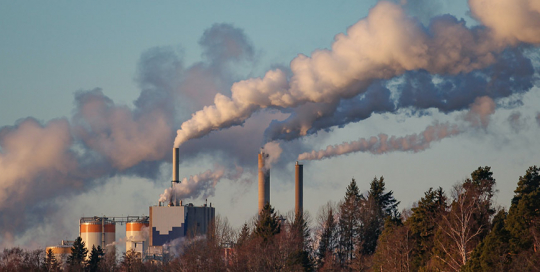
Not all countries face the same level of responsibility regarding the climate crisis. The biggest polluters need to take action to reduce their carbon emissions, but also to offset their carbon footprint by supporting environmental projects around the world. Each year more than 50 billion metric tons of CO2 are released into the Earth’s atmosphere: this is the main source of the greenhouse gasses that contribute to climate change. The largest part of these gasses comes from the use of fossil fuels, the generation of energy through non-renewable channels and polluting human activities. What we’re observing in discussions at significant annual events like the Conference of the Parties (COP) and the world economic forum in Davos is the clash of interests between sector-specific lobbies and self-interest. These conflicts are impeding the acceleration of negotiations and the establishment of global actions to address climate change. 2024 predictions for climate and carbon markets Top 10 polluters Below, you’ll discover the top 10 most polluting countries, with China leading in emissions primarily driven by its extensive use of coal. Countries like the USA and EU are also significant contributors to pollution, attributed to their industrial revolution periods and heavy reliance on fossil fuels. China, with more than 14 bn tons of CO2 released. United States, with 6 bn tons of CO2 India, with 3.5 bn tons of CO2 The 27 European Union countries 3.4 bn tons of CO2 Russia, with 2 bn tons of CO2 Japan, 1,170 bn tons of CO2 Brazil, 1.140 bn tons of CO2 Iran, 1.130 bn tons of CO2 Indonesia, 1.106 bn tons of CO2 Mexico , 792  bn tons of CO2 Reaching carbon neutrality COP28 held in Dubai in 2023 made progress with agreements among countries, yet there’s still a considerable gap to limit emissions effectively. Legislative measures like the CBAM in Europe and the Inflation Act in the USA play crucial roles in advancing and standardizing global emissions control.  The Carbon Border Adjustment Mechanism (CBAM) in Europe is a significant policy initiative introduced by the European Union to address carbon leakage concerns. Carbon leakage occurs when industries move their operations to regions with laxer emission regulations, resulting in no overall reduction in global emissions. CBAM aims to prevent this by placing a carbon price on certain imported goods based on their embedded carbon content. This mechanism not only ensures a level playing field for industries within the EU but also encourages global partners to adopt more sustainable practices. The Inflation Act in the USA reflects a multifaceted approach to combat climate change that is part of a broader legislative package, introducing measures to address inflation and promote sustainable practices. The act includes provisions related to clean energy investments, tax credits for renewable projects, and initiatives to accelerate the transition to a low-carbon economy. By integrating climate-focused measures into economic policies, the Inflation Act aims to drive environmental sustainability alongside economic resilience. Image: Forest Protection in the Democratic Republic of Congo We can all take climate action  As global efforts at COP28 and legislative measures like CBAM in Europe and the Inflation Act in the USA strive to address the urgent climate crisis, the role of individuals and companies also becomes increasingly pivotal. Achieving carbon neutrality requires collective action, and carbon offsetting emerges as a tangible solution to make an immediate impact. ClimateTrade’s marketplace provides a unique avenue for individuals and businesses to actively contribute to global sustainability by connecting with high-quality sustainable projects worldwide. By joining forces, we empower everyone to play a vital role in the journey towards a more sustainable and resilient future.


Microalgae
Climate Change News

Meet the trees of the future: BioUrban’s microalgae reactors purify the air in large cities

BioUrban is a pioneering technology that absorbs carbon from the atmosphere and mitigates global warming. These 4-meter-high carbon sinks are capable of cleaning the air that 2,790 people breathe every day, or 40 tons of CO2 per year. Developed by Mexican company BiomiTech, the artificial tree is designed to be placed in spaces in the center of large cities that have high levels of pollution such as small parks, schools and hospitals. Within its structure, it contains microalgae reactors that absorb pollutant particles to feed on them and, after a natural process of photosynthesis, convert them into oxygen and biomass.  The first of these artifacts has been successfully installed in Mexico, specifically, in the capital of the Mexican state of Puebla. There, BioUrban has reduced pollution levels in one of the busiest areas of the city near the university. Now, ClimateTrade has partnered with BiomiTech to bring the technology to Spain. “The most polluting areas of large cities, structurally do not allow to hold a large number of trees in their spaces, and thanks to this new technology, CO2 capture is maximized and air quality is improved. Clearly, the installation of a BioUrban device is complementary to the development of other initiatives such as urban forests, ”says Francisco Benedito, CEO of ClimateTrade. “Cities like Madrid, Barcelona or Valencia suffer from high levels of pollution. With this initiative we intend to maximize the capture of CO2 and improve the quality of the air in our cities,” he adds. This technology is a nature-based solution to climate change that will allow the creation of a new circular bioeconomy capable of producing fuels from the pollution generated by our daily activities.

Other Categories

COP27 carbon market
Carbon Markets

Top 5 carbon market developments at COP27

Between technical wording and vague commitments, it can be challenging to analyze and understand the decisions that emerged from COP27. In this article, ClimateTrade explains the most relevant carbon market developments from this year’s Conference of the Parties. Two intense weeks of negotiations came to an end on Sunday, and a record 35,000 COP27 delegates have now left Sharm el-Sheikh. It’s time to digest all the information that came out of the summit, and for us at ClimateTrade, that means analyzing the most relevant carbon market announcements and developments. More on this topic: Top 5 expectations from COP27 COP27 carbon market development 1: Article 6 advances While COP26 was seen as a cornerstone moment for Article 6, COP27 was an opportunity to iron out some of the more technical details of the functioning of international carbon markets under the Paris Agreement.  For Article 6.2, governing the use of Internationally Transferred Mitigation Outcomes (ITMOs), the text adopted at COP27 clarifies the rules on how to track ITMOs through a registry, what each country’s Article 6 reporting expert reviews should include, and how parties should report the use of ITMO towards the achievement of Nationally Determined Contributions (NDCs). Article 6.4, which governs voluntary cooperation between countries to achieve the goals of the Paris Agreement, did not progress as much as expected, mostly because its Supervisory Body was formed just a few months before COP27 and only had time to meet once before the conference. However, the text approved in Sharm el-Sheikh does bring some clarifications on the transfer of credits developed under the Clean Development Mechanism (CDM) to the Article 6 mechanism. It also gives more details on the type of emissions reductions where the Share of Proceeds (a tax on carbon credit trade under the Article 6 mechanism) should be applied. Carbon market experts, including the International Emissions Trading Association (IETA) that ClimateTrade is a member of, believe 2023 will be a much more productive year in working to define the functioning of Article 6, and that the first credits to be issued under this mechanism should come out in 2025. COP27 carbon market development 2: Loss and Damage Fund This year’s COP was marked by a historic agreement: for the first time, parties agreed to set up a Loss and Damage Fund to help vulnerable countries deal with the consequences of climate change. This is based on the notion that rich countries and their rapid industrial development over the past 200 years are highly responsible for the issues currently affecting the climate, and that the effects of climate change are most felt by countries that contribute very little to global warming.  Loss and damage funding, also called climate reparations by some, has been championed  by vulnerable countries at climate conferences since before the Paris Agreement was signed, but it took more than a decade – and dramatic climate events like this year’s Pakistan flooding – for this item to be added to the official COP agenda. On the surface, this issue may not seem relevant to carbon markets, but we at ClimateTrade believe that the creation of the Loss and Damage Fund will have a positive impact on the adoption of the carbon market. Some of the developing countries that have been fighting for climate reparation have also been reluctant to adopt carbon finance mechanisms, as they have seen the development of the carbon market as detracting from the issue of loss and damage. For that reason, they may have put off carbon initiatives in order not to weaken their argument for the creation of the fund. Now that parties have agreed to set up the Loss and Damage Fund, these countries are likely to feel more comfortable participating in the carbon market as an additional avenue for climate finance, rather than as an avenue to replace it. This could result in increased carbon credit supply and improved global participation in the carbon market. Of course, the COP27 Loss and Damage Fund announcement was only an outline: ClimateTrade will watch developments closely to detect any further impact the fund, its rules or its functioning could have on the carbon market. COP27 carbon market development 3: African Carbon Markets Initiative Another big piece of carbon market news announced at COP27 was the launch of the African Carbon Market Initiative, which aims to produce 300 million carbon credits annually across the continent by 2030, and 1.5 billion credits annually by 2050. The goal of the initiative is to unlock more financing for Africa’s energy transition – specifically, US$6 billion by 2030 and US$120 billion by 2050, all the while supporting over 110 million jobs by 2050. Several African nations, including Kenya, Malawi, Gabon, Nigeria and Togo, joined the launch event for ACMI, which is supported by financiers such as Exchange Trading Group, Nando’s and Standard Chartered. COP27 carbon market development 4: Energy Transition Accelerator U.S. Climate Envoy John Kerry made headlines early in the summit by announcing the Energy Transition Accelerator (ETA) – a public-private initiative to fund renewable energy projects through carbon offsets, with the purpose of accelerating the clean energy transition in developing countries. More details are expected in the coming months. COP27 carbon market development 5: First ITMO trade between Switzerland and Ghana While Article 6 remains to be fully finalized, Switzerland and Ghana have completed the first ever voluntary sale of ITMOs under Article 6.2. With this transaction, sustainable rice farming in Ghana will help Switzerland lower its national emissions, while giving Ghanaian farmers an extra revenue stream. The trade shows that countries do not need to wait for COP negotiations to end to act collaboratively on climate.

carbon-neutral transportation
Climate Change News

Corporations are demanding carbon-neutral transportation

Under pressure from investors, large companies and corporations are raising their expectations for certified carbon-neutral transportation. This trend is particularly visible in the case of urban mobility, business travel and last-mile deliveries. Investor and government requirements around decarbonization are becoming more stringent, while at the same time, compliance and transparency regulations around companies’ environmental impact are increasing in number and scope. The pressure to comply with environmental, social and governance (ESG) criteria is real, particularly for large companies backed by institutional investors. Beyond supporting investors in identifying and mitigating environmental, social and governance risks, ESG performance is correlated with value creation for shareholders. It is becoming increasingly clear that companies with a strong ESG performance tend to be more efficient, less wasteful, more productive and enjoy more commitment from employees, which makes them more attractive to both capital and talent. Employees’ urban mobility Large companies have identified a low-hanging fruit to begin identifying and mitigating ESG risks: their employees’ and directors’ urban and metropolitan commute, particularly by taxi. Luckily for the HR and sustainability managers of these corporations, some taxi operators have begun integrating advanced digital services of high added value for their corporate clients. The operators and their mobile apps are starting to report on the carbon footprint of their rides. One example of this sustainable urban mobility trend is Cabify, an app operating in Argentina, Chile, Colombia, Ecuador, Spain, Mexico, Peru and Uruguay. Since 2020, this ride-sharing operator has been sending yearly certificates guaranteeing CO2 emission offsetting to its corporate and institutional clients registered on its Cabify for Business (C4B). Thanks to ClimateTrade’s technological support, Cabify’s urban mobility app can offer its thousands of corporate clients in eight countries the digital tools they need to implement more sustainable corporate policy, and to pursue a traceable corporate social responsibility (CSR) strategy around the urban mobility of their employees. This trend has been mentioned in various international forums attended by ClimateTrade, such as the Leadership Summit on Mobility Sustainability and Digitization that took place in Seville in November 2021. Business travel Business travel agencies serving large corporations and public organizations have also started their journey towards better environmental practices in their B2B services. These agencies, which specialize in managing flights, accommodation, car rentals, transport and events, are beginning to offer high added value services to their corporate clients, starting with the voluntary offset of business trips’ carbon footprint. Proof of this growing demand, Spain’s business travel association GEBTA is integrating ClimateTrade’s digital solutions to generate CO2 offsetting certificates for the business trips its members organize. With this initiative, travel agencies are supporting their own CSR strategy, as well as their corporate and institutional clients’. Last mile delivery  Urban and long-distance logistics and delivery operators are becoming more aware of their own shortfalls around managing the ESG risks of their activities. They are starting to collect environmental data for their delivery vehicle fleets and preparing to share carbon footprint data with their end clients, particularly in the B2B sphere. Operators are also working internally with their operations and digitization managers to incorporate solutions such as APIs and widgets, allowing them to manage relevant data and create a B2B space and a shared dashboard with their clients to monitor the carbon footprint of deliveries. With ClimateTrade’s technological support, some logistics companies in Latin America (Colombia, Mexico, Chile) are starting to innovate in this area, with the goal of dramatically improving the quality of their B2B services. In 2022, these operators are expected to announce the first premium B2B services including the automated generation of carbon-neutral delivery certificates guaranteeing the offset of each delivery’s CO2 emissions. ClimateTrade’s digital solutions  In the coming years, all products will be benchmarked by CO2, and consumers will know exactly how much they pollute before buying them, which will influence their purchasing habits.  Carbon-neutral products and services are a necessity. But making it happen is easier said than done. It requires automated carbon footprint calculation and a reliable platform to give customers full visibility on where the carbon credits are generated. ClimateTrade helps companies to fulfil their most ambitious carbon offsetting commitments, empowering their sustainability strategy with our innovative digital solutions. After noticing the trend towards carbon-neutral products and services, we developed the ClimateTrade API, the first API REST that can be easily and securely integrated into the companies’ systems for them to be able to offer their own customers the possibility of acquiring carbon-neutral products and services during the purchase process.  And this month, we launched the ClimateTrade Widget, a tool with similar functionalities, but an even easier integration process, making it ideally suited for SMEs and organizations with limited IT resources. The ClimateTrade API and Widget provide customers with information about the carbon footprint of their purchases and offer them the opportunity to invest in sustainable projects while offsetting it. Explore our case studies to find out how we have implemented these solutions for international clients. ……………… Want to know more? Register on our marketplace and speak to our experts.  Article written by Francisco Martín, Head of Engineering and International Key Account Manager at ClimateTrade.