Climate Change News

Climate Change News

Miami climate tech
Climate Change News

Pairing Two Top Miami Industries — Blockchain and Climate Tech — Will Create Meaningful Carbon Reductions

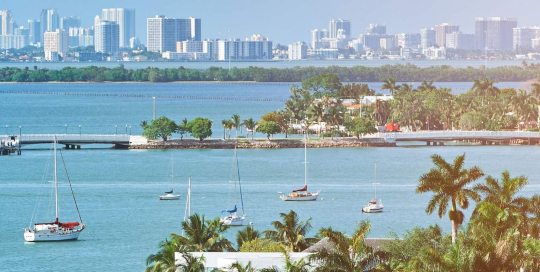
Net-zero pledges mean little without accurate measurement.  Op-ed by Francisco Benedito, ClimateTrade CEO. When it comes to fighting climate change and mitigating its effects, the eyes of the world are on Miami. Our coastal community has much at stake. And as the Supreme Court limits the EPA’s ability to regulate emissions, new approaches are critical to our future. There are some commendable advances. “Shore power” is finally coming to Port Miami — enabling cruise ships to plug in while in port, using electricity instead of burning fuel. New partnerships are bringing some of the world’s most innovative climate technology companies to South Florida. The county’s first-ever AI-powered smart water pilot program is launching soon — all part of a master plan to reduce Miami-Dade’s greenhouse gas emissions by 50% and achieve net-zero emissions by 2050.  While these goals are admirable, they mean nothing if we don’t have an accurate way to measure their impact. Years into the decarbonization effort, the world still lacks a transparent, accurate measurement of greenhouse gas emissions. A 2021 Washington Post investigation found that the reports countries submit to the United Nations underestimate their greenhouse gas emissions by 8.5 billion to 13.5 billion metric tons.   If we’re serious about creating public-private partnerships that work for the planet, those of us deeply invested in the climate fight must work together to create a reporting system that can stand up to the greatest scrutiny. Blockchain technology — another sector where Miami leads — offers a promising way forward. Combining blockchain with climate tech is a powerful tool for achieving serious climate goals.  Solving a problem of any size — let alone one the magnitude of global climate change —requires accurate, accessible data. Blockchain technology can help to solve some of these transparency issues. “Smart contracts” on the blockchain ensure that just one entity at a time owns or can claim a carbon credit; these ledgers make all documentation immutable and visible to everyone on the network. Smart contracts become even more powerful when combined with “oracles,” a device that connects a blockchain ledger with outside data. Oracles can use satellites and smart sensors to monitor a site’s greenhouse gas emissions and make nearly real-time ledger updates. The result is an accurate, transparent, traceable system that limits the possibility of fraud or human error.  Businesses, governments, and other institutions could easily apply the same technology to their operations to develop more accurate measurements of greenhouse gas emissions, rather than making educated guesses each year that can’t withstand even basic scrutiny. This data would be stored on a distributed ledger, which cannot be manipulated. The technology could also help businesses meet the Securities and Exchange Commission’s new climate change reporting requirements.  Some might scoff at using the blockchain for climate change mitigation efforts because cryptocurrencies have been criticized for having high carbon footprints, but next-generation blockchain industries — which go beyond cryptocoin to include supply chain management, cybersecurity and healthcare — are sharply focused on reducing emissions. And importantly, no other technology in use today solves so many of the reporting requirements and transparency needs in the carbon offsets markets.  If Miami’s leaders are looking to achieve meaningful, measurable greenhouse gas emission reductions, they should look to their colleagues in tech. Using blockchain as a virtual ledger is not a panacea, but it can be a powerful tool to win over skeptics and provide a clear view of the challenges and progress of our collective actions. We will fail to bridge the political divide over climate change, to attract more companies and nations to act, and to rationalize spending trillions of dollars in this fight if our efforts aren’t traceable or believable. In 2022, trust alone won’t cut it.  Francisco Benedito is the CEO and Co-Founder of startup ClimateTrade, a blockchain-based climate solutions provider. One of the TOP 100 worldwide Fintech Influencers for Sustainable Development Goals (SDGs), Benedito founded ClimateTrade with the purpose of establishing an exponential company focused on sustainability. In 2021, he was recognized as one of the 100 Latinos most committed to climate action, in a ranking developed by Sachamama in collaboration with WWF, The Nature Conservancy, the World Environment Center and various other environmental organizations. Earlier this year, Forbes Spain named him one of 22 business leaders most likely to create disruptive change in 2022.
UK climate ruling
Climate Change News

Landmark UK climate ruling holds government accountable for net zero strategy

In a landmark ruling last week, the UK’s High Court found that the government has failed to present an adequate strategy to meet its 2050 net zero ambitions, and ordered it to outline a detailed emissions reduction plan. The lawsuit was brought to the High Court by NGOs Friends of the Earth, ClientEarth and the Good Law Project, which argued that the government was not holding up to its obligations under the Climate Change Act of 2008. The Climate Change Act made it the duty of the Secretary of State to ensure that the UK reduced its emissions by 100% compared to 1990 by 2050.  According to the claimants, the government’s Net Zero Strategy, presented last year just ahead of COP26 meetings in Glasgow, did not include the data necessary to assess its effectiveness in curbing greenhouse gas emissions – a claim the court found justified. Now, the government has until April 2023 to submit a new Net Zero Strategy report outlining and quantifying the ways its net zero policies will achieve emissions targets. This is the latest in a series of court cases initiated by citizens and NGOs against governments and institutions for their lack of action to counter climate change: the UNEP Global Climate Litigation Report 2020 found that between 2017 and 2020, the number of such court cases went from 884 in 24 countries to at least 1,550 in 38 countries.  What’s particularly interesting is that courts are increasingly finding governments guilty of not doing enough against climate change. In early 2021, a Paris court ruled that the French state had failed to take sufficient action in a case brought by four nongovernmental organizations, and was, as such, partially responsible for climate change. In a follow-up ruling last October, it ordered the government to bring the country’s carbon emissions down by about 15 million tons, to reach the target established in the first carbon budget (2015-2018) by the end of 2022. What does the UK climate ruling mean? The UK government now has to prepare a fresh Net Zero Strategy report that clearly quantifies emissions reductions. The strategy itself is unlikely to change, as it was not questioned by the court or even the claimants. But the addition of measurable data points will promote transparency and accountability in climate action. This follows a general trend to make climate targets more data-based, as opposed to aspirational, in order to combat greenwashing.  The timing of this review is interesting, as the Ukraine-Russia war and the resulting threat of a natural gas shortage has led many European countries to prioritize energy security over decarbonization – by approving new fossil fuel developments at home. In fact, at least three new oil and gas or coal developments have been approved by the UK government since COP26. Data-based climate targets At ClimateTrade, we believe that blockchain technology is a helpful tool to develop climate targets aligned with measurable data, and to keep track of them over time and across borders. Indeed, blockchain is based on decentralized governance and data storage, which makes it inherently suited to the pursuit of consensus. Additionally, since all data stored on blockchain is immutable, it allows for full traceability in all transactions. All our solutions are based on blockchain infrastructure, supporting companies’ ESG reporting and transparency efforts and ensuring the real positive impact of their carbon offsetting activities. Contact us to find out more.

G7 Climate Club
Carbon Markets

What the G7 Climate Club means for carbon markets

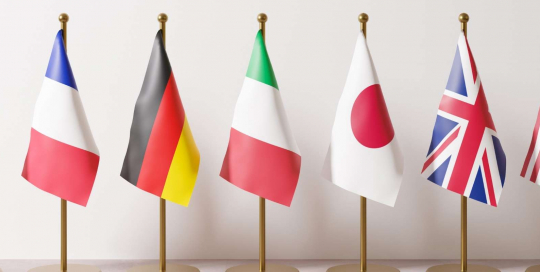
What exactly is a climate club, and how can the one recently announced by the G7 influence the world’s decarbonization? At the end of the G7 meeting in Germany last week, Canada, France, Germany, Italy, Japan, the UK and the US announced the formation of a climate club aiming to “advance ambitious and transparent climate change mitigation policies towards climate neutrality”. But what exactly does a climate club consist of, and how will it influence global decarbonization?  What is a climate club? Though this is a relatively new concept, a climate club generally consists of a group of countries committed to climate action, who take measures together to fight carbon leakage from countries outside the club. As a reminder, carbon leakage is when production is moved from a country with a strict carbon policy to a country where it is cheaper to pollute, and therefore no emissions reduction is achieved. The idea is to create a low-carbon market big enough to incentivize companies to reduce their emissions and improve their climate performance. Who is in the G7 Climate Club? The G7 Climate Club is formed of all the countries included in the Group of 7: Canada, France, Germany, Italy, Japan, the UK and the US. In 2020, these countries accounted for over 50% of global net wealth (US$418 trillion), 32 to 46% of global GDP, about 25% of global emissions, and approximately 770 million people or 10% of the world’s population. Needless to say, the G7 Climate Club is big enough and economically powerful enough to make a difference in the global fight against climate change.  Three of these countries (France, Germany and Italy) are part of the European Union, which has a mandatory carbon market (the EU ETS) in place and is already planning to implement a Carbon Border Adjustment Mechanism – effectively a carbon tax for products entering the EU – to fight carbon leakage. Of the other four, Canada has a carbon tax set at C$50 per ton of CO2-equivalent and due to increase to C$170 by 2030; Japan has a carbon tax of around US$2.80 per ton, but is looking at implementing a US$56/ton tax on the shipping industry starting from 2025; the UK has an emissions trading system similar to that of the EU; and the US currently has no federal carbon tax. However, the G7 Climate Club is not closed: instead, founding members are inviting other countries with strong climate ambitions to join by the end of the year, when the G7 expects the club to be fully established. More on this topic: EU ETS reform: What’s to come for the mandatory carbon market? SEC proposes landmark climate disclosures for US companies What will the G7 Climate Club do? According to a G7 statement on the Climate Club, it is built on three pillars:  1) Advancing ambitious and transparent climate mitigation policies to reduce emissions intensities of participating economies on the pathway towards climate neutrality, by making policies and outcomes consistent with the club’s ambition, strengthening emissions measurement and reporting mechanisms, and countering carbon leakage at the international level.  2) Transforming industries jointly to accelerate decarbonization, including through taking into account the Industrial Decarbonisation Agenda, the Hydrogen Action Pact, and expanding markets for green industrial products.  3) Boosting international ambition through partnerships and cooperation to encourage and facilitate climate action and unlock socio-economic benefits of climate cooperation and to promote just energy transition. Members of the Climate Club would share best practices and work together to compare the effectiveness and economic impacts of each of their mitigation policies, such as explicit carbon pricing, other carbon mitigation approaches and carbon intensities. They would also use their influence to incentivize developing countries to increase climate transparency and decarbonize their energy and industrial sectors, including through financial, technical capacity support and technology transfer development and deployment. How will the Climate Club shape carbon markets? The biggest impact the Climate Club is expected to have on global carbon markets is by setting a minimum carbon price, below products imported by club members will be submitted to an adjustment tax. This will allow climate leaders to move ahead on policy and accelerate global decarbonization, even if no consensus can be found amongst all Paris Agreement signatories – as was observed at COP26 on the topic of coal. In fact, the Climate Club is intended to com­pensate for the lack of enforcement mech­anisms in the Paris Agreement: “We note with concern that currently neither global climate ambition nor implementation are sufficient to achieve the goals of the Paris Agreement by reducing greenhouse gas emissions. We aim to establish a Climate Club to support the effective implementation of the Paris Agreement by accelerating climate action and increasing ambition,” says the G7 statement on the topic. What are the challenges? In pushing for the global implementation of the Paris Agreement, and considering the G7’s economic power on the global stage, the Climate Club must ensure it takes the basic principles of climate justice into consideration. While all countries must take action to combat the climate crisis, differences in levels of economic development and historical carbon emissions must be recognized, and “punitive” mechanisms like carbon taxes and carbon border adjustment mechanisms must come with financial and other forms of support for developing countries’s net zero transition. Let’s remember that developed economies’ 2009 pledge to provide US$100 billion of climate finance to developing countries every year by 2020 was never fulfilled. The best way for the Climate Club to address climate justice would be to dedicate revenue from the Carbon Border Adjustment Mechanism to climate finance, both for developing countries and for communities within its own countries that are most vulnerable to the effects of climate change.

ESG transparency
Climate Change News

Lack of ESG transparency hinders action in the US and Europe

International initiatives attempting to promote better climate practices are hindered by the lack of ambition in corporate ESG transparency. US companies lag behind the ambition of regulators The Securities and Exchange Commissions made headlines in March by proposing new climate disclosure rules for listed companies in the United States. Concretely, large companies would be required to disclose their Scope 1 and 2 GHG emissions, certain financial statements, as well as qualitative and governance information within registration statements and annual reports. The proposed rule has faced resistance from corporate America, with business associations including the U.S. Chamber of Commerce, the Bank Policy Institute, the National Association of Manufacturers and the American Petroleum Institute asking the SEC to scale back on the required disclosures. This reaction is a reflection of how far behind large companies in the US are in terms of ESG transparency. A recent JUST Capital report found that only 57% of the 1,000 largest companies by market capitalization (the Russell 1000 Index) disclose their Scope 1 and 2 emissions. About 43% of them disclose their emissions reductions commitments; 30% disclose Scope 3 emissions from business travel; and only 11% and 7% disclose climate commitments in line with science-based targets for Net Zero by 2050 and 1.5°C temperature rise, respectively. Even Blackrock, an investment firm known for pushing companies in its portfolio to take climate action, wrote a letter to the SEC saying that its proposed rules risked increasing compliance costs for companies and creating confusion for investors. Considering the level of backlash, the SEC will likely have no choice but to reign in its regulatory ambition, keeping the level of ESG commitment in corporate America lower than in other parts of the world. Stricter ESG reporting requirements coming into force in the EU  In the European Union, large companies have been required to report on their ESG performance since 2018, when the Non-Financial Reporting Directive (NFRD) came into effect. The NFRD applies to all public interest companies with more than 500 employees, a balance sheet that exceeds €20 million or a turnover that exceeds €40 million – about 11,700 companies in total. As a result, 100% of companies included in the NFRD disclosed their GHG emissions in 2020, and 74% included their Scope 3 emissions in the report, according to the Climate Disclosure Standards Board.  Now, the EU is preparing to introduce the Corporate Sustainability Reporting Directive (CSRD), an updated version of the NFRD that increases its reach and scope. It is estimated that about 50,000 large and small companies in Europe will have to comply with the CSRD by the time it reaches full implementation in 2026. The new rules will require them to disclose detailed and audited information on their ESG impact, in line with the EU Green Deal and Green Taxonomy. More on this: Your guide to sustainability reporting in the EU Lack of information delays the publication of ESG benchmark in Spain and Italy UK ratings agency Standard Ethics is planning to create a sustainability index for mid-sized Spanish and Italian companies, but has been forced to delay it due to the scarcity of information disclosed. In a press release, Standard Ethics revealed that the publication of the ESG index has been moved from June to November 2022, “due to the additional time required by Standard Ethics’ analysts to complete a correct and more in-depth analysis of the Indices’ potential components given the complexity of locating the necessary public documentation”. Large companies in these countries do have a sustainability index, as they are already subjected to the rules of the NFRD and required to disclose information about their ESG impact. In Spain, the FTSE4Good IBEX Index identifies Spanish companies with leading corporate responsibility practices. Carbon footprint calculation: the first step towards ESG transparency If you are a company that hasn’t yet had to comply with ESG reporting requirements, now is the time to prepare. In order to disclose your emissions, the first step is to calculate them. Check out our guide to calculate your company’s CO2 emissions or get in touch with one of our experts to start the journey. Article written with contributions from Francisco Martín Rubio, head of ESG services at ClimateTrade.

EU green Week
Climate Change News

EU Green Week 2022: Key takeaways

Here are the main takeaways from the EU Green Week 2022 conference, which took place from May 30 to June 1. EU Green Week  is an annual event for all stakeholders to debate Europe’s environmental policy.  In 2022 the theme was EU Green Deal – Make it Happen, and the hybrid conference tackled three aspects of the transformation – circular economy, zero pollution, and biodiversity. Ahead of the conference, Virginijus Sinkevičius, European Commissioner for Environment, Oceans and Fisheries said: “Russia’s invasion of Ukraine has changed our world. Showing solidarity and helping Ukrainians is a top priority, but the war has also shown that we need to strengthen our resilience in response to crises. Climate change, biodiversity loss, and pollution don’t go away when war breaks out. And this is why we have the European Green Deal, our compass for the good and the bad times. At this year’s EU Green Week, I am looking forward to discussing with people from all over Europe about how we can level up our actions to protect our environment.” Day 1: Focus on nature-based solutions On the first day of the conference, nature-based solutions were recognized as key to combating climate change. Most of the winners of the LIFE Awards, announced Monday May 30th, focus on ecosystem and biodiversity conservation in places including Cyprus, Estonia and Germany. LIFE Awards winners The LIFE Award for Nature went to LIFE-KEDROS (Cyprus) for enhancing the conservation status and resilience of cedar forests at risk from climate change in Cyprus. The LIFE Award for Environment went to Clean Sea LIFE (Italy), an awareness-raising project to reduce marine litter along Italian coasts. The LIFE Award for Climate Action went to LIFE VinEcoS (Germany) for boosting biodiversity in vineyards in Saxony-Anhalt, Germany to make them more climate-resilient. Executive Vice-President for the European Green Deal, Frans Timmermans, said: “Nature restoration is an incredibly powerful tool to tackle both the climate and the biodiversity crisis. We need to protect and restore nature, so it can protect us.” At ClimateTrade, we agree wholeheartedly. That’s why you can find many nature-based solutions projects on our marketplace and, since last week, you can even buy biodiversity credits from Terrasos’ Bosque de Niebla Project in Colombia! Browse nature-based solutions projects Day 2: Focus on regulatory efforts On the second day of the conference, speakers reinforced how important laws and their enforcement are to promote a circular economy, ensure zero pollution and restore nature. According to them, the EU needs to start the institutional framework to say loud and clear: ‘We no longer accept unsustainable products.’ Even if it is not popular. Interestingly, speakers mentioned that ‘Polluter pays’ is a principle in the founding treaties of the EU, but that governments find it hard to implement. In fact, only 0.2% of tax revenue is based on pollution and resource use, compared to 54% from labour taxes. Enforcement is key to reach zero pollution and promote the circular economy. Finally, they pointed out that nature restoration is human protection. Questioning the need for a nature restoration law is questioning that humans are part of nature. At ClimateTrade, we support holistic climate action. Visit our marketplace to browse sustainable projects around the world.

Ukraine Russia climate
Climate Change News

The climate consequences of the Ukraine-Russia war

Russia’s invasion of Ukraine has had catastrophic human consequences, with thousands of casualties and millions of people fleeing the country. But it is also having a negative impact on the climate, jeopardizing efforts to meet the goals of the Paris Agreement. Russian sanctions Europe has historically been very dependent on Russia to meet its energy needs. Natural gas represents about 20% of its energy mix (the different sources of energy that are used to make electricity) and in 2021, about 40% of all the natural gas imported by Europe came from Russia.  When Russia invaded Ukraine, the European Union retaliated by imposing economic sanctions on the country, and particularly on its banks to hinder financial flows. As the war progressed, sanctions became harsher, many exports to Russia were banned, pipeline projects were stopped and several countries began boycotting Russian oil and gas.  Today, the US has banned all oil and gas imports from Russia and the UK has announced that it will phase out these Russian products by the end of 2022. The EU itself is not in a position to take such a firm stance, but several EU countries, including Estonia, Lithuania and Latvia, have stopped purchasing fossil fuels from Russia. Fossil fuel subsidies This desire to cut energy ties with Russia has disrupted the global fossil fuel market, leading to a sharp rise in gasoline and electricity prices. This has spurred general discontent among the population, fears of rising energy poverty, and trucker strikes. As a result, many governments are promising to cut taxes on fossil fuels, backtracking on a recent trend to increase them to discourage their purchase. Even in California, a US state known for its commitment to climate action, the Governor recently proposed a US$400 yearly rebate per car to bring residents some relief. Return to coal  To make up for the lost oil and gas supply, as well as rising prices, many countries are also turning to a cheap but highly polluting source of energy: coal. Coal consumption in Europe had been declining steadily in recent years, and as recently as October 2021, during COP26, many countries were calling for a total ban on coal. But now, plans to close coal plants have been stopped and the consumption decline has slowed down: from a 29% drop between 2017 and 2019, it went to just 3% between 2019 and 2021. This is likely to slow down Europe’s decarbonization in the short term, even though in the long term, the European Union wants to double down on renewable energy development to get closer to self-sufficiency. Amazon deforestation Another, lesser-known impact of the Ukraine crisis is the threat of further deforestation in the Amazon. Brazil’s far-right President Jair Bolsonaro is a strong supporter of economic development in the region – denying environmental concerns and indigenous rights to land – and he is now using the Russian war as an argument for more extraction in the Amazon. Brazil’s agricultural sector relies heavily on fertilizer imports, and the majority of those imports come from Russia. As the war began, Bolsonaro identified an “opportunity” for Brazil to become less reliant on Russia by developing its own fertilizer production – mining potassium from the Amazon. Even though indigenous leaders have pointed out that only 11% of potassium reserves are inside indigenous lands, the president’s declarations have supported the acceleration of deforestation – both legal and illegal. This pattern has led many experts to warn of an upcoming “tipping point”, where large parts of the rainforest will turn into dry savannah, changing weather patterns and releasing billions of tons of carbon dioxide into the atmosphere. While the short-term social and economic consequences of the Ukraine-Russia war are undeniable, global leaders should not lose sight of the bigger picture in grappling with them: climate change remains the biggest threat for human life on this planet, and our window for action will not stay open much longer.

Other Categories

Yacumama Forest Carbon Project
Climate Impact

Yacumama Forest Carbon Project: Protecting the Amazon’s biodiversity

Located in the Peruvian Amazon, the Yacumama Forest Carbon Project is a 3,200 hectare land preservation project aiming to protect the area’s tropical rainforest and its rich biodiversity. It is a perfect example of the direct positive impact climate finance can have on local ecosystem resilience. The project is estimated to prevent the emission of an average of 72,982 tonnes of CO2 into the atmosphere every year.  On top of the tremendous carbon sequestration potential, the preservation of the Yacumama forest also protects a number of threatened Amazonian species such as the jaguar, the tapir, the sloth, the harpy eagle and the elusive pink dolphin that roams the waters of the Yarapa River as it makes its way to the Amazon. It also provides habitat and nourishment to the seven species of primates that live in the area, a number second only to Uganda, which is home to eight species. And let’s not forget the incredible bird biodiversity of the forest, from hummingbirds to eagles, parrots and macaws. The land on which the project stands is privately owned as a lodge, research, education, and conservation area. The project began in 1992 as an ecotourism destination offering visits and educational workshops to finance its operations. In 2012, it changed its business model and started offering carbon credits to get funding, and today its owners rely heavily on climate financing to maintain their activities. Without it, they may be forced to sell the land to profit-seeking enterprises that would likely harvest the trees to sell them as timber or biomass, and set up agricultural operations in the area. Yacumama means ‘Mother of the Waters’ in Quechua, and this project is very focused on the region’s water ecosystems. Two of the Sustainable Development Goals it contributes to are water-related: SDG 6 (clean water and sanitation) and SDG 14 (life below water). Yacumama also contributes directly to SDGs 3 (health and wellbeing), 13 (climate action) and 15 (life on land). Moreover, Yacumama is also committed to the preservation of indigenous traditions. Register on the ClimateTrade marketplace to find out more and support the project.

Carbon Footprint
Climate Impact

How to Track and Offset Your Own Carbon Footprint.

While there is a lot of talk about carbon footprint and reducing emissions, many people don’t know where to start in calculating their own personal carbon footprint or that of their business. Understanding and tracking your carbon emissions is the first step toward meaningful climate action