
Climate Change News

Climate Change News

COP27
Climate Change News

Where to find ClimateTrade at COP27

ClimateTrade will be actively participating in COP27, our fifth UN climate change conference. There are less than three weeks left before the biggest climate event of the year, and we are ready to go. This year’s theme is Together for Implementation, and we can’t wait to push the agenda on the voluntary carbon market, ensuring carbon credit quality and harmonized carbon pricing, as well as biodiversity credits as a tool for nature protection. Panel participation So far, our CEO Francisco Benedito is due to speak in three different panels: 09/11 – 15.30 CET: Sustainable Innovation Forum – When will the carbon offset market become credible and truly protect and regenerate the planet?  (Innovation Zone Sharm el-Sheikh + live streaming) Carbon markets are rapidly growing as companies and consumers look to offset the environmental impact of their choices. How can we meet the demand for a quality global carbon market that operates effectively to ensure genuine impact for the planet? How can we protect and enhance the planet’s natural carbon sinks? What are the opportunities of blockchain and digital technology? How close are we to developing an agreed standard for certifying carbon credits? Register here. 14/11 – 13.30 CET: World Biodiversity Summit – Carbon Markets and their Role for Biodiversity – Stepping Up Climate & Biodiversity Action by Trading CO2 (Park Regency Sharm el-Sheikh + live streaming). Carbon markets play a crucial role in fighting climate change and can fast-track the transition to a net-zero economy. To better synergise the global climate and biodiversity goals, carbon markets should not only focus on mitigating climate change, but projects should also consider their effects on biological diversity. This fireside chat will look at the business cases and policy frameworks needed to achieve nature-positive carbon markets. Register here. 14/11 – 16.30 CET: ICC Make Climate Action Everyone’s Business Forum panel – Transparency, reliability and collaboration in the carbon market (online) A fair and transparent carbon price is key to support companies’ climate transition, and the ICC Carbon Pricing Principles lay the bases for this harmonization. Since their publication, the Spanish Chamber of Commerce and several local Chambers of Commerce have been working with ClimateTrade to leverage blockchain technology for transparency in carbon pricing. In this session, Francisco Benedito, CEO of ClimateTrade, discusses the results of these efforts to implement the ICC Carbon Pricing Principles. Register here. Live carbon offsetting at the Innovation Zone As a Sustainable Innovation Forum sponsor, ClimateTrade will offer COP27 attendees the option to calculate and offset the carbon footprint of their participation in the event, live from our booth. Come visit us to experience our whitelabel solution first-hand!

VERGE 22
Climate Change News

Discussing the future of climate tech at VERGE 22

ClimateTrade will be attending and speaking at VERGE 22, the climate tech event organized by Greenbiz in San Jose, California, October 25-27. As an industry leader, ClimateTrade is proud to be a sponsor and speaker at the world’s leading climate tech event, VERGE 22. The purpose of this event is to accelerate solutions to the most pressing challenges of our time, and we are looking forward to discussing those in detail. A leader in six strategic areas VERGE 22 is organized in six strategic themes – clean energy, sustainable transportation, carbon removal, regenerative food systems, net-zero buildings and the startup ecosystem – and ClimateTrade contributes to all six of these. We support the development of clean energy by offering renewable projects and renewable energy certificates (RECs) on our marketplace; we partner with transportation companies to help them mitigate their climate impact; we are joining forces with players in the regenerative food ecosystem to investigate carbon farming; we are a strong carbon neutrality partner in the construction sector, having developed a specialized carbon footprint calculator; and we are deeply involved in the startup ecosystem in Valencia, Miami and beyond. For all these reasons, we look forward to being a conversation leader at the Greenbiz event. Panel: New technologies and strategies for communicating carbon data to consumers – 26/10, 2.45pm PDT Our CEO Francisco Benedito is a speaker on this panel of leaders behind some of the new experiments with carbon labels, who will share what we do and don’t know about the power of labels to impact consumer choice. What would happen if the carbon embodied in a laptop or a sofa or even a packet of chips were displayed on the product’s label? Measuring embodied carbon is notoriously difficult, but supply chains are slowly becoming more transparent and consumer demand for environmental data is growing. These forces have prompted companies large and small to experiment with labels that detail the emissions created in the manufacture of a product. The big question now is how consumers will react. Benedito will bring ClimateTrade’s perspective from our partnership with Santander Bank on its new carbon footprint feature, available on the webpage and app. Live carbon offsetting at the ClimateTrade booth Additionally, we are bringing innovation to our event booth! VERGE 22 participants can find us at booth 113 to experience our whitelabel solution, calculating and offsetting the footprint of their event attendance. If you haven’t yet, you can still register to attend VERGE 22 here.

decarbonize aviation
Climate Change News

Why is it so hard to decarbonize aviation?

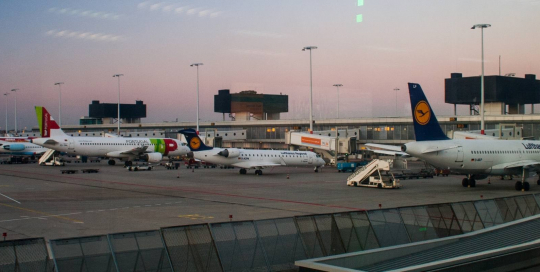
The journey towards a Net Zero world is long and arduous – and it probably shouldn’t be done by plane. Aviation is considered one of the hardest sectors to decarbonize: read this article to find out why. Aviation’s contribution to climate change Global aviation, which includes passenger and freight planes, is responsible for almost 2% of greenhouse gas emissions, and 2.5% of CO2 emissions (around 1 billion tons in 2018). That’s much less than road transportation (11.9% of GHG) or even livestock (5.8%). But the effect of these emissions is made worse by the collateral impacts of flying. According to Our World in Data, “as well as emitting CO2 from burning fuel, planes affect the concentration of other gases and pollutants in the atmosphere. They result in a short-term increase, but long-term decrease in ozone (O3); a decrease in methane (CH4); emissions of water vapour; soot; sulfur aerosols; and water contrails. While some of these impacts result in warming, others induce a cooling effect. Overall, the warming effect is stronger.” In the end, the aviation sector is considered responsible for 3.5% of global warming. Alternative fuels to decarbonize aviation Fuel is the biggest contributor to the carbon footprint of air travel. Removing emissions from aviation fuel would contribute to a 65% reduction in carbon emissions from the sector, according to the International Air Transport Association (IATA). Sustainable Aviation Fuel Currently, the only alternative to kerosene, the preferred fuel for planes, is Sustainable Aviation Fuel (SAF), essentially a bioful that can be made from almost any type of waste (plants, cooking oil, used clothes, etc). While burning these products results in CO2 emissions, SAF presents a reduction in lifecycle emissions of up to 80% compared to traditional fuel. This is because it is partly made from plants, which absorb CO2 to grow, and partly because it avoids greenhouse gas emissions from landfill or waste treatment. Additionally, SAF cannot be made from materials that would divert land use from food production, or from the products of deforestation. One of the advantages of SAF is that it can be mixed with regular fuels to lower the carbon footprint of flights without having to modify planes’ engines. However, SAF can be up to eight times more expensive than kerosene, which makes it cost-prohibitive in many cases. Green hydrogen The other alternative to kerosene is green hydrogen, a technology that is still under development but would remove 100% of fuel-based emissions from air travel. Hydrogen is a zero-emissions fuel that can be produced from different sources: brown hydrogen is made by burning coal, defeating its zero-emissions purpose; and blue hydrogen is made from fossil fuel, with CO2 sequestration integrated into the process (this is currently considered the best option for reducing emissions at a reasonable cost). Green hydrogen is the real game-changer, as it is made through the electrolysis water using renewable energy. Its production has almost no impact on the environment, making it the most sustainable option for aviation.  Green hydrogen is still very expensive to produce, but its cost is reducing as renewable energy is becoming cheaper and demand for eletrolyzers is increasing. Hydrogen engines are different from fossil fuel engines, but airlines are already piloting hydrogen planes: Airbus’ ZEROe aims to be the first zero-emission commercial aircraft. It is estimated that hydrogen will enter aviation’s fuel mix in the 2030s. Carbon offsetting for aviation The aviation sector needs to support the development of zero-emission fuels through investment and demand signals, in order to make them more affordable. But in the meantime, the best option for the industry is to offset the carbon footprint associated with air travel. ClimateTrade offers an API that can be integrated into flight reservation platforms to give travelers the option to offset the carbon emissions of their flights. The API is connected to the ClimateTrade marketplace, where more than 60 certified carbon mitigation projects are available. All transactions are conducted through blockchain technology, giving customers end-to-end visibility of where and how their money is used. This traceability greatly improves both the positive impact of carbon offsetting, and the transparency of communication with travelers. Check out the pilot project we conducted with Iberia. For more information, visit our marketplace or contact us.

biodiversity credits
Climate Change News

WEF recognizes Voluntary Biodiversity Credits potential to unlock financing for nature

The Voluntary Biodiversity Credits launched by ClimateTrade and Terrasos last May are gaining traction as a tool to direct financing towards nature conservation. The World Economic Forum (WEF) published a briefing paper this September, titled ‘Biodiversity Credits: Unlocking Financial Markets for Nature-Positive Outcomes’. In it, the authors remind readers of the importance of biodiversity conservation for the planet, but also for business.  “Over 1 million species are at risk of extinction, one third of the world’s topsoil has been degraded, forest fires are now more extensive and destructive than at any time in the past 10,000 years and 50% of the world’s coral reefs are destroyed. With more than half the world’s GDP moderately or highly dependent on nature and the services it provides, this loss of biodiversity integrity and functionality is increasingly undermining our economy, development, health and social stability,” the paper says. While the WEF notes that business needs to transition towards regenerative practices for long-term nature protection, it recognizes that biodiversity credits are an opportunity to “protect critical ecosystems that businesses and the world depend on from irreversible tipping points” during this transition. One of the case studies detailed in the paper revolves around the Voluntary Biodiversity Credits (VBCs) launched by ClimateTrade and Terrasos in May this year. Under the initiative, Terrasos is able to sell VBCs generated from conservation in Colombia’s Bosque de Niebla-El Globo Habitat Bank on the ClimateTrade marketplace. ClimateTrade’s Distributed Ledger Technology (DLT) makes it possible to overcome various conceptual and technical obstacles around the sale of VBCs, such as the lack of consensus on how to treat intervention or responsibility around nature conservation between communities, NGOs, governments and companies. It also adds clarity around the rules of the Protocol for the Emission of Voluntary Biodiversity Credits (Beta version) developed in the context of the Partnership for Forests to overcome the lack of trust resulting from years of misallocation of ecosystem and forest conservation financing going to the all-powerful voluntary carbon market. Since the launch of the VBCs in May, more than 100 credits have been sold on the marketplace, signalling strong interest in this form of climate mitigation. You can learn more about the Bosque de Niebla Habitat Bank Project and purchase Voluntary Biodiversity Credits on the ClimateTrade marketplace.

carbon footprint football
Climate Change News

The carbon footprint of football

Football leaves more than just players’ footprints on the field: carbon emissions from games, travel and merchandising are considerable, and need to be tackled. Climate change is causing disruption around the world, including in sports. Extreme heat waves can affect athletes’ ability to perform, torrential rains can flood stadiums and poor air quality can cause damade to the health of players and supporters. With the World Football Summit just around the corner, and the FIFA World Cup not far behind, now is the perfect time to look at the carbon footprint associated with this sport, and what can be done to reduce it. Calculating the carbon footprint of football It is estimated that the 2018 Russia World Cup released 2.16 million tons of greenhouse gases – equivalent to more than 465,000 cars on the road for an entire year! To reach this number, experts used the GHG Protocol’s methodology and its three scopes. They took into account the construction of facilities for the event, supporters’ travel to and from venues, the energy used for light, heating, cooling and cooking during the event, as well as the emissions associated with manufacturing merchandise. The World Cup is definitely the sector’s biggest event, and fortunately for the planet, it only takes place every four years, but football itself never stops. England’s Premier League alone consists of 38 games per season, and the UEFA Champions League organizes 125 matches every year. In 2017, the University of Essex calculated the total of GHG emissions from transport to and from stadiums for tier 3 football games in the 2012/13 season, which was estimated at 56,237 tons of CO2e. And the bigger the game, the larger its carbon footprint, as supporters tend to travel further for important matches. To calculate their emissions, football clubs need to count not just transport to and from games, but also all the materials purchased for players, business travel and even the emissions associated with the production of merchandising to sell to fans. This involves mapping all of the club’s activities, purchases and sales.  Climate action in football Football is the most popular sport in the world – and one of the most lucrative, with a market value of about US$1.8 trillion in 2019. As such, it has the potential to unite people and drive cultural change in ways few other activities can. It is time to put this popularity and capital to good use by educating football fans about climate change and implementing innovative solutions. For instance, the organizers of the 2022 Qatar World Cup have promised to host the first carbon-neutral World Cup, with mitigation measures including building a reusable stadium from shipping containers, installing solar-powered stadium air conditioning, and growing trees irrigated by treated sewage water to absorb CO2 emissions from the atmosphere. These measures are welcome, considering that Qatar has built seven new stadiums, an entire new city and over 100 new hotels and roads for the event, bringing its carbon footprint to an estimated 3.6 million tons. Football clubs also need to calculate and reduce their footprint, offset the remainder, and talk to fans about how they did it. Athletes should become role models, lobbying for climate action and leading by example. For instance, Forest Green Rovers in England is the first club to commit to net zero: they are currently building a net-zero stadium with 500 trees and several electric vehicle charging stations. Several other clubs have signed up to the UN Sports for Climate Action framework, with various commitments.  How ClimateTrade can support the decarbonization of football ClimateTrade is an established carbon neutrality partner for sporting events: we supported the BBVA Open Internacional Valencia Tennis Tournament in calculating and offsetting its emissions, and we will also be offsetting the emissions of the World Football Summit in Sevilla on September 28-29.  The ClimateTrade marketplace gathers more than 60 international carbon mitigation projects on a blockchain platform, making carbon offsetting transparent and traceable. Projects include renewable energy, reforestation, ecosystem conservation, community support and more, and all are certified by recognized standards and aligned with the UN Sustainable Development Goals, ensuring real impact in the fight against climate change. The ClimateTrade API can also be used at stadiums or points of sale to allow fans to offset their carbon footprint while buying tickets and giving them information about specific projects and their environmental and social impact. For more information about what ClimateTrade can do to support carbon-neutral football, contact us.

U.S. corporate decarbonization
Climate Change News

Best practices in U.S. corporate decarbonization

U.S. companies cannot wait for regulation to force them to mitigate their impact on the climate. Luckily, many of them have already begun their decarbonization journey. As the world’s largest economy, the United States has the power and influence to lead the world towards Net Zero, yet it is still lagging far behind others in terms of climate ambition. This August, President Biden signed the Inflation Reduction Act into law, and while this is the most ambitious climate bill ever passed in the U.S, much remains to be done for the country to reach Net Zero. Public opinion is unanimous: a full 70% of American consumers want corporations to do more against climate change, and 30% already spend more money on products that are better for the environment. Because of this, implementing a Net Zero strategy has become a matter of competitiveness for U.S. companies. Pledges vs strategies Currently, about 200 of the largest U.S. corporations have announced climate goals, the majority of which relate to reaching Net Zero emissions by 2050. But not all of them have backed their strategies with a detailed plan and midterm targets. A recent assessment by NewClimate Institute looked at the pledges of five American companies: Amazon, Apple, CVS Health, Google and Walmart. All of them rated poorly on transparency and integrity, except Apple, which earned a reasonable transparency rating and a moderate integrity rating. In general, climate pledges are judged based on the presence of interim targets, detailed plans, reporting mechanisms and the inclusion of at least part of scope 3 emissions. Of the 200 U.S. companies with climate targets, less than 50 meet those standards. According to the Net Zero Tracker, Workday (tech), Ralph Lauren (fashion), Duke Energy (power) and ExxonMobil (oil and gas) are among the best performers. Tech leading the pack Tech companies are the most advanced in the U.S. when it comes to decarbonizing their operations, with Google (and its parent company Alphabet), Apple and Workday, a cloud software company, consistently ranking between the world’s most sustainable companies. They are making headway thanks to the large-scale adoption of renewable electricity and the use of recycled materials in their products. In 2021, Accenture, GitHub, Microsoft and ThoughtWorks – all American tech companies – launched the Green Software Foundation, whose goal is to set standards and establish best practices for the building of low-carbon software.  How to design an efficient Net Zero strategy In order to take effective climate action and avoid greenwashing claims, it is crucial that U.S. companies follow best practices in terms of disclosures and target setting. According to NewClimate Institute, best practices include annually disclosing emissions in a clear and understandable format and providing a breakdown of emission sources with historical data for each source.  In terms of target setting, the Institute states that companies should explicitly state that their targets cover all scope 1, 2 and 3 emissions, as well as non-GHG climate impacts where relevant, set a specific emission reduction target that is independent from offsetting claims, and aligned with 1.5°C-compatible trajectories or benchmarks for the sector, and set interim targets aligned with the long-term vision in terms of depth and scope. ClimateTrade’s free white paper, ‘A Comprehensive Guide to Designing Efficient Net Zero Strategies’ gathers all the best practices from U.S. companies’ decarbonization stragies to deliver a step-by-step guide to Net Zero. Download it now.

Other Categories

PlanetWatch carbon offsetting
ClimateTrade News

PlanetWatch offers carbon offsetting to its community with ClimateTrade

30 November 2021, London – PlanetWatch, the world’s first decentralised indoor and outdoor air quality monitoring network, will now offer its user community the possibility to convert PLANET tokens into carbon credits issued by ClimateTrade to contribute to sustainable carbon emission reducing plans. Founded in  2020, PlanetWatch is a spinoff of the European Organization for Nuclear Research (CERN). The data collected by PlanetWatch air sensors is transcribed onto the Algorand blockchain, which makes this air quality repository immutable. There are currently 20,000 air sensors spread across the globe, with the number of PlanetWatchers rapidly increasing. The network went live on Algorand MainNet in August 2020. PLANET tokens are the firm’s utility tokens, earned when a sensor sends valid air quality data – and they can now be used to offset carbon emissions. “PlanetWatch and its community play such an important role in monitoring air quality around the world. It is a pleasure for ClimateTrade to be able to empower them to take even more direct climate action through carbon offsetting”, said Francisco Benedito, CEO and Co-Founder of ClimateTrade. Claudio Parrinello, CEO of Planetwatch, added: “We are delighted to announce our partnership with ClimateTrade, and are looking forward to a mutually beneficial relationship that will enhance the impact of both companies in their efforts to create a more sustainable environment”.  “It is great to foresee that a fraction of our PLANET tokens will be used  to support climate mitigation projects, while helping ordinary people make their own cities smarter and cleaner, for the benefit of us all”. ClimateTrade helps companies achieve carbon neutrality by allowing them to invest capital in proven and reviewed climate projects that fit the needs of the company. The firm developed the first carbon credit platform with blockchain technology, which allows responsible companies to offset their emissions by purchasing peer-to-peer carbon credits directly from mitigation project developers, avoiding intermediaries.    About PlanetWatch s.a.s. Planetwatch s.a.s., is a high-tech startup based in France, less than a mile away from CERN. By leveraging synergically the Algorand blockchain, advanced data acquisition software developed at CERN and high-performance yet affordable air quality sensors, including advanced devices developed by a major research institute, Planetwatch decentralizes, incentivizes and gamifies environmental  monitoring. Planetwatch is currently deploying dense, low-cost air quality monitoring networks delivering real-time data and building the first global immutable ledger for historical air quality data. For more information, visit https://www.planetwatch.io. About ClimateTrade ClimateTrade is a Spanish-based climate marketplace helping  global brands  achieve their sustainability goals by offsetting CO2 emissions and financing climate regenerative projects. Pioneering the development of its blockchain marketplace, ClimateTrade recently launched an API and a Widget that allow companies to offer carbon-neutral products and services to their customers. For more information: https://app-wordpress-pro-e9e8haaqesg7dzcw.westus2-01.azurewebsites.net/.

biodiversity carbon market
Carbon Markets

Biodiversity credits and their role in relation to carbon markets

Biodiversity credits are the latest tool in the climate action arsenal – but how do they work and what is their role in relation to the carbon market? Biodiversity protection and restoration is one of the key topics at COP27 in Sharm el-Sheikh, and for good reason. Ahead of the UN Climate Change Conference, WWF revealed the catastrophic effect of human activity on biodiversity: according to the Living Planet Report 2022, wildlife populations shrank by an average of 69% between 1970 and 2018.  How is climate change affecting biodiversity? Climate change has been identified as one of the most significant threats to biodiversity in recent years. Rising temperatures, changing rainfall patterns, and increased frequency and intensity of extreme weather events such as hurricanes, droughts, and wildfires are already having a significant impact on global ecosystems and the species that inhabit them. Some of the effects of climate change on biodiversity include: Range shifts: species that move to cooler climates as their current habitats have become too warm for them, leading to animal extinctions if they cannot adapt to new habitats. Alterations in migration patterns: Climate change is affecting the timing of seasonal events such as flowering, bird migration, and insect emergence. This can disrupt the delicate balance of ecological interactions and result in cascading effects throughout the food chain. Coral bleaching: Warming ocean temperatures have resulted in widespread coral bleaching, where the colorful algae that live in the coral are expelled, causing the coral to turn white and ultimately die. Changes in phenology: The timing of seasonal events, such as when plants flower and when insects emerge, is shifting due to climate change. This can result in mismatches between species that rely on each other, such as pollinators and the plants they pollinate. Why is biodiversity essential for limiting climate change? Climate change is having a profound impact on biodiversity, and we need to implement strategies to address this urgent global challenge. Reducing greenhouse gas emissions are essential in protecting the planet’s ecosystems and the species that rely on them. If the loss of animal and plant life was not tragic enough, this level of biodiversity loss is hindering our efforts to curb climate change: biodiverse ecosystems like forests, peatlands and oceans are natural carbon sinks, and their efficiency is now at risk. What are biodiversity credits? Voluntary biodiversity credits, including the ones developed by Terrasos and ClimateTrade in May and recently recognized by the World Economic Forum, are economic units representing specific actions for biodiversity protection and restoration. In the case of Terrasos, the credits were generated from the Bosque de Niebla-El Globo Habitat Bank in Colombia, with the support of XM, IDB Lab and Partnership for Forest, with each unit representing 10 square meters of land protected for 30 years. Biodiversity credits are typically created through a certification process that verifies the environmental benefits of the conservation or restoration activities. These credits can then be sold on a market to other developers who need to offset the environmental impacts of their own projects. Biodiversity credits – a new way of funding nature protection The role of biodiversity credits was discussed this week during a World Climate Summit panel on carbon offset markets and their role for biodiversity, held in Egypt alongside COP27. As one of the panel speakers, ClimateTrade CEO Francisco Benedito explained that biodiversity credits are set to allow companies, individuals and governments to go beyond carbon neutrality and become “nature-positive”. “As a former banker I was always worried about how to fund sustainable projects for people without collateral. In a renewable energy project, the collateral is the energy that is set to be produced, for instance. But for biodiversity protection projects there is no collateral. This type of unit – biodiversity credits – is a new way of funding nature protection. Because we need to put money to work to avoid further species extinction,” he noted. Beyond the limitations of carbon markets David Antonioli, CEO of Verra and the panel’s moderator, pointed out that as carbon markets have evolved, their limitations have become clearer. “For instance, to make the REDD+ (reduction of emissions from deforestation and forest degradation) work, you need a plausible imminent threat for the forest, that’s the rationale for providing carbon credits. As you get further away from those threats, these projects still provide sustainable livelihoods but because they’re not located where the threat is, they find it difficult to receive carbon finance,” he said, suggesting that biodiversity credits may be able to fill that gap. Verra itself has started to develop a framework around biodiversity credits to ensure that these units can become complementary to the carbon market. Carlijn Nouwen, Co-Founder of the Climate Action Platform for Africa, gave the example of Gabon, a country with very low deforestation rates that cannot access REDD+ creditsm but is looking to monetize the protection of its biodiverse forest. She also emphasized the need to ensure fair compensation for ecosystem services such as biodiversity conservation in the development of these credits: “As we look at paying for biodiversity and ecosystem service credits, we want to make sure we go over and above the financial recognition of carbon credits. We need to innovate with integrity and hold those two things in the right balance to make sure we get equitable compensation for all ecosystem services.” Regulation and education to push demand When it comes to the sources of demand for biodiversity credits, regulation and education are pushing more and more companies towards this offering.” We know about the Task Force on Nature-related Financial Disclosures, 40% of which is about biodiversity. This is one example of how regulation and education are pushing more and more companies to care. People are starting to see that the biggest climate threat is around biodiversity loss. In fact, in this COP I have seen more people than ever trying to get involved in biodiversity conservation,” said Benedito. As to when the biodiversity credit market will reach the maturity of the