ClimateTrade News

ClimateTrade News

ClimateTrade Developers' Portal
Blockchain Technology

ClimateTrade Developer’s Portal: Carbon neutrality at your fingertips

New platform allows companies to integrate ClimateTrade’s API and Widget autonomously. ClimateTrade launches https://developers.climatetrade.com/, a developers’ portal allowing companies to integrate carbon offsetting services into their own channels autonomously. By making all API documentation available at the click of a button, this new platform streamlines and expands access to the ClimateTrade API and Widget for companies that want to give their customers the option to offset their carbon footprint. ClimateTrade’s developer solutions include: The ClimateTrade API, which helps companies calculate the carbon footprint of their products and services, and allows customers to visualize and offset it in one click by supporting climate action projects. The ClimateTrade Widget, an easy-to-integrate tool to allow the customers of small organizations to offset the carbon footprint of their purchases in just a few clicks. These solutions have already been successfully implemented by clients in sectors such as mobility, airlines, construction, e-commerce and financial services. Check out our use cases.  On top of the API and Widget readily available from the Developers’ Portal, ClimateTrade regularly works with clients to develop custom integrations for their needs. Most recently, Santander Bank integrated ClimateTrade’s carbon offsetting solution into its website and app, allowing clients to visualize and offset the carbon footprint of their card purchases and utility bills directly from their account.  ClimateTrade is a blockchain-based climate pioneer, aiming to empower large-scale decarbonization through constant innovation. The ClimateTrade marketplace allows companies to offset their climate impact by purchasing carbon, plastic and biodiversity offsets directly from certified projects. With the ClimateTrade API and Widget, clients can integrate these offsetting functionalities into their own platform, making their products climate-positive. ClimateTrade is also spearheading disruptive innovation around the digital certification of carbon mitigation projects and supporting the digitization of national carbon registries.All of ClimateTrade’s products, including the marketplace, API and Widget, are based on blockchain technology, making carbon offsetting transactions traceable and improving transparency in the famously opaque voluntary carbon market.

Avoris carbon footprint
ClimateTrade News

Avoris travel agencies offset the carbon footprint of their travelers with ClimateTrade

B travel, Halcón Viajes, Viajes Ecuador and RACC Travel will offer their clients the option to offset the carbon footprint of their trips upon purchase, in collaboration with ClimateTrade. With the implementation of this innovative service, travel agencies within Ávoris Corporación Empresarial are pioneers in Spain in offering this eco-responsible travel option.   Palma, May 25, 2022: Halcón Viajes, B travel, Viajes Ecuador and RACC Travel, travel agencies that are part of the Ávoris network, today launch “Offset your emissions”, a pioneering service in Spain that aims to offset the carbon footprint of their customers’ trips. With this innovation, Ávoris’s travel agency network becomes the first in Spain to offer this environmentally friendly travel option. For this new service, Ávoris has chosen ClimateTrade as a partner. This Spanish-born marketplace supports global brands’ decarbonization targets and facilitates the financing of climate-regenerative and greenhouse gas reduction and offsetting projects around the world, leveraging blockchain technology to guarantee the traceability of carbon credits. This initiative by Ávoris complements others, such as the offsetting of the entire carbon footprint of its employees’ trips, marking the group’s commitment towards environmental sustainability, a core principle for the company, which brings benefits for its employees, clients, shareholders, suppliers and society in general. “Offset your emissions” works as follows: upon purchasing any trip, 15 days before departure, the client will receive an email leading them to a webpage customized for each of Ávoris’s brands, where they can offset the carbon footprint of their trip via a suggested donation of €3, or more if they wish. Once the transaction is finalized, the traveler will receive a certificate serving as proof of their carbon offsetting activity and contribution to greenhouse gas absorption projects registered by Spain’s Ministry for the Ecological Transition and Demographic Challenge. Juan Miguel Morales, director of the leisure division of Ávoris Corporación Empresarial, said: “This innovative project we are implementing in our agencies is proof of Ávoris’s firm commitment to being a guardian of the environment, by implementing socially responsible business practices. ‘Offset your emissions’ is a pioneering project on a national level and I’m sure that very soon all travel agencies in Spain will follow our lead.”

Voluntary Biodiversity Credits
Climate Impact

ClimateTrade and Terrasos jointly promote Voluntary Biodiversity Credits to support biodiversity conservation

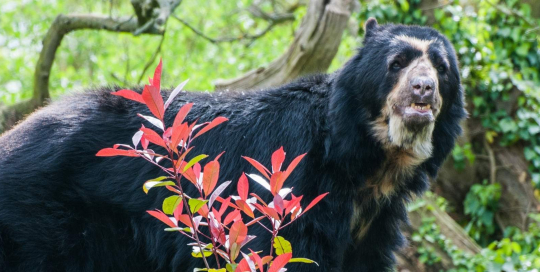
ClimateTrade and Terrasos to jointly promote Voluntary Biodiversity Credits to bolster Habitat Banking and support effective biodiversity conservation. The Bosque de Niebla-El Globo Habitat Bank in Colombia is the first in the world dedicated to the conservation of remaining native species in the High Andes  Voluntary Biodiversity Credits can be acquired both by individuals and by companies looking to generate a positive and effective contribution for the conservation of threatened ecosystems and general biodiversity It is now possible to purchase Voluntary Biodiversity Credits generated from El Globo Habitat Bank through ClimateTrade, with each credit corresponding to 30 years of conservation and/or restoration of 10m2 of the Bosque de Niebla, home of threatened species such as the spectacled bear (Tremarctos ornatus), which is currently classified as “vulnerable”, the yellow-eared parrot (Ognorhynchus icterotis), and the black-and-chestnut eagle (Spizaetus isidori), two endangered bird species.  Valencia and Medellín, May 20, 2022: On the occasion of International Day for Biological Diversity, ClimateTrade, the first blockchain-based climate marketplace and Terrasos, Latin American leader in the development and operation of biodiversity conservation and habitat banking projects, have joined forces to promote the conservation of highly endangered ecosystems through the commercialization of innovative Voluntary Biodiversity Credits (VBCs). VBCs allow companies to meet their decarbonization and digitization targets while becoming “nature-positive” by aligning their operations with biodiversity and ecosystem conservation. The latest UN Environmental Program (UNEP) Adaptation Gap Report concluded that even though three out of four countries currently have adaptation plans in place for the current climate and health emergencies we are facing, the financing and implementation of these actions are much below what is necessary. This is even more the case when the plans don’t include a strong focus on conserving nature and biodiversity. Today, less than 17% of the planet’s natural areas are protected, and biodiversity is experiencing an unprecedented global decline, with an extinction rate over the past 50 years 1,000 times higher than what is considered normal. There are no longer any excuses not to protect biodiversity, particularly now that we have experienced first hand one of the dramatic impacts of its loss: zoonosis pandemics such as COVID-19. According to a paper published in Nature, it would have been possible to avoid the pandemic through an inversion of US$31 billion into measures including biodiversity protection. Instead, the economic cost of the pandemic – without even considering the terrible human cost – has been close to US$15 trillion. Based on this, it is urgent and mandatory to focus not just on biodiversity conservation, but also on its effective restoration, to comply with natural conservation goals and the international targets included in the 2030 Agenda and the Paris Agreement. It is also necessary for an efficient, just and inclusive recovery post-COVID-19. Habitat Banking by Terrasos Terrasos’ Habitat Banking Projects, backed by the Inter-American Development Bank’s (IADB) Natural Capital Lab, are nature-based solutions through which measurable biodiversity gains can be achieved, thanks to a payment for ecosystem services mechanism that allows projects to achieve efficiency and quality in their conservation actions. Additionally, Habitat Banking promotes local economic development and adaptation to climate change, which makes them a great solution to achieve resilience in the face of our current planetary crisis. ClimateTrade’s Distributed Ledger Technology (DLT) makes it possible to overcome various conceptual and technical obstacles around the sale of VBCs, such as the lack of consensus on how to treat intervention or responsibility around nature conservation between communities, NGOs, governments and companies. It also adds clarity around the rules of the Protocol for the Emission of Voluntary Biodiversity Credits (Beta version) developed in the context of the Partnership for Forests to overcome the lack of trust resulting from years of misallocation of ecosystem and forest conservation financing going to the all-powerful voluntary carbon market. The Protocol for the Emission of Voluntary Biodiversity Credits (Beta version) is an open-access document led by Terrasos, looking to promote exceptional conservation projects by clarifying the requirements for their design and implementation, as well as the mechanisms for the registration, measurement and emission of Voluntary Biodiversity Credits from areas with great ecological value in a sustainable and permanent way. The Bosque de Niebla – El Globo Habitat Bank, also called the Spectacled Bear Habitat Bank, is the first of its type to emit Voluntary Biodiversity Credits, each corresponding to 10 m2 of forest in the Bosque de Niebla preserved and/or restored for 30 years. This is a high-priority ecosystem for conservation, since it provides important ecosystem services related to water management, carbon sequestration and nutrient cycles. This particular conservation initiative involves a 345 hectare forest extension, home to more than 290 bird species, 32 types of reptiles and 76 mammal species. Among these, 71 are endemic species and 20 are currently endangered. More than 6 water sources spring from the Bosque de Niebla, supplying local aquaducts and headwaters that are key to local development. As a water hotspot and large ecological corridor, this Habitat Bank is crucial for climate change adaptation and mitigation. Measurable biodiversity gains The purchase of a VBC is a way to give back to nature and ensure positive impacts for 30 years, since each credit represents 30 years of measurable biodiversity gains in this conservation project. For this Habitat Bank, ech VBC is priced at US$30, corresponding to 10 m2 of forest. Francisco Benedito, Co-Founder and CEO, comments: “Biodiversity credits, which represent long-term initiatives, will be a game changer for biodiversity conservation. By being truly focused on generating longlasting and permanent results, they allow companies to understand, for instance, the real cost of digitization, which requires large quantities of minerals, affecting ecosystems and biodiversity. Knowing and accurately understanding the additionality of conservation will also generate trust among the impact investment community, which will be able to provide more funding to SMEs and conservation NGOs.” About ClimateTrade ClimateTrade is a blockchain-based climate marketplace facilitating carbon offsetting and decentralized climate finance. On the ClimateTrade platform, companies looking to offset their carbon footprint get direct access to climate-regenerative projects around

Oaxaca wind project
ClimateTrade News

MAPFRE offsets 15,400 tCO2 through Mexico wind project

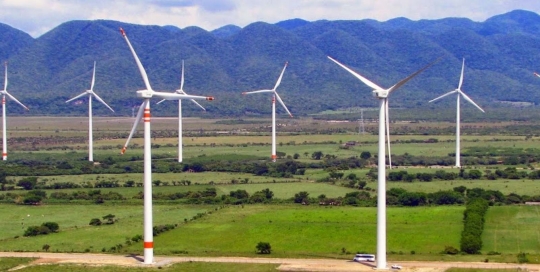
The purpose is to contribute to clean energy production and offset part of MAPFRE’s carbon footprint.  The CO2 offsetting transaction was conducted on ClimateTrade’s climate marketplace, which specializes in carbon offsetting projects.  The insurance firm selects environmental and social projects to offset the emissions it cannot reduce.  In 2021, MAPFRE met its target of being a carbon-neutral company in Spain and Portugal, and is now looking towards its 2030 goal: carbon neutrality across the Group.  Madrid, May 9th, 2022: MAPFRE has offset 15,400 tons of CO2 through the Oaxaca IV Wind Project, located in the Itsmo de Tehuantepec region, in the state of Oaxaca, Mexico. Thanks to said facility, which is part of one of the largest wind energy complexes in Latin America, the insurance firm has offset 79% of the carbon emissions released in Spain and Portugal in 2021. The initiative is part of its Corporate Environmental Footprint Plan 2021-2030, through which the insurance firm selects environmental and social projects to offset the emissions it cannot reduce. The emissions offsetting transaction was conducted through ClimateTrade, a blockchain-based climate marketplace, which made it transparent and issued a CO2 emissions offsetting certificate. The Oaxaca IV Wind Project is part of the Oaxaca Wind Complex operated by Acciona, where energy for 700,000 Mexican homes si being produced, and where educational and community support activities are being promoted. Thanks to this projects, 670,000 tons of CO2 emissions are avoided every year. Reforestation and decarbonization This carbon offsetting project in Mexico is in addition to the ‘MAPFRE Forest’ project, created in 2021, which includes all of the multinational’s reforestation activities, aiming to preserve biodiversity and natural capital and to create carbon sinks in the areas where it operates. Thanks to this project, the multinational has planted a total of  6,541 trees in Spain and Portugal, which will absorb 4,000 tons of CO2 from the atmosphere, offsetting 21% of MAPFRE’s emissions in these countries. Strict commitments In 2021, MAPFRE met its objective to be a carbon-neutral company in Spain and Portugal. For 2030, it is committed to reducing its carbon footprint by 50% compared to 2019, and to achieve carbon neutrality in all its countries of operation. By 2050, MAPFRE will raise its sustainability expectations, as a signatory to the Net Zero Insurance Alliance, with the goal of achieving net zero GHG emissions by 2050, meaning zero net emissions in its insurance and reinsurance portfolios.

mandatory carbon market
ClimateTrade News

ClimateTrade enters mandatory carbon market thanks to EEX admission

ClimateTrade is now operational in the EU’s mandatory carbon market (EU ETS) after completing its admission with EEX. Valencia, April 7, 2022 – ClimateTrade, the world’s first blockchain-based climate marketplace, is now operational in the European Union’s mandatory carbon market after completing its admission with the European Energy Exchange (EEX). From now on, buyers and sellers of EU allowances (EUAs), the carbon credits tradable under the EU Emissions Trading Scheme (EU ETS), can conduct transactions on the ClimateTrade marketplace, leveraging its agile digital platform for efficiency and transparency. ClimateTrade connects climate mitigation project developers directly with companies looking to offset their carbon footprint, and uses blockchain technology to ensure the end-to-end traceability of carbon credits. The company has facilitated the offset of more than 2 million tons of CO2 on the global voluntary carbon market since its inception in 2017. The EEX admission marks its first entry into mandatory carbon markets, making it the first and only company in Europe facilitating carbon offsetting in both the voluntary market and the EU ETS through blockchain. Francisco Benedito, ClimateTrade’s co-founder and CEO, comments: “Having the ability to operate in the EU’s mandatory carbon market is a crucial part of our strategy to power gigaton decarbonization, and we are very proud of this achievement. We chose EEX for being the leading energy exchange providing secure, successful and sustainable commodity markets worldwide.” “We’re delighted to welcome ClimateTrade based in Valencia as a new participant. We look forward to building markets together with them. A warm welcome from the whole EEX team,” says Carlos Miguel Urro, EEX Senior Sales Manager for Southern Europe. Driving impact and efficiency in the EU ETS The EU ETS is the world’s biggest mandatory carbon market, and plays a significant role in influencing the development of others around the world. But the urgency of the climate crisis, the growth of decarbonization ambitions and unexpected power market shocks are placing unprecedented pressure on this system.  In the white paper A 2030 outlook for Europe’s mandatory carbon market, launched today to commemorate its admission at the EEX, ClimateTrade analyzes established targets, recent policy adjustments and external drivers to predict the evolution of the EU ETS, and shares its vision for an efficient and impactful mandatory carbon market. The white paper is available to download for free here.

Banco Sabadell
ClimateTrade News

Banco Sabadell moves forward with carbon offsetting in alliance with ClimateTrade

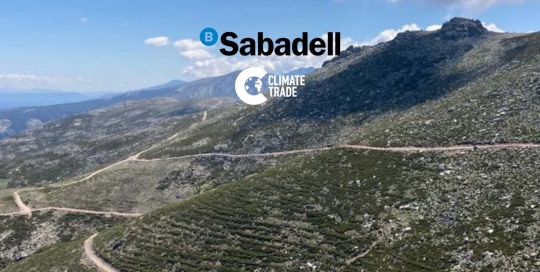
Banco Sabadell has teamed up with ClimateTrade to offset the CO2 emissions associated with its operations in 2021, by investing in forest projects in Spain. Banco Sabadell is advancing in its sustainability commitment by focusing on reducing and offsetting its own carbon emissions, as well as supporting clients with sustainable solutions and consulting for their environmental transition. In 2021, the bank complemented its action plan with the offsetting of its carbon footprint via investment in carbon dioxide mitigation projects that generate positive impact in their communities of operation. Banco Sabadell approved the offsetting of 3,632 tons of CO2, representing emissions from scope 1, 2 and 3 (relating to business travel), through investment in Spanish project certified by the Ministry of Ecological Transition (MITECO). With this initiative, Banco Sabadell bets on three forest projects, two of which are in Galicia, specifically in Parada de Achas (1,083 tons of CO2) andLaza – Touza (151 tons of CO2). The third is a reforestation project based on sustainable forest management (2,398 tons of CO2), located in the Sierra de Gredos (Ávila) and being developed in synergy with the Regional Park and the Natura 2000 network. Ana Ribalta, Director of Sustainability at Banco Sabadell, commented: “This is another example of how Banco Sabadell is aligning its activities to the Paris Agreement. It forms part of our sustainability strategy, which revolves, among other things, around our commitment to keep making progress to reduce our own emissions and to reach neutrality in all our operations.” The offsetting of 2021 emissions is one amongst a set of measures the bank has adopted to keep reducing its own carbon footprint, including the use of renewable energy since 2015, eco-efficiency measures and waste and material consumption reduction plans for water, paper and plastics. All these initiatives serve to strengthen the bank’s existing commitments as a member of the main international alliances for a sustainable and carbon-neutral economy, through frameworks such as the UN’s Responsible Banking Principles, the Collective Commitment to Climate Action or the Net-Zero Banking Alliance by UNEPFI.

Other Categories

Calculate carbon footprint ClimateTrade
Carbon Markets

How to calculate the carbon footprint of your company?

With ClimateTrade, organizations can easily calculate their carbon footprint. Faced with the heated discussion about the climate crisis and the urgency of taking effective actions to reduce the consequences of global warming, many companies are beginning to work on their ESG (Environmental, Social and Government) objectives. Among which is the “calculation of the carbon footprint”, which allows them to visualize a clear panorama of the impacts caused to the environment resulting from their business models. Calculate carbon footprint In a net zero world, every company will be required to calculate and offset its carbon footprint via different CO2 emissions offsetting projects. In many countries, large companies in polluting sectors are already asked to do so by law, and by the end of this decade, this requirement will be extended to many more countries, sectors, and types of companies. In other words, now is the time to prepare for this obligation.  Do you need help to calculate the carbon footprint of your company? Fill in the form and a ClimateTrade expert will contact you. What is the carbon footprint? The carbon footprint is the sum of all the greenhouse gases a person, company or even country releases into the atmosphere, expressed in CO2 equivalent. These emissions are responsible for global warming, and as such, they need to be addressed in the fight against climate change. This is why many governments are putting a limit on the amount of emissions companies can produce, which is often combined with a tax on carbon. Many countries and companies have pledged to be net zero by 2050, which means that all their carbon emissions will be offset, and none will enter the atmosphere and destabilize the climate. Calculating the carbon footprint of a company means assessing its impact on the climate. It is a necessary step in combating climate change at company level. Methodology to calculate CO2 emissions Whatever your sector is, it is crucial to follow standard methodology to calculate your carbon footprint. This will ensure you are aligned with industry best practices, and make it easier to report and offset your emissions. Greenhouse Gas Protocol The most widely used methodology to calculate carbon footprint, whether manually or through a carbon footprint calculator, is that of the Greenhouse Gas Protocol (GHG Protocol). The first edition of this standard was published in 2001 after a decade of international cooperation. In 2016, 92% of Fortune 500 companies reported using this standard for carbon emissions calculation. The GHG Protocol offers several relevant methodologies: The Corporate Accounting and Reporting Standard is its generic guidance for companies and other organizations preparing a corporate-level GHG emissions inventory; the Corporate Value Chain Standard focuses on scope 3 calculation and reporting; and the Product Life Cycle Standard can be used to understand the full life cycle emissions of a product and focus efforts on the greatest GHG reduction opportunities. Emissions classification to calculate carbon footprint  With this protocol, emissions can be classified into three areas: Scope One: Direct GHG Emissions Scope 1 emissions are those generated by a company’s own operations. For instance, for oil and gas companies, scope 1 represents a very large share of the carbon footprint: their core activities of drilling, extracting and refining petrol and natural gas release large amounts of greenhouse gases into the atmosphere. On the other hand, service-oriented companies such as banks and financial institutions tend to have small amounts of scope 1 emissions, since they work in offices and don’t use polluting processes to make their products. To calculate your scope 1 emissions, think about what you and your employees do on a daily basis. Where do you work (office, factory, field, etc.)? What do you do? How polluting are your daily activities? Scope Two: Indirect GHG emissions associated with electricity These are indirect GHG emissions generated by electricity, process heat or cold, or steam used in processes, as well as transportation. They can begin to be counted from the invoices of the energy supply companies with the breakdown of the kilowatt-hours, therms or cubic meters that they supply. All sectors require electricity to operate, so all companies need to calculate scope 2 emissions. Start with your power supply: how much of it comes from renewable sources, and how much from fossil fuels? How much power do you use for your operations on a yearly basis?  This will help you assess how much of your carbon footprint comes from electricity. The same exercise applies to heating or even cooking: companies often use natural gas for these activities, so it is important to calculate the emissions related to them. Then, look at transportation: does your company operate a fleet? Do your vehicles have combustion engines or are they electric? What kind of distance do they drive every week, month or year? This information will allow you to calculate the emissions related to the transportation fuel you use for your operations. Scope Three: Other indirect emissions Scope 3 emissions can be considered “out of your control”: they include the emissions generated by your providers and by your clients in the lifecycle of your product or service. For instance, going back to oil and gas companies, while the extraction and refining of the raw material belongs to scope 1, the combustion of these products in everyday activities such as driving or cooking are part of their scope 3. This is why the general carbon footprint calculation methodology includes scope 3: companies have to make changes and incentivize decarbonization throughout their supply chains. What to include in the Scope 3 carbon footprint of an organization?  In particular, it is recommended to include: emissions from the means of transport used by workers between their residence to their workplace emissions from business trips by executives or middle managers, especially flights, trips by private or rented car, hotel stays, boat or ferry trips emissions from outsourced computing services, such as cloud services the emissions of the logistics companies collecting or delivering the products  It is worth noting that Scope Three

Registros huella de carbono España
Carbon Markets

How do carbon footprint registries work in Spain

Several Spanish regions have created corporate carbon footprint registries to encourage emissions offsetting and contribution to local sustainability projects. Catalonia was the first in 2015 to encourage companies to report their emissions voluntarily. Andalucia followed in 2020 by setting up a voluntary registry with several new features, among which a connection to the State Ministry’s registry and the promotion of offsetting via marine projects (known as Blue Carbon). After that, the Balearic Islands made carbon footprint declaration and periodic verification mandatory for companies of more than 50 employees in 2022. Finally, the Canary Islands are now replicating Andalucia’s model with a voluntary registry for entities that choose to declare their carbon footprint. Catalonia: Voluntary corporate reporting since 2015 The voluntary agreement program for the reduction of greenhouse gas emissions (GEI) is a tool promoted by the Catalan Climate Change Office (OCCC) for those looking to make a voluntary GHG reduction commitment that goes further than what is required by law. Through the agreement, signatory organizations commit to follow their GHG emissions and establish reduction measures annually. Since 2015, these organizations have communicated their GHG emissions data to the OCCC annually, as well as their reduction measures. With this data, the OCCC creates a yearly analysis and presents it as a report with infographics with information about the type of organizations reporting, how many and what kind of measures they have put in place, as well as the global yearly variation in emissions. Andalucia: The first system connected to the Ministry  The Andalucian System for Emissions Offsetting (SACE), is a voluntary set of measures created in 2020 to fight climate change and promote the transition to a new energetic model in Andalucia. It provides the corporate sector with the opportunity and the means to actively participate in the fight against climate change. Emissions reduction goals can be achieved partially or entirely through emissions offsetting, which in this system is represented by absorption units (UDA) generated by offsetting projects or self-offsetting of emissions. As a reflection of their profound collaboration, the Agriculture, Ranching, Fishing and Sustainable Development Council and the Ministry for the Ecological Transition and Demographic Challenge have created a simplified system for declaring carbon footprint on both SACE and on the Ministry’s carbon footprint, offsetting and capture project registry. This way, organizations that choose to declare their footprint in both registries can request to do so through SACE. SACE includes: Emissions report: self-assessment of emissions via a calculation tool provided by SACE Reduction plan: definition of a series of actions to reduce emissions Plan execution: achievement of the actions defined in the plan Offsetting: emissions that cannot be reduced can be offset through offsetting projects or self-offsetting Carbon absorption projects can include forestation, reforestation, restoration or conservation of existing forest areas, coastal ecosystems, meadows and Mediterranean forests, wetlands, marine vegetation or phanerogams and any other natural space, as well as projects aiming to protect or increase soil organic matter through agroforestry or agriculture. The difference between offsetting and self-offsetting depends on whether projects are located on public land (for offsetting) or on private land with authorization (for self-offsetting). Blue carbon innovation in Andalucia since 2021 The Andalucian ​​Climate Change Office (OACC) also allows blue carbon absorption projects. In the framework of the Life Blue Natura project, coordinated by the Agriculture, Ranching, Fishing and Sustainable Development Council, carbon deposits held in fields of Posidonia oceanica and in tidal marshes have been quantified. These coastal ecosystems have been capturing carbon from the atmosphere for millennia – this is what we call blue carbon. Andalucia features vast tidal marshes and marina phenogram prairies. Financing for restoration and conservation projects in these habitats is made possible by turning them into absorption projects for offsetting organizations’ greenhouse gas emissions. The region has developed fundamental tools such, as the Andalucian carbon standard for the certification of blue carbon credits, the carbon sequestration calculator and the Andalucian catalog of blue carbon projects where the first such pilot projects have been listed: one in the Bahia de Cadiz Natural Park, and another in the Cabo de Gata Natural Park. Balearic Islands makes carbon footprint registration mandatory in 2022  After a legislative phase in 2021, the region is currently building the registry. The Balearic Island government is set to make it mandatory for medium and large companies to register their carbon footprint, after calculating emissions and having them verified independently by September 30th, 2022. Bill 48/2021, which came into force at the start of 2022, creates the Balearic carbon footprint registry and establishes the obligation for companies with 50 employees or more working from the islands, as well as those with an annual turnover of over €10 million, to register with the autonomous community government Annual carbon footprint calculations and emissions reduction plans must be added to the registry to comply with the Balearic climate change mitigation targets. The system also allows companies to mention their chosen CO2 sequestration projects, but this isn’t mandatory. The rest of companies, as well as individual citizens, can also register voluntarily to provide the government with the most precise information about the islands’ emissions, allowing it to set up the mechanisms necessary for their reduction. The structure of the information stored in the Balearic registry will be compatible with the one in the State registry. Canary Islands’ carbon footprint registry  This will be a basic instrument to move towards decarbonization in the Canary Islands’ economy. All natural persons and legal entities can choose to register, though some will be obligated to do so by law. The information to register includes the annual calculation of the carbon footprint associated with activities in the Canary Islands, as well as data relating to emissions reduction plans and CO2 sequestration projects. Registry digitization: the next step The digital voluntary registry developed by Spain’s stock market operator BME and ClimateTrade, which was launched last February, will be key to the correct functioning of future voluntary carbon mechanisms, such as those mentioned above. On top of managing information

carbon removals
Climate Change News

IPCC confirms the importance of carbon removals to meet climate goals

The latest IPCC assessment report reminds us that we need to do much more this decade if we are to limit global warming to 2ºC, and presents the most efficient avenues to meet our climate goals: phasing out fossil fuels and using carbon removal methods in hard-to-abate sectors.