ClimateTrade News

ClimateTrade News

Hemp Carbon Removal Project
Climate Impact

ClimateTrade launches the Hemp Carbon Removal project

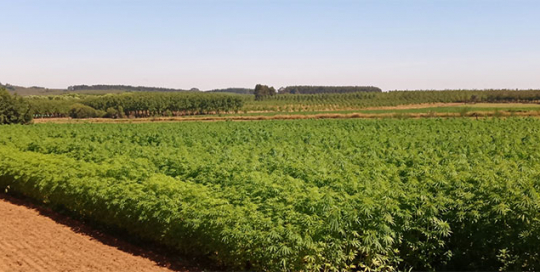
After having conducted a comprehensive assessment for several carbon sink solutions, ClimateTrade has finally decided that HEMP is the best innovated Nature-based Solutions (NbS). In partnership with Made In Hemp, from the technical side, Woodna Maderas Naturales, from the operational side, and for the analysis and test we are working with CETIM (Materials Technology Center), together, we have undertaken the first trial during 2021 in Galicia, Spain. ClimateTrade has opted for the Hemp Carbon Removals because we consider that they are a great opportunity to return wealth to rural areas and strengthen the social fabric, by being able to generate economic and ecological benefits through the agriculture of this new industry that regenerates the soil and can efficiently replace the materials derived from oil, cement and plastics among others. Thanks to biomaterials derived from hemp cultivation, we are also committed to carbon in setting (Carbon in setting is an innovative mechanism to reduce emissions while boosting business value) of our customers’ Scope 3, reducing net greenhouse gas emissions both through carbon capture and avoided emissions from products such as ‘hempcrete’ (hemp cement) for the construction industry or ‘hemp packing’ (hemp packaging) for the sales industry. In this first test plot, installed on the farm of the company Woodna Maderas Naturales in the municipality of Arzúa (Galicia), is characterized by having a humid temperate Atlantic climate not being necessary irrigation, we have planted two varieties of hemp registered in the European Union catalog with high potential for biomass production, with the aim of measuring carbon in total biomass. The test has been structured in strips where the varieties alternate with unplanted areas and with a total area close to half a hectare. This pilot test has been done following an experimental design that allows comparing hemp varieties in different environments and agroecological models. Following standard measurement methodologies, we manage to generate reference data that serve to monitor in the long term the ecological and climatic benefits generated by hemp. During the growth period, from late May to early September, we have conduced monthly monitoring of the plantation, by measuring number of plants, high and thickness in a designed area, and finally, before harvest, we have collected representative samples to measure carbon in total biomass. Currently waiting to get analysis results from CETIM.

the planet we love melia
ClimateTrade News

Meliá Hotels International on its path to beat climate change

In commemoration of the World Environment Day, Meliá Hotels International is launching  “The planet we love”,  in alliance with ClimateTrade. Both companies have worked hand in hand in order to put together a project that seeks to involve the hotel’s guests and clients in the fight against climate change.  It represents a fundamental step of the Meliá chain commitment to the environment and the transition to a low-carbon economy. What is “The Planet we love”? Customers of the MeliáRewards loyalty program will be able to exchange points for carbon credits certified by the United Nations in support of  selected projects in developing countries aiming at reducing greenhouse gas emissions. These projects are: Waste for Energy Project, in Brazil, for the reduction of methane emissions into the atmosphere and its transformation into non-polluting domestic energy for thousands of homes at risk. Oaxaca Wind Project, endorsed by AENOR and developed by Acciona, aims to promote new water and sustainable energy infrastructures to benefit more than 700,000 homes in Mexico, avoiding the emission of more than 670,000 tons of CO2, equivalent to the photosynthesis carried out by 33 million trees. “The planet demands commitments from both companies and consumers to move towards a low-carbon economy, the major challenge that we need to face in the 21st century”; said Gabriel Escarrer, Executive Vice President and CEO of Meliá Hotels International. The involvement of customers in its environmental commitments through this project is a new step forward in the integration of ESG criteria (Environmental, Social and Governance) in the Meliá Hotels International value chain, which has led the company to aim to reduce emissions by 51% before 2035 (Scope 1 and 2). “Offsetting the carbon footprint of travel requires that a positive impact is generated. The use of blockchain technology allows us to achieve a greater impact and also certify the destination of the funds. Compensating our travel is a game changer for the industry, as we neutralise the CO2 emissions caused by travel”,  stated our CEO, Francisco Benedito. Thanks to the alliance with Climatetrade, Meliá Hotels International becomes the first hotel company in the world to offer loyalty program members the possibility of getting directly involved in offsetting their carbon footprint by purchasing carbon credits assigned to certified and guaranteed projects.

algorand climatetrade
Blockchain Technology

The greenest blockchain technology: is it possible?

Algorand pledges to be the greenest blockchain and be carbon neutral thanks to the alliance with ClimateTrade. The Algorand network was designed from the ground up to minimally impact the environment. Because its consensus is not based on energy-intensive proof-of-work and requires minimal computational power or electricity, Algorand has been a leader in minimizing the environmental impact of blockchain technology. “We understand that the mechanics of measuring the environmental impact of a global, decentralized and widely used blockchain are nuanced and complex. That’s why we are teaming up with ClimateTrade to continue and double-down on our eco-conscious efforts.” said Silvio Micali, Founder of Algorand.  “Clean energy and addressing climate change are priorities for the United Nations, global organizations and governments alike. Algorand has a very low carbon footprint to begin with, and we are inspired by the leadership role the organization is taking to ensure the next generation of blockchain adoption is environmentally friendly,” said Francisco Benedito, CEO of ClimateTrade. How does Algorand offset its Carbon Footprint with Climatetrade? To achieve a carbon-negative network, Algorand and ClimateTrade will implement a sustainability oracle which will notarize Algorand’s carbon footprint on-chain for each epoch (a set amount of blocks). With its advanced smart contracts, Algorand will then lock the equivalent amount of carbon credit as an ASA (Algorand Standard Asset) into a green treasury so that its protocol keeps running as carbon-negative. Through this partnership, Algorand is able to leverage several projects of our marketplace that help to offset the low footprint of their network: The Southern Cardamom REDD+ project initiated by Wildlife Rescue and Wildlife Works, which protects the rainforest by avoiding more than 3 million tons of carbon emissions annually. The Vichada Gold Standard Climate Project which is aimed at reforestation in the Orinoco Department in Colombia. The Oaxaca Wind Project by Acciona which covers the electricity demand of 700,000 Mexican homes, avoiding the emission of 670,000 tons of CO2. The Sumatra Merang Peatland Project by ForestCO2 which aims to protect and restore the peatland ecosystem in Indonesia. With this alliance we not only work to achieve the carbon neutrality of Algorand but also to have a positive impact on the environment, which is how every innovative blockchain ecosystem should be in the future.

Untitled design (4)
ClimateTrade News

ClimateTrade is now a member of the largest Blockchain Association in the US

ClimateTrade has been chosen as a member for its commitment to responsibly building and investing in the next generation of digital services. It is a great pleasure to be part of the Blockchain Association, the largest association in the U.S. within the blockchain industry. We look forward to working closely with the Association and its members to help create a carbon negative network and contribute to the sustainable growth of this sector. The Blockchain Association is the alliance of  blockchain leaders advocating for the innovation and collaboration necessary to support American leadership of this industry. Its goal is to improve the public policy environment so that blockchain networks can thrive in the United States. The members of the association range from blockchain networks projects, trading platforms that allow users to exchange cryptocurrencies, and early stage investors that support the entire ecosystem. All of its associates have a substantial U.S. presence and a track record of regulatory compliance.  

Microalgae
Climate Change News

Meet the trees of the future: BioUrban’s microalgae reactors purify the air in large cities

BioUrban is a pioneering technology that absorbs carbon from the atmosphere and mitigates global warming. These 4-meter-high carbon sinks are capable of cleaning the air that 2,790 people breathe every day, or 40 tons of CO2 per year. Developed by Mexican company BiomiTech, the artificial tree is designed to be placed in spaces in the center of large cities that have high levels of pollution such as small parks, schools and hospitals. Within its structure, it contains microalgae reactors that absorb pollutant particles to feed on them and, after a natural process of photosynthesis, convert them into oxygen and biomass.  The first of these artifacts has been successfully installed in Mexico, specifically, in the capital of the Mexican state of Puebla. There, BioUrban has reduced pollution levels in one of the busiest areas of the city near the university. Now, ClimateTrade has partnered with BiomiTech to bring the technology to Spain. “The most polluting areas of large cities, structurally do not allow to hold a large number of trees in their spaces, and thanks to this new technology, CO2 capture is maximized and air quality is improved. Clearly, the installation of a BioUrban device is complementary to the development of other initiatives such as urban forests, ”says Francisco Benedito, CEO of ClimateTrade. “Cities like Madrid, Barcelona or Valencia suffer from high levels of pollution. With this initiative we intend to maximize the capture of CO2 and improve the quality of the air in our cities,” he adds. This technology is a nature-based solution to climate change that will allow the creation of a new circular bioeconomy capable of producing fuels from the pollution generated by our daily activities.

Other Categories

ClimateTrade Developers' Portal
Blockchain Technology

ClimateTrade Developer’s Portal: Carbon neutrality at your fingertips

New platform allows companies to integrate ClimateTrade’s API and Widget autonomously. ClimateTrade launches https://developers.climatetrade.com/, a developers’ portal allowing companies to integrate carbon offsetting services into their own channels autonomously. By making all API documentation available at the click of a button, this new platform streamlines and expands access to the ClimateTrade API and Widget for companies that want to give their customers the option to offset their carbon footprint. ClimateTrade’s developer solutions include: The ClimateTrade API, which helps companies calculate the carbon footprint of their products and services, and allows customers to visualize and offset it in one click by supporting climate action projects. The ClimateTrade Widget, an easy-to-integrate tool to allow the customers of small organizations to offset the carbon footprint of their purchases in just a few clicks. These solutions have already been successfully implemented by clients in sectors such as mobility, airlines, construction, e-commerce and financial services. Check out our use cases.  On top of the API and Widget readily available from the Developers’ Portal, ClimateTrade regularly works with clients to develop custom integrations for their needs. Most recently, Santander Bank integrated ClimateTrade’s carbon offsetting solution into its website and app, allowing clients to visualize and offset the carbon footprint of their card purchases and utility bills directly from their account.  ClimateTrade is a blockchain-based climate pioneer, aiming to empower large-scale decarbonization through constant innovation. The ClimateTrade marketplace allows companies to offset their climate impact by purchasing carbon, plastic and biodiversity offsets directly from certified projects. With the ClimateTrade API and Widget, clients can integrate these offsetting functionalities into their own platform, making their products climate-positive. ClimateTrade is also spearheading disruptive innovation around the digital certification of carbon mitigation projects and supporting the digitization of national carbon registries.All of ClimateTrade’s products, including the marketplace, API and Widget, are based on blockchain technology, making carbon offsetting transactions traceable and improving transparency in the famously opaque voluntary carbon market.

Corporate event
Carbon Markets

How to make your events carbon-neutral

Events are an important part of industry collaboration, but they come with a significant CO2 emissions footprint. Here is our guide to make your events carbon-neutral. The Meetings, Incentives, Congress and Events (MICE) sector has been through a lot in recent months. As the pandemic hit and lockdowns were implemented, almost all events had to move from in-person to online. In the past year, mass Covid-19 vaccinations helped the revival of physical gatherings, but travel and agglomeration rules remain very volatile. It is a tumultuous time for the industry, but that shouldn’t spare event organizers from having to reduce the environmental impact of their gatherings. As an example, the 2018 UN Climate Change Conference is estimated to have emitted around 55,000 tons of CO2, not counting the travel emissions from its more than 30,000 participants. As with every other sector, scrutiny is growing around the climate strategy of companies, and MICE professionals should also start moving toward carbon neutrality. Luckily, there are now many tools available to help calculate, reduce and offset the carbon footprint of events.   Calculate CO2 emissions There are four main areas to take into account in calculating the emissions associated with an event: travel, accommodation, venue and food.  How far do your speakers and attendees have to travel to come to your event, and how will they travel? To calculate GHG emissions from travel, you can divide your attendees in different categories: long-haul flight, short flight, bus, train or car ride, and count emissions based on the number of kilometres traveled. According to some estimations, travel can represent up to three quarters of an event’s carbon footprint, so this is the most important culprit. Then, it is time to look at accommodation for your event participants. Most people stay in hotels, but there are some differences in carbon emissions depending on the classification of hotels (a 5-star hotel tends to have a larger footprint than a 1-star hotel). Luckily, the hotel sector has made significant improvements in terms of energy efficiency: according to the Cornell Hotel Sustainability Benchmarking Index 2021, GHG intensity per square meter in hotels worldwide decreased by more than 6% between 2017 and 2019. But this is still an important element in the carbon footprint of events. The third question is: where are you having your event? A venue’s carbon footprint depends on its size, energy consumption and type of electricity it uses. Ask your venue provider about the place’s ratio of conventional versus renewable energy sources, and make sure you consider the season of your event when calculating energy use (winter and summer are generally more energy-intensive due to heating and cooling necessities). Last but not least, what kind of food are you serving? Animal products (particularly beef) have a larger carbon footprint than plant-based foods. On the other hand, buffets tend to lead to a lot more food waste than plated meals, which also impacts GHG emissions.   Reduce your footprint Now that you know the main culprits in the carbon footprint of events, it is time to look at ways to reduce it.  Considering the weight of travel in an event’s overall carbon footprint, it might be a good idea to consider a hybrid model, whereby most speakers and a small audience are present physically, but everything is available online to those who want to participate from home. This will not only reduce your carbon bill, but also tremendously increase your reach. Many events have experimented with this model successfully since the pandemic. Making your event hybrid also reduces the carbon footprint from accommodation, venue and food, since you will need to cater for fewer people. But you might also look for sustainable venues that use renewable electricity and implement energy efficiency measures. Finally, a plant-based menu is the best way to cut the emissions from the food you serve.    Offset emissions and contribute to projects worldwide But no matter how much you try to reduce the environmental impact of your event, it is likely that some emissions will be impossible to avoid. In order to propose a truly carbon-neutral event, you will also need to offset your remaining carbon emissions by financing mitigation initiatives such as reforestation projects or new renewable energy developments. ClimateTrade is a strategic carbon neutrality partner for the MICE sector. For instance, we recently collaborated with Algorand to offset the carbon footprint of the Decipher event in Miami, thanks to the offsetting of 627 tons of CO2 via reforestation projects in El Salvador, Colombia and the US on the ClimateTrade digital marketplace. The amount of emissions included in the calculation stemmed from the flights (international and national) of 450 attendants, road transportation, two nights’ accommodation, the materials used for the exhibition spaces, wifi devices, electricity consumption, catering and waste generated. Another example of event management best practice is that of the business association LIDE in Argentina. LIDE is compensating the carbon footprint of all its events and webinars since 2020 through the purchase of carbon credits via ClimateTrade. By doing so, it is contributing to various reforestation projects in Latin America.   ClimateTrade in the MICE sector  ClimateTrade is also developing strategic alliances with the MICE sector and the business travel industry. In May 2021, the Spanish Association of Business Travel Agencies (GEBTA), started offering new premium services to its end clients, thanks to ClimateTrade technology. Now, corporations committed to decarbonizing their activities and operations, can begin offsetting the carbon footprint of their business trips and MICE activities. This agreement marked a shift in corporate travel agencies’ corporate social responsibility strategies: from simply offering sustainability consulting services to their clients, that have begun implementing practical tools to enable them to offset their emissions on every trip. By doing so, these agencies are reinforcing their own sustainability commitments, and powering their clients’ strategies. ………………………… Contact our experts to begin planning your carbon-neutral event. ………………………… This article was written with the support of Francisco Martin, Head of Engineering at ClimateTrade and manager of the