Carbon Markets
What is carbon sequestration?
In the fight against climate change, carbon sequestration is a key concept. This article explains what this expression means exactly.

In the fight against climate change, carbon sequestration is a key concept. This article explains what this expression means exactly.

Regulation around carbon farming is maturing, with the EU’s carbon removal regulation proposal and the U.S’ Growing Climate Solutions Act.

As our window to act becomes ever smaller, what should be the top climate change priorities in 2023?

Azolla Projects and ClimateTrade have launched a carbon farming program to generate carbon credits in the Spanish agricultural sector.

Biodiversity credits are the latest tool in the climate action arsenal – but how do they work and what is their role in relation to the carbon market? Biodiversity protection and restoration is one of the key topics at COP27 in Sharm el-Sheikh, and for good reason. Ahead of the UN Climate Change Conference, WWF revealed the catastrophic effect of human activity on biodiversity: according to the Living Planet Report 2022, wildlife populations shrank by an average of 69% between 1970 and 2018. How is climate change affecting biodiversity? Climate change has been identified as one of the most significant threats to biodiversity in recent years. Rising temperatures, changing rainfall patterns, and increased frequency and intensity of extreme weather events such as hurricanes, droughts, and wildfires are already having a significant impact on global ecosystems and the species that inhabit them. Some of the effects of climate change on biodiversity include: Range shifts: species that move to cooler climates as their current habitats have become too warm for them, leading to animal extinctions if they cannot adapt to new habitats. Alterations in migration patterns: Climate change is affecting the timing of seasonal events such as flowering, bird migration, and insect emergence. This can disrupt the delicate balance of ecological interactions and result in cascading effects throughout the food chain. Coral bleaching: Warming ocean temperatures have resulted in widespread coral bleaching, where the colorful algae that live in the coral are expelled, causing the coral to turn white and ultimately die. Changes in phenology: The timing of seasonal events, such as when plants flower and when insects emerge, is shifting due to climate change. This can result in mismatches between species that rely on each other, such as pollinators and the plants they pollinate. Why is biodiversity essential for limiting climate change? Climate change is having a profound impact on biodiversity, and we need to implement strategies to address this urgent global challenge. Reducing greenhouse gas emissions are essential in protecting the planet’s ecosystems and the species that rely on them. If the loss of animal and plant life was not tragic enough, this level of biodiversity loss is hindering our efforts to curb climate change: biodiverse ecosystems like forests, peatlands and oceans are natural carbon sinks, and their efficiency is now at risk. What are biodiversity credits? Voluntary biodiversity credits, including the ones developed by Terrasos and ClimateTrade in May and recently recognized by the World Economic Forum, are economic units representing specific actions for biodiversity protection and restoration. In the case of Terrasos, the credits were generated from the Bosque de Niebla-El Globo Habitat Bank in Colombia, with the support of XM, IDB Lab and Partnership for Forest, with each unit representing 10 square meters of land protected for 30 years. Biodiversity credits are typically created through a certification process that verifies the environmental benefits of the conservation or restoration activities. These credits can then be sold on a market to other developers who need to offset the environmental impacts of their own projects. Biodiversity credits – a new way of funding nature protection The role of biodiversity credits was discussed this week during a World Climate Summit panel on carbon offset markets and their role for biodiversity, held in Egypt alongside COP27. As one of the panel speakers, ClimateTrade CEO Francisco Benedito explained that biodiversity credits are set to allow companies, individuals and governments to go beyond carbon neutrality and become “nature-positive”. “As a former banker I was always worried about how to fund sustainable projects for people without collateral. In a renewable energy project, the collateral is the energy that is set to be produced, for instance. But for biodiversity protection projects there is no collateral. This type of unit – biodiversity credits – is a new way of funding nature protection. Because we need to put money to work to avoid further species extinction,” he noted. Beyond the limitations of carbon markets David Antonioli, CEO of Verra and the panel’s moderator, pointed out that as carbon markets have evolved, their limitations have become clearer. “For instance, to make the REDD+ (reduction of emissions from deforestation and forest degradation) work, you need a plausible imminent threat for the forest, that’s the rationale for providing carbon credits. As you get further away from those threats, these projects still provide sustainable livelihoods but because they’re not located where the threat is, they find it difficult to receive carbon finance,” he said, suggesting that biodiversity credits may be able to fill that gap. Verra itself has started to develop a framework around biodiversity credits to ensure that these units can become complementary to the carbon market. Carlijn Nouwen, Co-Founder of the Climate Action Platform for Africa, gave the example of Gabon, a country with very low deforestation rates that cannot access REDD+ creditsm but is looking to monetize the protection of its biodiverse forest. She also emphasized the need to ensure fair compensation for ecosystem services such as biodiversity conservation in the development of these credits: “As we look at paying for biodiversity and ecosystem service credits, we want to make sure we go over and above the financial recognition of carbon credits. We need to innovate with integrity and hold those two things in the right balance to make sure we get equitable compensation for all ecosystem services.” Regulation and education to push demand When it comes to the sources of demand for biodiversity credits, regulation and education are pushing more and more companies towards this offering.” We know about the Task Force on Nature-related Financial Disclosures, 40% of which is about biodiversity. This is one example of how regulation and education are pushing more and more companies to care. People are starting to see that the biggest climate threat is around biodiversity loss. In fact, in this COP I have seen more people than ever trying to get involved in biodiversity conservation,” said Benedito. As to when the biodiversity credit market will reach the maturity of the
Action and implementation are key priorities at COP27. Luckily, fast and ambitious action is our daily commitment at ClimateTrade. Here are some of the milestones we have accomplished between COP26 and COP27. This year’s Conference of the Parties is fast approaching, and with climate change accelerating, stakeholders from all spheres of society have their eyes on concrete actions. COP27’s slogan is ‘Together for Implementation’, a clear sign that it is time to put words into practice. Where to find ClimateTrade at COP27 Request a meeting with our team in Sharm el-Sheikh At ClimateTrade, we’ve always believed in actions more than in words, and one of our core values is ambition: We want to change the world and that can only be done by thinking big. As a result, moonshots are our daily thoughts. In the year from COP26 to COP27, we have taken big steps in three key areas: the promotion of transparent carbon markets, the enhancement of climate finance, and the protection of nature and biodiversity. From COP26 to COP27: Transparent carbon markets Improving the transparency of carbon markets is our core purpose here at ClimateTrade. here are three ways in which we promoted this objective over the past year: Blockchain decarbonization First, we worked with Algorand to make this blockchain network and its entire ecosystem carbon-neutral. Algorand is already the greenest blockchain network, having reduced its energy use tremendously. In December last year, we launched the Green Treasury, a blockchain oracle providing Algorand and its developer community a platform for offsetting the carbon footprint of the entire Algorand network. Since then, we have also started working with several members of the Algorand ecosystem to help them achieve carbon neutrality. We believe that blockchain technology is key to making the voluntary carbon market as transparent as possible. On blockchain infrastructure, all transactions are traceable and immutable, which means double counting is virtually impossible. But this technology comes with a heavy carbon footprint, which could easily defeat its transparent sustainability purpose. By decarbonizing the blockchain ecosystem, we make sure that transparency doesn’t cause collateral damage. Digital Measurement, Reporting and Verification In February 2022, ClimateTrade and BME concluded a successful proof of concept (PoC) for the digital certification of carbon mitigation projects. The initiative laid the bases for digitizing the verification and certification process for projects that generate carbon credits, and for adding them to national registries. Our goal with this is to make the entire process more efficient and transparent, and to guarantee the quality of the carbon credit supply. Digital Monitoring, Reporting and Verification (D-MRV) is an end-to-end solution that guarantees the authenticity and traceability of carbon credits: project developers can register their mitigation in a public and traceable way, allowing all users to verify the integrity of data. This facilitates the transparent purchase of carbon credits and their automated cancellation. International Emissions Trading Association membership Finally, we recently joined the International Emissions Trading Association (IETA). Our membership allows us to be part of international efforts to create effective and transparent market-based trading systems for carbon emissions and advance the United Nations’ Sustainable Development Goals. From COP26 to COP27: Enhanced climate finance One of ClimateTrade’s missions is to direct flows of capital towards climate change mitigation. We believe that it is necessary to shift the global economy towards a sustainable model to truly protect the future of the planet. To this end, we have taken several key actions in the past year. More than 12,000 carbon offsetting transactions To date, ClimateTrade has facilitated the offsetting of more than 3 million tons of CO2, and since COP26 alone, more than 12,000 transactions have occurred on our marketplace, directing much needed funding towards climate-positive projects. Improved marketplace We have also made design and operational improvements to our climate marketplace, which is now being used by more than 11,000 users. The more people and companies use our marketplace, the more capital will be available for sustainable projects. International expansion Finally, we have opened new offices in Miami and Seoul and participated in more than 100 events to raise awareness about the need for decarbonization worldwide. As part of this thought leadership work, we have also published four different white papers and eBooks to support companies’ Net Zero strategies. From COP26 to COP27: Biodiversity and nature protection Climate action is about much more than just decarbonization; that’s why ClimateTrade has been working particularly hard in the past year to promote nature and biodiversity conservation. Voluntary Biodiversity Credits In May 2022, we joined forces with Terrasos to commercialize Voluntary Biodiversity Credits from the Bosque de Niebla – El Globo Habitat Bank on our marketplace. Each credit corresponds to 30 years of conservation and/or restoration of 10m2 of the Bosque de Niebla, home of threatened species such as the spectacled bear, the yellow-eared parrot, and the black-and-chestnut eagle. Since then, more than 100 credits have been sold on our platform, and this initiative has been recognized by the World Economic Forum. Nature-based solutions Our marketplace currently features more than 30 nature-based solution projects, which capture or avoid carbon through forest, soil and biodiversity protection. We make a constant effort to ensure that we offer carbon mitigation projects that also bring added biodiversity benefits. Blue carbon and regenerative agriculture As part of our research and development work, we have teamed up with several new partners to develop methodologies for blue and white carbon, as well as regenerative agriculture. One of these initiatives is the recently announced Albufera Blue Carbon, in which we are working with Valencia’s CE/R+S (Responsible and Sustainable Companies Association) to quantify the carbon mitigation potential of peatlands in the Valencian Community. To find out more about what we have been up to since COP26, check out our announcements page.
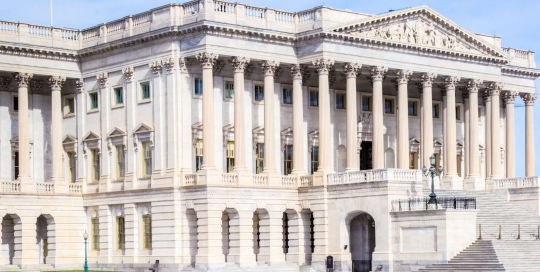
The United States Senate passed the Inflation Reduction Act yesterday (August 7), the most ambitious climate bill ever adopted in the country. The bill, which is expected to be signed into law in the coming weeks, allocates US$349B to climate and green energy projects, and could lead to an estimated 40% reduction in the country’s greenhouse gas emissions by 2030 (from a 2005 baseline). Climate budget distribution According to Moody’s Analytics, two-thirds of the US$349B will be distributed in the form of federal tax credits that create incentives to produce electricity from clean energy sources, invest in renewable energy technologies, and address climate change through carbon sequestration, renewable fuel production, and clean energy manufacturing. The other one-third includes government funds to support conservation practices that help to mitigate GHG emissions, particularly from agriculture and forestry, and adopt clean energy technologies and energy efficiency in housing. In reaction to the passing of the bill in the Senate, Francisco Benedito, CEO of ClimateTrade, comments: “The Inflation Reduction Act is a historic opportunity both for the United States and the world. The bill will have a tremendous impact in tackling the climate crisis. It will put the U.S. in a leadership position by taking action and reducing emissions up to 41% and generating over a million additional jobs by 2030. We at ClimateTrade are very excited about this bill and look forward to putting climate front and center for our business community.” Reducing electricity costs The bill also aims to reduce the cost of electricity and make the U.S. energy self-sufficient: in the first half of 2022, the rise in gas prices that resulted from the Ukraine-Russia war led to a dramatic increase in electricity prices throughout the U.S., between 13% (in the Southwest region) and 135% (in the New York region), according to the Energy Information Administration. In total, the bill sets aside US$739B of tax money to make life more affordable for Americans through energy investments and healthcare cost reduction measures. Much of the budget for this reform is expected to come from higher taxes on corporations. The Inflation Reduction Act was supported by all 51 Democrats and opposed by all 50 Republicans in the Senate. Climate regulations in the U.S. This is the latest in a series of attempts to regulate climate action in the United States. In March 2022, the Securities and Exchange Commission (SEC) published proposed rules for climate-related risk and greenhouse gas disclosure for listed companies in the country. It then opened a period of public consultation that was due to end in June, and expects to finalize the regulation by the end of this year. The proposed rules include the mandatory reporting of Scope 1, 2 and 3 emissions, as well as any material impacts climate-related risks can have on the company’s business, strategy and outlook, such as physical and regulatory exposures. ClimateTrade can help you navigate these regulatory changes and support your company’s transition to Net Zero. Get in touch with our experts to discuss your needs.
ClimateTrade is proud to be a pioneer and a thought leader in the fight against climate change. As such, we will be actively participating in Climate Week NYC, one of the world’s biggest climate events! Now in its 14th year, Climate Week NYC brings together the most influential leaders in climate action from business, government, and the climate community, in conjunction with the United Nations General Assembly and the City of New York, to create an ambitious platform to drive climate action, fast – the main purpose of the event’s organizer, the Climate Group. This year’s theme is ‘Getting it Done’, prompting climate leaders to put their plans into action around environmental justice, sustainable living, energy, nature, transport, resilience and other aspects of the ecological transition. Having recently opened our first U.S. headquarters in Miami, ClimateTrade will be participating in Climate Week NYC for the first time this year. We’re taking an incredibly active approach to the week, attending or speaking at more than 15 events, including a partnership with IETA’s North America Climate Summit, after ClimateTrade joined the International Emissions Trading Association in June. North America Climate Summit, September 20-21, the Westin New York As sponsors of this important event, ClimateTrade will be actively participating in discussions. Our CEO Francisco Benedito will be speaking at two panels on September 21: Panel 1 – 1pm: Using Technology to Assist in Reaching Decarbonization Objectives and Finding a Pathway to Net Zero In this panel organized by ClimateTrade, we will discuss the implementation of our carbon offsetting capabilities in Santander Bank’s app and website, and the role that technology can play in supporting the transition to Net Zero. Moderator: Michael Green – American Sustainable Business Network Speakers Francisco Benedito – CEO, ClimateTrade Marta Aisa – Head of Responsible Banking, Banco Santander Clara Arrocha – Global Cards Product Manager, Banco Santander Ben Gerber – CEO, M-RETS (Midwest Renewable Energy Tracking System) Panel 2 – 2.30pm: Voluntary Markets: A Stepping Stone on Pathway to Net Zero Based on new data from Ecosystem Marketplace, in 2022 the Voluntary Carbon Market (VCM) has soared to a record-breaking US$2B in market value, quadrupling in size from $500 million in 2020. Growth in the VCM continues to be fueled by a significant acceleration in corporate and government net zero commitments, with an increasing number of parties recognizing the vital role the VCM has to play in achieving ambitious and credible net zero goals. Two new global initiatives such as Integrity Council for the Voluntary Carbon Markets (IC-VCM) and the VCM Integrity Initiative (VCMIi) have been launched to scale the market while enhancing transparency and integrity. Hear from our panel of VCM participants, including independent standards and leading NGOs, as they explore the major developments and future outlooks for the VCM in a Paris-aligned world. Moderator: Andrea Abrahams – Managing Director, ICROA Scene Setter: Stephen Donofrio – Managing Director, Ecosystem Marketplace Speakers Annette Nazareth – Chair Integrity Council for the Voluntary Carbon Market (ICVCM) Lydia Sheldrake – Director of External Affairs, Voluntary Carbon Markets Integrity Initiative (VCMI) David Antonioli – CEO, Verra Brennan Spellacy – CEO, Patch Francisco Benedito – CEO, ClimateTrade Other Climate Week NYC events In addition to these two speaking roles, ClimateTrade’s CEO Francisco Benedito, Head of Partnerships Kat O’Brien and U.S. Business and Policy Advisor Michael Green will be attending a number of events during the week, including: The Nest Summit The Hub Live Women and Climate Celebration Fintech is Femme NYC Blockchain Association Crypto & Cocktails Transform to Net Zero: What Makes an Effective Climate Transition Action Plan 7th Annual Sustainable Investment Forum North America 2022 If you would like to set up a meeting with someone from the team at one of these events, please contact us.
ClimateTrade, the world’s first blockchain-based climate solutions provider, announces the hiring of Will Darrah as chief commercial officer.