
Climate Impact
United Nations SDG Progress Report, Special Edition Highlights.
UN Warns of Impending Global Shortfalls in Sustainable Development Goals Without Urgent Action. We can’t afford to wait – the clock is ticking.

UN Warns of Impending Global Shortfalls in Sustainable Development Goals Without Urgent Action. We can’t afford to wait – the clock is ticking.

By aligning ethics with profits, banks have realized that ‘doing the right thing’ is a win-win for financial institutions and are ready to support customers in their sustainability journeys.

Carbon pricing operates on the principle that the cost of emitting carbon dioxide (CO2) and other greenhouse gasses should be internalized into the economic system.

There has never been a more important time to advocate for global emissions avoidance.

In recent years, a revolutionary substance called Biochar has been generating considerable excitement in the scientific and environmental communities.

Climate tech is defined as technologies that are explicitly focused on reducing CO2 emissions, or addressing the impacts of global warming.

With the world’s largest climate event just around the corner and extreme weather events already causing mayhem around the globe, expectations are at their peak this year. Here are the five advances ClimateTrade expects from the event in Sharm el-Sheikh. 1. Full acceptance of the work of the Integrity Council for Voluntary Carbon Markets The Integrity Council for Voluntary Carbon Markets (ICVCM) is doing tremendous work to bring together the entire carbon ecosystem in setting clear guidelines on carbon credit quality and the functioning of the overall market. It is not easy work, and the Council’s attempt to define Core Carbon Principles (CCPs) has been met with resistance, with certain market players, such as Verra, noting that the process being put in place to guarantee the quality of carbon credits would be “unworkable”. We at ClimateTrade firmly believe in the necessity to build integrity in carbon markets, and that will not be possible without the buy-in of all market participants in initiatives like the ICVCM. In response to Verra’s statement, our co-founder and head of impact José Lindo said to Carbon Pulse: “In my opinion, we are overly focusing on the ‘how’, i.e carbon integrity processes, and rather we should start the debate from the ‘why’ i.e the purpose served by the CCPs, and reflect on legitimate requirements voiced by countries, scientists, environmental organizations, indigenous communities and, obviously, voluntary carbon market players.” For this reason, we expect the Conference of the Parties to reaffirm the role of the ICVCM in helping align carbon credit supply with quality and transparency expectations. 2. Final definition of the Paris Agreement’s Article 6 rules Last year in Glasgow, countries clarified some of the rules of Article 6, the part of the Paris Agremeent that governs the functioning of carbon trading between countries. For instance, it was decided that to avoid double counting, the country where the mitigation project is based holds the power to decide whether the credits should go towards its own Nationally Determined Contributions (NDCs) or be sold internationally, in which case it would be listed as a credit on its records. Negotiations also clarified which of the credits generated under the Clean Development Mechanism (the Paris Agreement’s predecessor) could be brought over to the new system, and set up some rules around taxing carbon trading transactions. But much remains to be defined for Article 6 to become operational. In particular, we expect this year’s conference to determine the mechanisms that will govern the use of Internationally Transferred Mitigation Outcomes (ITMOs), the units meant to be used for the international emissions trading between Parties to the Paris Agreement. 3. Regulating the registration of Nationally Determined Contributions (NDCs) Equally, the system for calculating and registering Nationally Determined Contributions (NDCs), the emissions reductions countries decide to achieve every five years, is currently not regulated, which can lead to wide variations in ambition between countries. ClimateTrade expects COP27 negotiations to define rules as to how these contributions are calculated, communicated and adjusted. 4. No changes in Paris Agreement signatories The current geopolitical landscape, particularly the Ukraine-Russia war, could put the future of the Paris Agreement at stake. As seen with the withdrawal of the U.S. from the agreement following the election of Donald Trump, governments have the potential to weaponize the world’s emissions reduction goals to achieve their political ambitions. We hope this year’s Conference of the Parties will see no changes in Paris Agreement signatories or faltering in their commitments. 5. Inclusion of biodiversity in carbon market discussions As our understanding of climate change grows and climate action matures, it is becoming evident that biodiversity protection should be part of the carbon equation. This year will be the 15th edition of the UN Biodiversity Conference, which has been run alongside the climate change conference so far. We expect COP27 to mark a turning point in the way countries approach these two areas of sustainability, and a recognition that the two are inextricably linked. ClimateTrade is already working to protect biodiversity in the same way carbon is offset (through voluntary biodiversity credits) and we believe the nascent nature protection credit system could learn a lot from the development of a working carbon market.
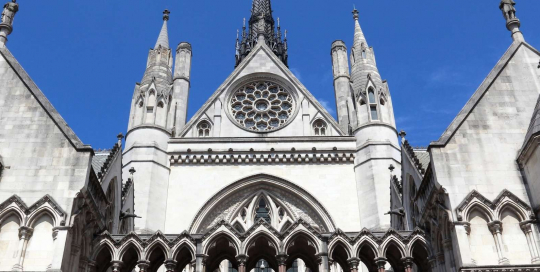
In a landmark ruling last week, the UK’s High Court found that the government has failed to present an adequate strategy to meet its 2050 net zero ambitions, and ordered it to outline a detailed emissions reduction plan. The lawsuit was brought to the High Court by NGOs Friends of the Earth, ClientEarth and the Good Law Project, which argued that the government was not holding up to its obligations under the Climate Change Act of 2008. The Climate Change Act made it the duty of the Secretary of State to ensure that the UK reduced its emissions by 100% compared to 1990 by 2050. According to the claimants, the government’s Net Zero Strategy, presented last year just ahead of COP26 meetings in Glasgow, did not include the data necessary to assess its effectiveness in curbing greenhouse gas emissions – a claim the court found justified. Now, the government has until April 2023 to submit a new Net Zero Strategy report outlining and quantifying the ways its net zero policies will achieve emissions targets. This is the latest in a series of court cases initiated by citizens and NGOs against governments and institutions for their lack of action to counter climate change: the UNEP Global Climate Litigation Report 2020 found that between 2017 and 2020, the number of such court cases went from 884 in 24 countries to at least 1,550 in 38 countries. What’s particularly interesting is that courts are increasingly finding governments guilty of not doing enough against climate change. In early 2021, a Paris court ruled that the French state had failed to take sufficient action in a case brought by four nongovernmental organizations, and was, as such, partially responsible for climate change. In a follow-up ruling last October, it ordered the government to bring the country’s carbon emissions down by about 15 million tons, to reach the target established in the first carbon budget (2015-2018) by the end of 2022. What does the UK climate ruling mean? The UK government now has to prepare a fresh Net Zero Strategy report that clearly quantifies emissions reductions. The strategy itself is unlikely to change, as it was not questioned by the court or even the claimants. But the addition of measurable data points will promote transparency and accountability in climate action. This follows a general trend to make climate targets more data-based, as opposed to aspirational, in order to combat greenwashing. The timing of this review is interesting, as the Ukraine-Russia war and the resulting threat of a natural gas shortage has led many European countries to prioritize energy security over decarbonization – by approving new fossil fuel developments at home. In fact, at least three new oil and gas or coal developments have been approved by the UK government since COP26. Data-based climate targets At ClimateTrade, we believe that blockchain technology is a helpful tool to develop climate targets aligned with measurable data, and to keep track of them over time and across borders. Indeed, blockchain is based on decentralized governance and data storage, which makes it inherently suited to the pursuit of consensus. Additionally, since all data stored on blockchain is immutable, it allows for full traceability in all transactions. All our solutions are based on blockchain infrastructure, supporting companies’ ESG reporting and transparency efforts and ensuring the real positive impact of their carbon offsetting activities. Contact us to find out more.

Climate conversations will continue to dominate as severe weather events increase and nature-based solutions are set to lead the way in carbon markets.