
Climate Impact

Climate Impact

Hemp Carbon Removal Project
Climate Impact

ClimateTrade launches the Hemp Carbon Removal project

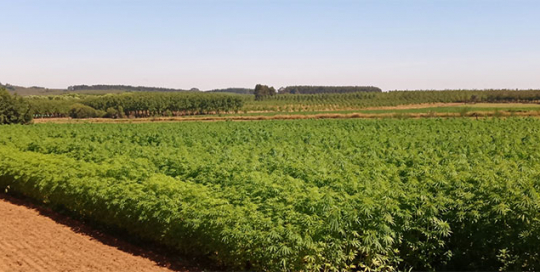
After having conducted a comprehensive assessment for several carbon sink solutions, ClimateTrade has finally decided that HEMP is the best innovated Nature-based Solutions (NbS). In partnership with Made In Hemp, from the technical side, Woodna Maderas Naturales, from the operational side, and for the analysis and test we are working with CETIM (Materials Technology Center), together, we have undertaken the first trial during 2021 in Galicia, Spain. ClimateTrade has opted for the Hemp Carbon Removals because we consider that they are a great opportunity to return wealth to rural areas and strengthen the social fabric, by being able to generate economic and ecological benefits through the agriculture of this new industry that regenerates the soil and can efficiently replace the materials derived from oil, cement and plastics among others. Thanks to biomaterials derived from hemp cultivation, we are also committed to carbon in setting (Carbon in setting is an innovative mechanism to reduce emissions while boosting business value) of our customers’ Scope 3, reducing net greenhouse gas emissions both through carbon capture and avoided emissions from products such as ‘hempcrete’ (hemp cement) for the construction industry or ‘hemp packing’ (hemp packaging) for the sales industry. In this first test plot, installed on the farm of the company Woodna Maderas Naturales in the municipality of Arzúa (Galicia), is characterized by having a humid temperate Atlantic climate not being necessary irrigation, we have planted two varieties of hemp registered in the European Union catalog with high potential for biomass production, with the aim of measuring carbon in total biomass. The test has been structured in strips where the varieties alternate with unplanted areas and with a total area close to half a hectare. This pilot test has been done following an experimental design that allows comparing hemp varieties in different environments and agroecological models. Following standard measurement methodologies, we manage to generate reference data that serve to monitor in the long term the ecological and climatic benefits generated by hemp. During the growth period, from late May to early September, we have conduced monthly monitoring of the plantation, by measuring number of plants, high and thickness in a designed area, and finally, before harvest, we have collected representative samples to measure carbon in total biomass. Currently waiting to get analysis results from CETIM.

Other Categories

decarbonize aviation
Climate Change News

Why is it so hard to decarbonize aviation?

The journey towards a Net Zero world is long and arduous – and it probably shouldn’t be done by plane. Aviation is considered one of the hardest sectors to decarbonize: read this article to find out why. Aviation’s contribution to climate change Global aviation, which includes passenger and freight planes, is responsible for almost 2% of greenhouse gas emissions, and 2.5% of CO2 emissions (around 1 billion tons in 2018). That’s much less than road transportation (11.9% of GHG) or even livestock (5.8%). But the effect of these emissions is made worse by the collateral impacts of flying. According to Our World in Data, “as well as emitting CO2 from burning fuel, planes affect the concentration of other gases and pollutants in the atmosphere. They result in a short-term increase, but long-term decrease in ozone (O3); a decrease in methane (CH4); emissions of water vapour; soot; sulfur aerosols; and water contrails. While some of these impacts result in warming, others induce a cooling effect. Overall, the warming effect is stronger.” In the end, the aviation sector is considered responsible for 3.5% of global warming. Alternative fuels to decarbonize aviation Fuel is the biggest contributor to the carbon footprint of air travel. Removing emissions from aviation fuel would contribute to a 65% reduction in carbon emissions from the sector, according to the International Air Transport Association (IATA). Sustainable Aviation Fuel Currently, the only alternative to kerosene, the preferred fuel for planes, is Sustainable Aviation Fuel (SAF), essentially a bioful that can be made from almost any type of waste (plants, cooking oil, used clothes, etc). While burning these products results in CO2 emissions, SAF presents a reduction in lifecycle emissions of up to 80% compared to traditional fuel. This is because it is partly made from plants, which absorb CO2 to grow, and partly because it avoids greenhouse gas emissions from landfill or waste treatment. Additionally, SAF cannot be made from materials that would divert land use from food production, or from the products of deforestation. One of the advantages of SAF is that it can be mixed with regular fuels to lower the carbon footprint of flights without having to modify planes’ engines. However, SAF can be up to eight times more expensive than kerosene, which makes it cost-prohibitive in many cases. Green hydrogen The other alternative to kerosene is green hydrogen, a technology that is still under development but would remove 100% of fuel-based emissions from air travel. Hydrogen is a zero-emissions fuel that can be produced from different sources: brown hydrogen is made by burning coal, defeating its zero-emissions purpose; and blue hydrogen is made from fossil fuel, with CO2 sequestration integrated into the process (this is currently considered the best option for reducing emissions at a reasonable cost). Green hydrogen is the real game-changer, as it is made through the electrolysis water using renewable energy. Its production has almost no impact on the environment, making it the most sustainable option for aviation.  Green hydrogen is still very expensive to produce, but its cost is reducing as renewable energy is becoming cheaper and demand for eletrolyzers is increasing. Hydrogen engines are different from fossil fuel engines, but airlines are already piloting hydrogen planes: Airbus’ ZEROe aims to be the first zero-emission commercial aircraft. It is estimated that hydrogen will enter aviation’s fuel mix in the 2030s. Carbon offsetting for aviation The aviation sector needs to support the development of zero-emission fuels through investment and demand signals, in order to make them more affordable. But in the meantime, the best option for the industry is to offset the carbon footprint associated with air travel. ClimateTrade offers an API that can be integrated into flight reservation platforms to give travelers the option to offset the carbon emissions of their flights. The API is connected to the ClimateTrade marketplace, where more than 60 certified carbon mitigation projects are available. All transactions are conducted through blockchain technology, giving customers end-to-end visibility of where and how their money is used. This traceability greatly improves both the positive impact of carbon offsetting, and the transparency of communication with travelers. Check out the pilot project we conducted with Iberia. For more information, visit our marketplace or contact us.

Article 6 COP26
Carbon Markets

Top 3 Article 6 questions that were answered at COP26

Earlier this month in Glasgow, the Conference of the Parties finally agreed on how international carbon credits should be exchanged under Article 6 of the Paris Agreement. After more than five years of negotiations, many of the draft’s sticking points were resolved. «Transparency, justice, consensus and interdependency, these are the pillars for the successful execution of Article 6 of the Paris Agreement. Let’s keep in mind that this is arguably the most ambitious article for climate action, since it manages to involve the private sector,” comments José Lindo, Co-Founder and Head of Impact at ClimateTrade. Here are the top 3 Article 6 issues that world leaders agreed on in Glasgow, and what these decisions mean for international carbon markets. Double accounting In theory, allowing countries to fund greenhouse gas (GHG) mitigation projects abroad in order to meet their own decarbonisation targets, or Nationally Determined Contributions (NDCs) is a great way to reduce the global cost of the transition. According to the International Emissions Trading Association (IETA), an independent, industry-led organization working to create an efficient emissions trading framework, this form of international cooperation could lead to savings of US$250 billion a year by 2030, compared to individual implementation. However, there needs to be a mechanism in place to prevent the emissions reductions deriving from such projects from being claimed twice, once by the funding country, and once by the host country, where the project is implemented. Without such a mechanism, environmental groups warn that up to 30% of global emissions are at risk of double accounting. The final text, on which 200 nations agreed in Glasgow, states that the host country (the country where the mitigation project is being carried out), has the power to decide whether the credits generated should go towards its own NDCs or be sold internationally. If a credit is authorised for sale, the host country has to add an emission credit to its record, while the purchasing country can deduct one, avoiding double accounting. However, this rule only applies to mandatory carbon markets, where countries have a national carbon register and accounting system. In the voluntary market, where companies look to offset their emissions outside the remit of national targets, there is currently no supervision to avoid double accounting. Traceability in voluntary markets is therefore crucial: this is why we at ClimateTrade use blockchain technology to reliably track and trace carbon credits. “We can’t tackle the climate crisis solely from the public sector. Our marketplace allows companies and other entities to offset their carbon footprint directly by selecting the most appropriate carbon credits from projects around the world. By supporting and promoting these projects, we also provide better living conditions to their local communities and generate a direct impact on the environment, fostering the regeneration of the planet’s natural balance and helping to mitigate climate change. And thanks to blockchain technology, we can effectively guarantee that the carbon credits are cancelled in their corresponding registries, and that the money paid in the transaction goes directly to the project source,” adds Lindo. CDM integration In 1997, 84 countries signed the Kyoto Protocol, which included a Clean Development Mechanism (CDM) allowing GHG emissions trading between countries. But since the Paris Agreement, signatories argued over whether emissions reductions achieved through the CDM should be allowed to continue to generate carbon credits under the new framework. Countries that were against this provision argued that it would diminish the impact of Paris goals, whereas those that defended it said it would reduce the cost of the transition, since these projects are already paid for.  The final rulebook states that offsets generated under the CDM since 2013 can be carried over to the new system. This cut-off date has been heavily criticized: according to research by Climate Analytics, it will allow a global rise in emissions of 320 million tons of CO2 — the equivalent of the 320 million offsets generated since 2013. Carbon trade tax Article 6 mentions the creation of a centralized carbon trade mechanism to replace the Kyoto Protocol’s CDM. This mechanism will be supervised by “a body designated by the Conference of the Parties”, most likely the UN. Transactions belonging to this scheme will be taxed to cover administrative costs, but also to support more vulnerable countries in their decarbonisation efforts, via the Adaptation Fund.  Before Glasgow, there was a degree of uncertainty around which transactions would be taxed, as some countries were asking for the tax to be extended to any voluntary emissions transfer between countries. Doing that would have placed centralized and bilateral trading schemes on a level playing field, avoiding a preference for transactions outside the supervised mechanism. It would also have increased the proceeds available for climate financing in vulnerable countries.  But in the end, the Conference of the Parties has decided that only the transactions conducted via the centrally supervised mechanism would be taxed, at a rate of 5%. More about carbon markets Carbon markets as they are now have raised doubts amongst climate activists, countries and companies, and their fears are justified if we don’t start talking about a fair price for carbon and ensuring that funds reach the right countries and their communities. The carbon market can be improved, as can government transparency and. tax systems around these transactions. As a member of the Taskforce on Scaling Voluntary Carbon Markets, ClimateTrade has participated in structuring the Core Carbon Principles. We’ve also worked on the ICC Carbon Pricing Mechanism as representatives of ICC Spain (International Chamber of Commerce). ClimateTrade is the world’s leading climate marketplace. We help companies offset CO2 emissions and we support climate-positive projects to ensure a sustainable future for our planet. In other words, we are carbon market experts. Contact us to find out more.