
Climate Impact

Climate Impact

Voluntary Biodiversity Credits
Climate Impact

ClimateTrade and Terrasos jointly promote Voluntary Biodiversity Credits to support biodiversity conservation

ClimateTrade and Terrasos to jointly promote Voluntary Biodiversity Credits to bolster Habitat Banking and support effective biodiversity conservation. The Bosque de Niebla-El Globo Habitat Bank in Colombia is the first in the world dedicated to the conservation of remaining native species in the High Andes  Voluntary Biodiversity Credits can be acquired both by individuals and by companies looking to generate a positive and effective contribution for the conservation of threatened ecosystems and general biodiversity It is now possible to purchase Voluntary Biodiversity Credits generated from El Globo Habitat Bank through ClimateTrade, with each credit corresponding to 30 years of conservation and/or restoration of 10m2 of the Bosque de Niebla, home of threatened species such as the spectacled bear (Tremarctos ornatus), which is currently classified as “vulnerable”, the yellow-eared parrot (Ognorhynchus icterotis), and the black-and-chestnut eagle (Spizaetus isidori), two endangered bird species.  Valencia and Medellín, May 20, 2022: On the occasion of International Day for Biological Diversity, ClimateTrade, the first blockchain-based climate marketplace and Terrasos, Latin American leader in the development and operation of biodiversity conservation and habitat banking projects, have joined forces to promote the conservation of highly endangered ecosystems through the commercialization of innovative Voluntary Biodiversity Credits (VBCs). VBCs allow companies to meet their decarbonization and digitization targets while becoming “nature-positive” by aligning their operations with biodiversity and ecosystem conservation. The latest UN Environmental Program (UNEP) Adaptation Gap Report concluded that even though three out of four countries currently have adaptation plans in place for the current climate and health emergencies we are facing, the financing and implementation of these actions are much below what is necessary. This is even more the case when the plans don’t include a strong focus on conserving nature and biodiversity. Today, less than 17% of the planet’s natural areas are protected, and biodiversity is experiencing an unprecedented global decline, with an extinction rate over the past 50 years 1,000 times higher than what is considered normal. There are no longer any excuses not to protect biodiversity, particularly now that we have experienced first hand one of the dramatic impacts of its loss: zoonosis pandemics such as COVID-19. According to a paper published in Nature, it would have been possible to avoid the pandemic through an inversion of US$31 billion into measures including biodiversity protection. Instead, the economic cost of the pandemic – without even considering the terrible human cost – has been close to US$15 trillion. Based on this, it is urgent and mandatory to focus not just on biodiversity conservation, but also on its effective restoration, to comply with natural conservation goals and the international targets included in the 2030 Agenda and the Paris Agreement. It is also necessary for an efficient, just and inclusive recovery post-COVID-19. Habitat Banking by Terrasos Terrasos’ Habitat Banking Projects, backed by the Inter-American Development Bank’s (IADB) Natural Capital Lab, are nature-based solutions through which measurable biodiversity gains can be achieved, thanks to a payment for ecosystem services mechanism that allows projects to achieve efficiency and quality in their conservation actions. Additionally, Habitat Banking promotes local economic development and adaptation to climate change, which makes them a great solution to achieve resilience in the face of our current planetary crisis. ClimateTrade’s Distributed Ledger Technology (DLT) makes it possible to overcome various conceptual and technical obstacles around the sale of VBCs, such as the lack of consensus on how to treat intervention or responsibility around nature conservation between communities, NGOs, governments and companies. It also adds clarity around the rules of the Protocol for the Emission of Voluntary Biodiversity Credits (Beta version) developed in the context of the Partnership for Forests to overcome the lack of trust resulting from years of misallocation of ecosystem and forest conservation financing going to the all-powerful voluntary carbon market. The Protocol for the Emission of Voluntary Biodiversity Credits (Beta version) is an open-access document led by Terrasos, looking to promote exceptional conservation projects by clarifying the requirements for their design and implementation, as well as the mechanisms for the registration, measurement and emission of Voluntary Biodiversity Credits from areas with great ecological value in a sustainable and permanent way. The Bosque de Niebla – El Globo Habitat Bank, also called the Spectacled Bear Habitat Bank, is the first of its type to emit Voluntary Biodiversity Credits, each corresponding to 10 m2 of forest in the Bosque de Niebla preserved and/or restored for 30 years. This is a high-priority ecosystem for conservation, since it provides important ecosystem services related to water management, carbon sequestration and nutrient cycles. This particular conservation initiative involves a 345 hectare forest extension, home to more than 290 bird species, 32 types of reptiles and 76 mammal species. Among these, 71 are endemic species and 20 are currently endangered. More than 6 water sources spring from the Bosque de Niebla, supplying local aquaducts and headwaters that are key to local development. As a water hotspot and large ecological corridor, this Habitat Bank is crucial for climate change adaptation and mitigation. Measurable biodiversity gains The purchase of a VBC is a way to give back to nature and ensure positive impacts for 30 years, since each credit represents 30 years of measurable biodiversity gains in this conservation project. For this Habitat Bank, ech VBC is priced at US$30, corresponding to 10 m2 of forest. Francisco Benedito, Co-Founder and CEO, comments: “Biodiversity credits, which represent long-term initiatives, will be a game changer for biodiversity conservation. By being truly focused on generating longlasting and permanent results, they allow companies to understand, for instance, the real cost of digitization, which requires large quantities of minerals, affecting ecosystems and biodiversity. Knowing and accurately understanding the additionality of conservation will also generate trust among the impact investment community, which will be able to provide more funding to SMEs and conservation NGOs.” About ClimateTrade ClimateTrade is a blockchain-based climate marketplace facilitating carbon offsetting and decentralized climate finance. On the ClimateTrade platform, companies looking to offset their carbon footprint get direct access to climate-regenerative projects around
Gender equality climate action
Climate Impact

Gender equality for climate action

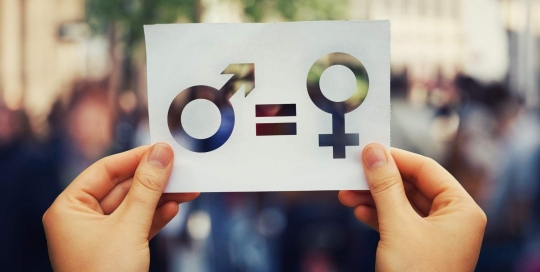
When it comes to combating climate change, women are a key part of the solution. In this article, we explore the importance of gender equality for climate action. March 8th is International Women’s Day, and throughout the month, many organizations increase their focus on supporting women in various ways. For the UN, this is also the month of Sustainable Development Goal 5 (SDG 5) relating to gender equality.  While some progress has been achieved in recent years, we are still very far from gender equality: worldwide, women still earn 24% less than men, and no country has managed to close this pay gap. Around the world, 750 million women and girls were married before the age of 18, and in 18 countries, husbands can legally prevent their wives from working. Women’s vulnerability to climate change Covid-19 has worsened gender inequality: new projections of global poverty by UN Women, UNDP and the Pardee Center for International Futures estimate that globally, 388 million women and girls will be living in extreme poverty in 2022 (compared to 372 million men and boys). ​​According to these new forecasts, 83.7% of the world’s extremely poor women and girls would live in just two regions: Sub-Saharan Africa (62.8%) and Central and Southern Asia (20.9%). More women than men live in extreme poverty today, and as such, they are disproportionately affected by the impacts of climate change. But they are also a key part of the solution, which is why any efforts to mitigate climate change must also tackle gender equality challenges. Women and agriculture Agriculture is at the center of the climate crisis both because the effects of global warming are threatening global food security, and because more sustainable agricultural practices could provide climate solutions. For instance, the latest IPCC report on climate change adaptation and mitigation highlighted agroforestry as a climate-resilient way of growing food while also creating wildlife habitat. Globally, women are just 13 per cent of agricultural land holders, yet they represent around 43% of the agricultural workforce. In the least developed countries, 64.3% of women were employed in agriculture in 2015. According to the UN Food and Agriculture Organization, if women had the same access to productive resources as men, they could increase yields on their farms by 20-30%, which would raise total agricultural output in developing countries by up to 4%, providing solutions to food security challenges. Gender-responsive climate finance There is increasing evidence that shows that gender equality and women’s empowerment would yield greater returns to economic growth and, more broadly, to sustainable development. It is therefore clear that incorporating gender awareness and gender criteria into climate financing mechanisms and strategies would make climate finance more efficient.  But women still don’t have adequate access to funds and other resources to adapt to the consequences of climate change: 9 in 10 countries in the world currently have at least one law impeding women’s economic opportunities, including access to credit. Gender considerations were only recently included in climate collaboration: there was no mention of gender in UN climate change negotiations until 2008. Today, climate finance mechanisms are beginning to include gender-related criteria in their assessment of projects. For instance, the Green Climate Fund, a financing body focused on mitigation and adaptation to climate change, adopted a gender policy in 2015, which says that a gender and social assessment must be included with every funding proposal, and that a gender and social inclusion action plan must be developed for every project. Watch the UNFCCC’s video below to understand what gender-responsive climate finance is and what benefits it can bring to women and men. ClimateTrade projects focused on gender equality On the ClimateTrade marketplace, climate mitigation projects are organized by SDG, so you can offset your carbon emissions while supporting the causes most important to you. We currently have 14 projects with a particular focus on gender equality (SDG 5): browse them here.

IPCC climate report
Climate Change News

New IPCC climate report urges inclusive and holistic action

The Climate Change 2022: Impacts, Adaptation and Vulnerability report by the Intergovernmental Panel on Climate Change (IPCC) stresses the need for urgent action to mitigate and adapt to the effects of global warming. Failed climate leadership The conclusions of the report released on February 28 are clear: not enough is being done to mitigate and adapt to climate change, and this could lead to disastrous consequences. Reacting to the findings, Secretary-General of the United Nations Antonio Guterres did not mince his words: “Today’s IPCC report is a damning indictment of failed climate leadership(…). This abdication of leadership is criminal.” Back in 2015, the international community agreed to do everything in their power to limit global warming to 1.5°C, a commitment sealed by the Paris Agreement. This level of warming will already lead to climate hazards and biodiversity losses. Now, the report has revealed that even temporarily exceeding this warming level would result in severe impacts, some of which will be irreversible. For instance, if global warming increases from 1.5°C to 3°C, the risk of biodiversity loss will increase tenfold. At 2°C of warming, regions dependent on snowmelt could experience a 20% decline in water availability for agriculture, leading to knock-on repercussions for food security and health. More on this topic: The decade of climate action: Where are we after two years? Paris Agreement: Top 3 Article 6 questions that were answered at COP26 Climate injustice One of the main conclusions of this latest IPCC report is that people and ecosystems least able to cope with the effects of global warming are being hardest hit by the dangerous and widespread disruption in nature caused by human-induced climate change. Low-income communities most affected by climate risks Geographically, between 3.3 and 3.6 billion people live in hotspots of high vulnerability to climate change, mostly in Africa, Asia, Central and South America, small islands and the Arctic. In cities, the effects of global warming are magnified, aggravating pollution events and limiting the functioning of key infrastructure. These impacts are concentrated amongst economically and socially marginalized urban residents, particularly in informal settlements. Commenting on adaptation efforts, the report’s authors pointed to examples of maladaptation, such as poorly built walls to protect coastal populations from the sea rise, and noted that these are most common in low-income and vulnerable communities that don’t have access to the resources needed to implement effective adaptation methods. Inclusive adaptation must include indigenous and local knowledge In order to accelerate adaptation to climate change, the IPCC recommends implementing inclusive governance that prioritizes equity and justice. “Maladaptation especially affects marginalized and vulnerable groups adversely (e.g., Indigenous Peoples, ethnic minorities, low-income households, informal settlements), reinforcing and entrenching existing inequities. Adaptation planning and implementation that do not consider adverse outcomes for different groups can lead to maladaptation, increasing exposure to risks, marginalizing people from certain socio-economic or livelihood groups, and exacerbating inequity. Inclusive planning initiatives informed by cultural values, Indigenous knowledge, local knowledge, and scientific knowledge can help prevent maladaptation.” In other words, there can be no resilience to climate change without climate justice. Nature-based solutions To avoid mounting loss of life, biodiversity and infrastructure, the report notes that ambitious, accelerated action is required to adapt to climate change, at the same time as making rapid, deep cuts in greenhouse gas emissions. These cuts will require the phase-out of all fossil fuels, with more ambition than has been shown so far on the global stage: just last year at COP26, global leaders shied away from agreeing to “phase out” coal, choosing instead the vaguer expression “phase down”. “Coal and other fossil fuels are choking humanity. You cannot claim to be green while your plans and projects undermine the 2050 net zero targets. People see through the smokescreen. The present global energy mix is broken. Now is the time to accelerate the energy transition to a renewable energy future,” added Guterres at the press conference. More on this topic: Net Zero: From aspiration to auditable strategy Agroforestry and forest protection The report also places particular emphasis on the untapped potential of nature to fight climate change and improve livelihoods. In particular, agroforestry stands out as a climate-resilient way of growing food while also creating wildlife habitat. “Food security can be enhanced by making the food system resilient,” said IPCC Working Group II Co-Chair Debra Roberts at the press conference. At the same time, conservation, protection and restoration efforts are needed to help natural forests adapt to a changing climate. More on this topic: Nature-based solutions for people and the planet “Healthy ecosystems are more resilient to climate change and provide life-critical services such as food and clean water”, said IPCC Working Group II Co-Chair Hans-Otto Pörtner. “By restoring degraded ecosystems and effectively and equitably conserving 30 to 50% of Earth’s land, freshwater and ocean habitats, society can benefit from nature’s capacity to absorb and store carbon, and we can accelerate progress towards sustainable development, but adequate finance and political support are essential.” But the report’s authors made it clear that certain natural solutions, particularly in agroforestry, would no longer work above 1.5°C of warming, since this level of temperature rise would reduce farming possibilities. Urgent action needed to deal with interconnected risks For the first time, this IPCC report also emphasizes the interconnectedness of climate risks, and the need for a holistic approach to avoid snowball effects. Scientists point out that climate change interacts with global trends such as unsustainable use of natural resources, growing urbanization, social inequalities, losses and damages from extreme events and a pandemic, jeopardizing future development. “This report recognizes the interdependence of climate, biodiversity and people and integrates natural, social and economic sciences more strongly than earlier IPCC assessments,” said Hoesung Lee. “It emphasizes the urgency of immediate and more ambitious action to address climate risks. Half measures are no longer an option.” To tackle all these different challenges, everyone should be involved: governments, the private sector and civil society, and risk reduction, equity and justice should be prioritized in

Monitoring Reporting Verification
Climate Impact

BME and ClimateTrade PoC paves the way for digital verification and certification of climate mitigation projects

BME and ClimateTrade PoC paves the way for the digital verification and certification of climate mitigation projects, facilitating large-scale carbon offsetting activities through blockchain. National carbon registry The proof of concept (PoC) announced on February 21 follows the creation of Spain’s first national carbon credit registry based on blockchain last year by Iberclear (BME). Its success lays the bases for digitizing the verification and certification process for projects that generate carbon credits, as well as their addition to the registry, making it all more efficient and transparent, and guaranteeing the quality of carbon credit supply in the national registry. The PoC was achieved through one of ACCIONA Energy’s photovoltaic plants: as project developer, ACCIONA communicated all the necessary information via a digital questionnaire based on blockchain, which guaranteed the immutability of the data. SGS Tecnos, S.A.U., as the independent verifying entity, verified the data and sent it to the certification entity, which was able to emit certification digitally. Digital MRV Digital Monitoring, Reporting and Verification (D-MRV) is an end-to-end solution that allows the optimization of this process and guarantees the authenticity and traceability of the carbon credits available on the Iberclear registry. Project developers will be able to register their mitigation in a public and traceable way, allowing all users to verify the integrity of data. This, in turn, will facilitate the transparent purchase of carbon credits and their automated cancellation on the ClimateTrade marketplace for carbon footprint offsetting. Transparency and data integrity This PoC will be key for the correct functioning of future voluntary carbon mechanisms. On top of managing the information and monitoring mitigation initiatives, it certifies the cancellation and transfer of carbon credits, guaranteeing full transparency and better integrity. This means that all players involved in carbon offsetting transactions will have the certainty that these transactions abide by the premises of the latest national and European laws for the fulfillment of the Paris Agreement. Through this initiative, BME strengthens its commitment to helping Spain lead the fight against climate change in an efficient and innovative way, to encourage energy efficiency and offsetting projects by companies and to complement existing public regulatory and offsetting mechanisms.   For more information, please contact us.

SDGs
Climate Impact

How to integrate the SDGs into your business

Our planet is facing enormous economic, social and environmental challenges. To overcome them, governments around the world have reached an agreement on the Sustainable Development Goals (SDGs). These goals represent an opportunity to eliminate social injustices such as poverty and push us to build a socially, economically and environmentally sustainable world. However, although this may seem to be the responsibility of governments and public entities alone, the reality is that it is the private sector, specifically private businesses, that are the major players in this scenario. A scenario that is both urgent and crucial. Understand the SDG opportunity Companies can use the SDGs to shape, manage and communicate their strategies, goals and activities. Today’s global challenges represent market opportunities for those companies capable of developing innovative and effective solutions. Furthermore, by integrating the sustainability factor into their value chain, companies can protect and create value for themselves. Consumers are increasingly focusing their purchasing decisions on their perception of a company’s sustainability performance, and the SDGs are a well-known set of criteria that can help shape their opinion. Another advantage of integrating the SDGs is to create aligned partnerships in terms of expectations. Strengthening relationships between stakeholders, customers or employees. Define priorities Defining our priorities as a company will help you target your efforts. We recommend taking the value chain as a starting point to evaluate the impact and to be able to define the priorities. From the base of the supply and logistics of entry, throughout production and operations, into distribution, use and end-of-life of products or services. In other words, perform a detailed analysis of each SDG at each stage of the value chain, mapping where impacts can be expected to be the greatest. This will help to understand where you should direct your efforts. For each of the potentially high impact areas, you should establish indicators that express the relationship between the company’s activities and its impact on sustainable development, so that performance can be monitored. Establish goals and objectives Once you have identified these areas of potential impact, you must choose the SDGs that are most relevant to them. It is recommended that you carefully consider your company’s level of ambition with respect to the goals. Ambitious targets tend to drive more impact and better performance than more modest targets. Decisions made with respect to objectives will also have reputational implications. It is therefore advisable to publish all or some of the company’s objectives. This is a very effective communication tool, since they express in simple and practical terms the company’s aspirations in terms of sustainable development. Build the SDGs into your processes Depending on the nature of the company and its sustainability objectives, some functions will be more important than others. There are numerous practices that lead to organizational change and support business integration, from raising awareness to utilizing the knowledge and inspiration received through external experts. Many companies have established councils, boards, or working groups of sustainability, made up of people from different areas. This creates space for strategic discussions dedicated to sustainability priorities in line with the SDGs, which can be especially valuable in the early stages of business integration. On the ClimateTrade marketplace, climate mitigation projects display the specific SDGs they are contributing to, helping companies align their carbon offsetting efforts with their SDG strategy. Register for free or contact our experts to know more.

Yacumama Forest Carbon Project
Climate Impact

Yacumama Forest Carbon Project: Protecting the Amazon’s biodiversity

Located in the Peruvian Amazon, the Yacumama Forest Carbon Project is a 3,200 hectare land preservation project aiming to protect the area’s tropical rainforest and its rich biodiversity. It is a perfect example of the direct positive impact climate finance can have on local ecosystem resilience. The project is estimated to prevent the emission of an average of 72,982 tonnes of CO2 into the atmosphere every year.  On top of the tremendous carbon sequestration potential, the preservation of the Yacumama forest also protects a number of threatened Amazonian species such as the jaguar, the tapir, the sloth, the harpy eagle and the elusive pink dolphin that roams the waters of the Yarapa River as it makes its way to the Amazon. It also provides habitat and nourishment to the seven species of primates that live in the area, a number second only to Uganda, which is home to eight species. And let’s not forget the incredible bird biodiversity of the forest, from hummingbirds to eagles, parrots and macaws. The land on which the project stands is privately owned as a lodge, research, education, and conservation area. The project began in 1992 as an ecotourism destination offering visits and educational workshops to finance its operations. In 2012, it changed its business model and started offering carbon credits to get funding, and today its owners rely heavily on climate financing to maintain their activities. Without it, they may be forced to sell the land to profit-seeking enterprises that would likely harvest the trees to sell them as timber or biomass, and set up agricultural operations in the area. Yacumama means ‘Mother of the Waters’ in Quechua, and this project is very focused on the region’s water ecosystems. Two of the Sustainable Development Goals it contributes to are water-related: SDG 6 (clean water and sanitation) and SDG 14 (life below water). Yacumama also contributes directly to SDGs 3 (health and wellbeing), 13 (climate action) and 15 (life on land). Moreover, Yacumama is also committed to the preservation of indigenous traditions. Register on the ClimateTrade marketplace to find out more and support the project.

Other Categories

algorand climatetrade
Blockchain Technology

The greenest blockchain technology: is it possible?

Algorand pledges to be the greenest blockchain and be carbon neutral thanks to the alliance with ClimateTrade. The Algorand network was designed from the ground up to minimally impact the environment. Because its consensus is not based on energy-intensive proof-of-work and requires minimal computational power or electricity, Algorand has been a leader in minimizing the environmental impact of blockchain technology. “We understand that the mechanics of measuring the environmental impact of a global, decentralized and widely used blockchain are nuanced and complex. That’s why we are teaming up with ClimateTrade to continue and double-down on our eco-conscious efforts.” said Silvio Micali, Founder of Algorand.  “Clean energy and addressing climate change are priorities for the United Nations, global organizations and governments alike. Algorand has a very low carbon footprint to begin with, and we are inspired by the leadership role the organization is taking to ensure the next generation of blockchain adoption is environmentally friendly,” said Francisco Benedito, CEO of ClimateTrade. How does Algorand offset its Carbon Footprint with Climatetrade? To achieve a carbon-negative network, Algorand and ClimateTrade will implement a sustainability oracle which will notarize Algorand’s carbon footprint on-chain for each epoch (a set amount of blocks). With its advanced smart contracts, Algorand will then lock the equivalent amount of carbon credit as an ASA (Algorand Standard Asset) into a green treasury so that its protocol keeps running as carbon-negative. Through this partnership, Algorand is able to leverage several projects of our marketplace that help to offset the low footprint of their network: The Southern Cardamom REDD+ project initiated by Wildlife Rescue and Wildlife Works, which protects the rainforest by avoiding more than 3 million tons of carbon emissions annually. The Vichada Gold Standard Climate Project which is aimed at reforestation in the Orinoco Department in Colombia. The Oaxaca Wind Project by Acciona which covers the electricity demand of 700,000 Mexican homes, avoiding the emission of 670,000 tons of CO2. The Sumatra Merang Peatland Project by ForestCO2 which aims to protect and restore the peatland ecosystem in Indonesia. With this alliance we not only work to achieve the carbon neutrality of Algorand but also to have a positive impact on the environment, which is how every innovative blockchain ecosystem should be in the future.

UIA International Forum 2022
ClimateTrade News

UIA International Forum 2022 moves towards carbon neutrality

The agreement signed between ClimateTrade and the UIA International Forum 2022 will drive dozens of affordable housing events towards carbon neutrality, strengthening global efforts to achieve the Sustainable Development Goals (SDGs). Through this collaboration, the Affordable Housing Activation (AHA) event in Madrid on May 18-20 will be made carbon-neutral, and side event organizers will be incentivized to calculate and offset their carbon footprint. The UIA International Forum 2022, named ‘Affordable Housing Activation Removing Barriers’, promotes a collaborative and innovative framework to improve housing affordability in the world, which is part of SDG 11 (Sustainable Cities and Communities). Between January and May 2022, dozens of events will be organized in different regions and countries, and they will be supported by Spain’s architecture association CSCAE, the Forum’s organizer, to reach carbon neutrality through CO2 emissions offset. This means that the Forum is effectively targeting SDG 11 and SDG 13 (Climate Action) through the same project. The Forum will be concluded in the Spanish capital with AHA Madrid, the emissions of which will be calculated and offset through the financing of mitigation projects on ClimateTrade’s marketplace. Angela Baldellou, executive director of the AHA Forum, notes: “With this initiative, we are supporting international side event organizers on their path towards more sustainable events and actions, by enabling the offset of their carbon footprint. To achieve this, we can count on ClimateTrade’s collaboration to make the processes simpler and more digital, opening the doors to the world of environmental projects for participating companies and allowing them to contribute without intermediaries. It is fundamental to raise awareness, mitigate climate change and offer coherent responses to the multiple-crisis scenario we are facing: affordability responses cannot go against sustainability goals. Quite the opposite: when we create an activist movement, it needs to go in the same direction as the others and contribute to complete sustainability.” Moreover, these events will be presented in a hybrid online/in-person format, cutting their emissions by 50-60% compared to purely physical events. Francisco Martín, Head of Engineering and Key Account Manager at ClimateTrade, adds: “We are excited about this new collaboration with CSCAE, through which AHA’s main event and its side events can benefit from our company’s experience in international events and congresses in the US, Argentina and Spain, among others.” About CSCAE Created in 1931, Spain’s Architect Association (Consejo Superior de los Colegios de Arquitectos de España or CSCAE) is an entity gathering all architect associations in Spain for the promotion of architecture and the pursuit of common objectives. It represents these associations and the more than 47,000 professional architects working in Spain for public and private corporations, as well as for international organizations. The association recently launched a carbon footprint calculator for the construction sector. For more information www.cscae.com. About ClimateTrade   ClimateTrade is a Spanish-based climate marketplace helping  global brands  achieve their sustainability goals by offsetting CO2 emissions and financing climate regenerative projects. Pioneering the development of its blockchain marketplace, ClimateTrade recently launched an API and a Widget that allow companies to offer carbon-neutral products and services to their customers.