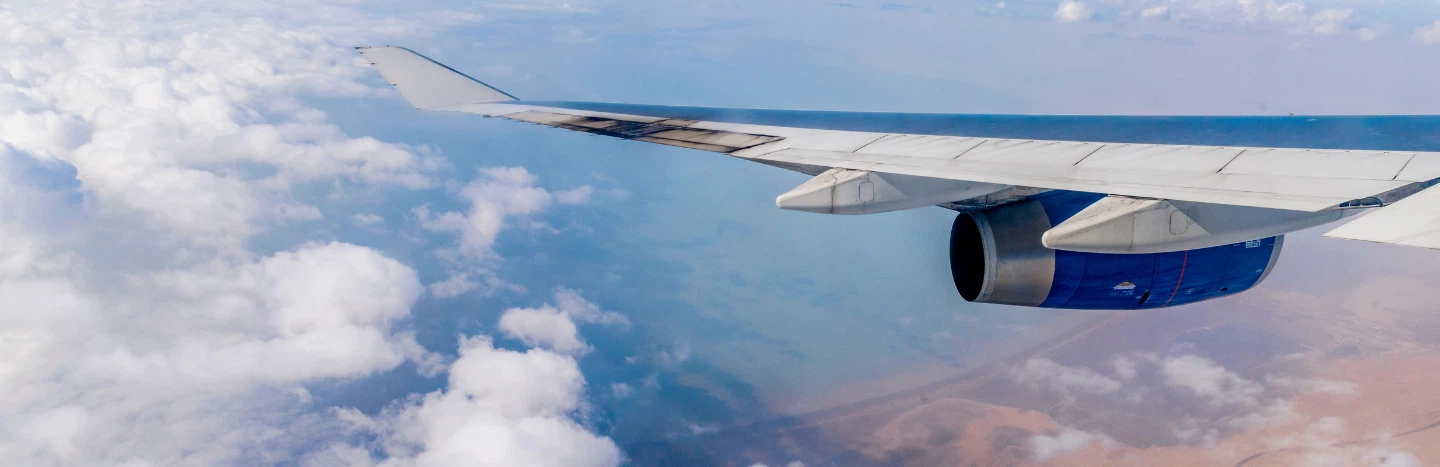
Two timelines are shaping the carbon market this autumn. For airlines, the clock is running on the first compliance period of CORSIA, the global offsetting scheme for international aviation. Operators must cancel their Phase 1 units by 31 January 2028. For corporate buyers, a run of September announcements shows that carbon removals are moving from pilot projects into mainstream portfolios. Here is what both groups need to know, and how we can help you act early.
CORSIA Phase 1 in plain terms
CORSIA, the Carbon Offsetting and Reduction Scheme for International Aviation, was created by the International Civil Aviation Organization (ICAO). It runs in three stages: a pilot phase (2021–2023), a first phase (2024–2026) and a second phase (2027–2035). In the pilot and first phases, States choose whether to take part. From the second phase, participation is based on each State’s share of international aviation activity (ICAO CORSIA FAQs). In 2026, the final year of Phase 1, 130 States take part.
Who must comply
CORSIA applies to aeroplane operators that emit more than 10,000 tonnes of CO2 a year from international flights, using aircraft with a maximum take-off mass above 5,700 kg (ICAO Assembly Resolution A42-22). Offsetting obligations apply to flights on routes between participating States.
How much must be offset
The baseline is 85% of the sector’s 2019 emissions. Each year ICAO publishes a sector’s growth factor, and each State applies it to the verified emissions of the operators attributed to it. For 2024 the factor is 0.15405257, as revised by ICAO in December 2025 (ICAO, CORSIA Annual Sector’s Growth Factor (December 2025)). In practice, operators must offset roughly 15.4% of their covered 2024 emissions. States tell operators their total final Phase 1 requirement by 30 November 2027.
Which units count
Only CORSIA Eligible Emissions Units can be used. According to the ICAO document CORSIA Eligible Emissions Units (April 2026), Phase 1 units must:
- Be issued under one of the ten programmes approved for Phase 1: ACR, ART, BioCarbon Fund ISFL, Climate Action Reserve, FCPF, Global Carbon Council, Gold Standard, Isometric, Premium T-VER and Verra’s VCS.
- Come from activities whose first crediting period started in 2016 or later.
- Represent emission reductions that took place between 1 January 2021 and 31 December 2026.
- Be authorised by the host country, which attests that the reductions will not be double-claimed. Depending on the programme, this also requires confirmation that a corresponding adjustment has been applied, or an approved guarantee.
The deadline: 31 January 2028
ICAO confirms that the deadline for aeroplane operators to cancel CORSIA Eligible Emissions Units for Phase 1 is 31 January 2028. Under Annex 16, Volume IV, the deadline moves to 60 days after the State’s notification if that notification arrives late. Operators must then ask the registry to publish their cancellations by 7 February 2028 and submit a verified Emissions Unit Cancellation Report by 30 April 2028 (Normec Verifavia).
Supply is tight
The main bottleneck is host-country authorisation. In July 2026, Sylvera estimated that of roughly 300 million credits potentially eligible for Phase 1, only 38 million had cleared both the authorisation and the corresponding-adjustment hurdles. Its base-case estimate of Phase 1 demand is 163 million units. Demand has already started: 502,000 CORSIA credits were retired in the first half of 2026, compared with 14,000 in the whole of 2025.
New supply is arriving, but slowly. On 28 September, Verra completed CORSIA Phase 1 tagging of 639,609 previously issued credits from a Rwanda cookstove project. ICAO has itself urged States to finalise authorisation letters “well in advance of the January 2028 deadline”.
Our CORSIA-eligible inventory
ClimateTrade has a significant inventory of CORSIA-eligible credits for the current First Phase (2024–2026), ready to deliver to airlines and aircraft operators. What we offer:
- A large volume available now, so you can cover your Phase 1 requirement well before 31 January 2028 instead of competing for scarce units in late 2027.
- Full documentation for each lot, covering programme, methodology, vintage and host-country authorisation status, so your compliance team can check every unit against the ICAO eligibility document.
- Traceable retirement: units are cancelled in the programme-designated registry as CORSIA requires, and each transaction comes with a ClimateTrade certificate recorded on blockchain.
- Aviation experience: our API and co-branded pages already help airlines such as Iberia offer offsetting to passengers.
For a Phase 1 quote, contact our team. Tell us your offsetting requirement and we will come back with available lots and the supporting documentation for each one.
Carbon removals are going mainstream
September brought clear signs that removals are becoming part of mainstream climate strategy.
- Integrity label for engineered removals. On 28 September, the Integrity Council for the Voluntary Carbon Market (ICVCM) approved Verra’s VM0049 carbon capture and storage methodology as meeting its Core Carbon Principles. The approval includes modules for direct air capture and BECCS. The label applies to the methodology, so each project still needs its own due diligence.
- Removals enter aviation compliance. On 22 September, Japan Airlines and Climeworks Solutions announced what they describe as the first CORSIA-compliant carbon removal purchase. The CORSIA-focused portfolio includes soil carbon and biochar removals, and JAL is also buying separate direct air capture credits from Climeworks. The volume was not disclosed.
- Contracting is picking up. Around 128,000 tonnes of durable carbon removal were contracted in August, up from about 22,000 in July. Deals included Höganäs–Öresundskraft (70,000 tonnes of BECCS) and Microsoft–CREW Carbon (23,602 tonnes).
- A long-term signal from SBTi. Under the Corporate Net-Zero Standard V2.0, published on 11 June 2026, recognition for supporting removals is voluntary until 2035. From 2035, companies must take responsibility for at least 1% of their ongoing emissions, rising to 100% of residual emissions at their net-zero target year.
Removals on the ClimateTrade marketplace
- Biochar: Glanris Colusa (Puro Standard)
- Enhanced rock weathering: UNDO (Puro Standard)
- Bio-oil storage: Charm bio-oil (Isometric Standard)
- Blue carbon: Sea Cave True Blue Carbon, Mexico (ICR Standard)
ClimateTrade offers high-quality removal credits across biochar, enhanced rock weathering, bio-oil and blue carbon. Our team can confirm the certification and labels of each lot, including CCP and CORSIA eligibility, and share full project documentation for your due diligence. Whatever your portfolio needs, from nature-based removals to direct air capture and other engineered removals, our team can source it for you.
Road to COP31
- Early October: the Article 6.4 Supervisory Body is expected to decide on rules for reversal-risk buffers, starting with clean cooking. Its expert panel has kept the buffer requirement despite industry pushback. The decision is still pending.
- 5–8 October: Fiji, Tuvalu and Australia host the official Pre-COP.
- 9–20 November: COP31 takes place in Antalya, Türkiye.
What to do now
- Airlines and aircraft operators: estimate your total Phase 1 requirement, secure eligible units early and check the authorisation status of every lot.
- Corporate buyers: add a removals sleeve to your 2027 portfolio alongside high-quality avoidance credits, so you are ready for SBTi’s future requirements.
The January 2028 deadline is closer than it looks. Request a CORSIA quote from our team, or explore carbon removals on the ClimateTrade marketplace.