
Carbon Markets

Carbon Markets

Voluntary carbon market
Carbon Markets

Voluntary carbon market value tops US$2B

The value of the voluntary carbon market (VCM) has quadrupled since 2020, reaching almost US$2B in 2021, according to a new report. The latest State of the VCM Briefing by non-profit Ecosystem Marketplace reveals that the market has already topped the US$2BN mark in 2022. Growth has been driven by both higher prices and stronger demand for carbon credits, with nearly 500 million credits traded in 2021, at an average price of US$4 per ton – up 60% year on year. But Ecosystem Marketplace (EM) also attributes this tremendous growth to international efforts to standardize the voluntary carbon market, increasing transparency and quality. In particular, the organization cites the Public Consultation for Core Carbon Principles (CCPs) by the Integrity Council for the Voluntary Carbon Market (ICVCM), which launched on July 27, 2022 to provide the framework needed to identify high-quality carbon credits that create real, additional and verifiable climate impact with high environmental and social integrity. “The ambition of the ICVCM both aligns with and supports EM’s core principle of promoting market integrity and trust through transparently presenting its internationally aggregated and standardized carbon credit trade data. Almost 20 years of experience and relationships with market participants have reinforced the fact that the ‘quality’ of credits is a key ingredient to market growth,” the report notes. Demand for forestry carbon offsets quadruples Transaction volumes increased in almost all the carbon credit categories covered in the report, with forest and land use projects showing the strongest growth from 57.8 million credits traded in 2020 to 227.7 million in 2021. Altogether, forestry credit transactions represented about US$1.3B – almost 67% of the market total in 2021. Renewable energy project demand more than doubled, from 93.8 million to 211.4 million credits. Additionally, the pricing of these credits went from US$1.08 to US$2.26, bringing the value of transactions to a total of US$479.1M.  Among the types of projects that received less demand in 2021, energy efficiency saw the biggest drop, going from 30.9 million credits in 2020 to 10.9 in 2021. Meanwhile, sales of carbon credits from household and community projects decreased from 8.3 million to 8 million. In both cases, an increase in the price of credits softened the impact of this drop on value. Price premium for co-benefits  Projects that presented benefits beyond carbon mitigation, such as community support, biodiversity conservation or contribution to the Sustainable Development Goals (SDGs), were sold at a premium compared to others. For instance, the price of Gold Standard projects, which include co-benefits in the certification process, increased by 35% from US$3.74 a ton to $5.05 a ton. More on this topic: What influences carbon offset pricing? ClimateTrade’s take We could not agree more on the need for quality and transparency for the voluntary carbon market to reach its full potential. That’s why we at ClimateTrade have been working towards this goal since our inception, leveraging the traceability of blockchain technology to increase trust, mitigate the risk of double counting and remove intermediaries between project developers and carbon credit buyers. At the same time, all the projects on our marketplace not only are certified by the most respected standard, but also clearly list their co-benefits in the form of SDG contributions.  We look forward to seeing the results of the ICVCM’s consultation, and to working with partners within the carbon offsetting ecosystem to achieve the level of standardization the market needs.

LACCW 2022
Carbon Markets

LACCW 2022: Regional hope counters lack of global climate ambition

Back from the Latin America and Caribbean Climate Week (LACCW 2022), our Co-Founder and Head of Impact José Lindo shares his thoughts.   Op-ed by José Lindo, ClimateTrade Co-Founder and Head of Impact   The event that many of us call pre-COP took place last week in Santo Domingo, organized by UNFCCC, UNEP and the World Bank Group with the support of the government of the Dominican Republic. These regional climate weeks provide countries and all their stakeholders with a dedicated forum to discuss solutions to the particular climate threats of their region, in their own language and culture. And considering how difficult it has been to reach global climate agreements, regional summits like these are likely to become key to actually implementing policies that may be localized, but will also be much more ambitious and effective in fighting climate change. Silence regarding a global carbon price I hoped for more climate ambition from the UN and from countries in the implementation of the measures of the Glasgow Pact, particularly since the responsibility of fossil fuels in the climate crisis was highlighted there like never before. But when it comes to decarbonization plans that go beyond the theoretical, as well as a global, ethical and fair GHG price, the radio silence continues. Big plans and renewable energy budgets sound great, but they distract from the real issue: the climate crisis is not being treated with the same urgency or financial resources as the Ukraine geopolitical crisis or the pandemic. The UNFCCC Secretary’s reaction to this issue seems very appropriate to me: at LACCW, he welcomed the initiatives of cities, subnational states, carbon markets, impact investors and tech companies, promoting a new paradigm of decentralization. Cities and private sector initiatives This spark of new hope has an appealing acronym: BINGO, or Business and Industry Non-Governmental Organizations: hundreds of thousands of companies, organizations and private climate investors that are acting fast to counter the urgency of the crisis. It appears as though scaling up the voluntary carbon market is easier than getting 200 countries to sign off on an appropriate global carbon price. We have made the implementation of Article 6 incredibly complicated, getting lost in never-ending debates about which mechanism to use to finance it: Core Carbon Principles (CCP), Emissions Trading Schemes (ETS), International Transferred Mitigation Outcomes (ITMOs) or maybe Carbon Removals Obligations (CRO)? This is causing policy paralysis and inaction, meanwhile several market players – including ClimateTrade – have been designing entire infrastructures aligned with the Paris Agreement and the need for decentralization in governance, financing and the execution of mitigation and decarbonization projects. Empowering local mechanisms If legislative independence and greater climate ambition can be found in cities, let’s create local mechanisms without waiting for clear global rules or a fair carbon price. ClimateTrade’s DLT technology is ready and functional: now let’s form new coalitions and partnerships. I’m leaving LACCW hopeful about the multidisciplinary, Ibero-American, public-private team we are trusting to accelerate ambition, but there remain many tough months and years ahead considering the current geopolitical situation. “Collective action or collective suicide”: I couldn’t agree more with Antonio Gutierres, the UN Secretary General. At ClimateTrade the choice has always been clear – action all the way – and because of that, I beg global leaders to give us freedom and empower us in our efforts.

G7 Climate Club
Carbon Markets

What the G7 Climate Club means for carbon markets

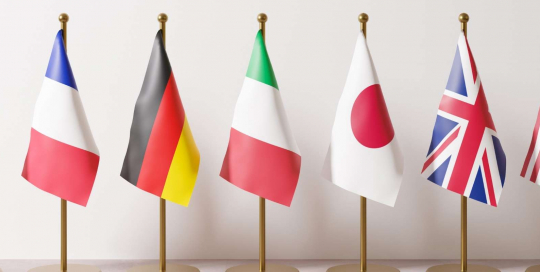
What exactly is a climate club, and how can the one recently announced by the G7 influence the world’s decarbonization? At the end of the G7 meeting in Germany last week, Canada, France, Germany, Italy, Japan, the UK and the US announced the formation of a climate club aiming to “advance ambitious and transparent climate change mitigation policies towards climate neutrality”. But what exactly does a climate club consist of, and how will it influence global decarbonization?  What is a climate club? Though this is a relatively new concept, a climate club generally consists of a group of countries committed to climate action, who take measures together to fight carbon leakage from countries outside the club. As a reminder, carbon leakage is when production is moved from a country with a strict carbon policy to a country where it is cheaper to pollute, and therefore no emissions reduction is achieved. The idea is to create a low-carbon market big enough to incentivize companies to reduce their emissions and improve their climate performance. Who is in the G7 Climate Club? The G7 Climate Club is formed of all the countries included in the Group of 7: Canada, France, Germany, Italy, Japan, the UK and the US. In 2020, these countries accounted for over 50% of global net wealth (US$418 trillion), 32 to 46% of global GDP, about 25% of global emissions, and approximately 770 million people or 10% of the world’s population. Needless to say, the G7 Climate Club is big enough and economically powerful enough to make a difference in the global fight against climate change.  Three of these countries (France, Germany and Italy) are part of the European Union, which has a mandatory carbon market (the EU ETS) in place and is already planning to implement a Carbon Border Adjustment Mechanism – effectively a carbon tax for products entering the EU – to fight carbon leakage. Of the other four, Canada has a carbon tax set at C$50 per ton of CO2-equivalent and due to increase to C$170 by 2030; Japan has a carbon tax of around US$2.80 per ton, but is looking at implementing a US$56/ton tax on the shipping industry starting from 2025; the UK has an emissions trading system similar to that of the EU; and the US currently has no federal carbon tax. However, the G7 Climate Club is not closed: instead, founding members are inviting other countries with strong climate ambitions to join by the end of the year, when the G7 expects the club to be fully established. More on this topic: EU ETS reform: What’s to come for the mandatory carbon market? SEC proposes landmark climate disclosures for US companies What will the G7 Climate Club do? According to a G7 statement on the Climate Club, it is built on three pillars:  1) Advancing ambitious and transparent climate mitigation policies to reduce emissions intensities of participating economies on the pathway towards climate neutrality, by making policies and outcomes consistent with the club’s ambition, strengthening emissions measurement and reporting mechanisms, and countering carbon leakage at the international level.  2) Transforming industries jointly to accelerate decarbonization, including through taking into account the Industrial Decarbonisation Agenda, the Hydrogen Action Pact, and expanding markets for green industrial products.  3) Boosting international ambition through partnerships and cooperation to encourage and facilitate climate action and unlock socio-economic benefits of climate cooperation and to promote just energy transition. Members of the Climate Club would share best practices and work together to compare the effectiveness and economic impacts of each of their mitigation policies, such as explicit carbon pricing, other carbon mitigation approaches and carbon intensities. They would also use their influence to incentivize developing countries to increase climate transparency and decarbonize their energy and industrial sectors, including through financial, technical capacity support and technology transfer development and deployment. How will the Climate Club shape carbon markets? The biggest impact the Climate Club is expected to have on global carbon markets is by setting a minimum carbon price, below products imported by club members will be submitted to an adjustment tax. This will allow climate leaders to move ahead on policy and accelerate global decarbonization, even if no consensus can be found amongst all Paris Agreement signatories – as was observed at COP26 on the topic of coal. In fact, the Climate Club is intended to com­pensate for the lack of enforcement mech­anisms in the Paris Agreement: “We note with concern that currently neither global climate ambition nor implementation are sufficient to achieve the goals of the Paris Agreement by reducing greenhouse gas emissions. We aim to establish a Climate Club to support the effective implementation of the Paris Agreement by accelerating climate action and increasing ambition,” says the G7 statement on the topic. What are the challenges? In pushing for the global implementation of the Paris Agreement, and considering the G7’s economic power on the global stage, the Climate Club must ensure it takes the basic principles of climate justice into consideration. While all countries must take action to combat the climate crisis, differences in levels of economic development and historical carbon emissions must be recognized, and “punitive” mechanisms like carbon taxes and carbon border adjustment mechanisms must come with financial and other forms of support for developing countries’s net zero transition. Let’s remember that developed economies’ 2009 pledge to provide US$100 billion of climate finance to developing countries every year by 2020 was never fulfilled. The best way for the Climate Club to address climate justice would be to dedicate revenue from the Carbon Border Adjustment Mechanism to climate finance, both for developing countries and for communities within its own countries that are most vulnerable to the effects of climate change.

ClimateTrade IETA
Carbon Markets

ClimateTrade is now a member of IETA

ClimateTrade has become a member of the International Emissions Trading Association (IETA), the leading non-profit business association working to establish a functioning carbon market. Joining IETA will allow ClimateTrade to be part of international efforts to create effective market-based trading systems for carbon emissions and advance the United Nations’ Sustainable Development Goals. IETA members include financial institutions, carbon brokers and traders, consultants, energy and power providers, industry, law firms, standards and registries, as well as technology providers such as ClimateTrade. The association has set up a number of working groups to analyse the market and suggest new policies and protocols around forestry, REDD+, voluntary markets, market oversight, and how decisions in the US and EU are affecting players and investors, directly and indirectly. “Joining IETA gives ClimateTrade a seat at the table with the world’s major business leaders to discuss and influence the future of carbon markets. We look forward to working with the association and its members to shape the way forward and support large-scale global decarbonization,” says Francisco Benedito, CEO of ClimateTrade.

carbon credit price
Carbon Markets

What influences carbon offset pricing?

The voluntary carbon market is extremely varied, both in terms of types of projects and in terms of carbon offset pricing. In this article, we dive into the drivers of these price variations. If you’re reading this article, you’re probably quite far in your journey towards net zero: you’ve calculated your company’s CO2 emissions, taken measures to reduce your carbon footprint and are now looking to offset your remaining emissions. You’ve learned how to purchase carbon offsets and are now comparing your options, and you’ve quickly realized there is a very wide range of prices for carbon credits. What’s the reason for this? Does a higher price signify higher quality? Is it risky to go for the cheapest credits? Don’t worry, we explain how everything works below. Carbon credit supply and demand The World Bank’s latest State and Trends of Carbon Pricing report reveals that carbon prices have risen sharply in the past year, and this is mostly due to increased demand as decarbonization efforts accelerate. “For the first time, the total value of the voluntary carbon market exceeded more than US$1 billion in November 2021,” the report says. “This rapid increase in value reflects both rising prices and rising demand from corporate buyers leading to higher transacted volumes.” According to the authors, global average carbon credit prices on the voluntary market moved from US$2.49/tCO2e in 2020 to US$3.82/tCO2e in 2021, and the volume of credits transacted in the voluntary market exceeded 362 million credits last year, 92% more than in 2020. This growth in demand and upward price trend is attracting investors, who are starting to see carbon credits as an investment product that is set to bring high returns in the coming years.   Carbon mitigation project costs The location and type of a carbon mitigation project influence the funding available to it, as well as its development costs. For instance, the Fairtrade minimum pricing model, developed in collaboration with Gold Standard, calculates a minimum price that ensures the average costs of the projects are covered, and these costs include: investment in equipment and machinery project costs like transport, monitoring, training, etc. carbon verification and certification costs a margin for the project to make a small benefit The model also deducts any revenues (for instance from the sale of clean electricity) from the price. According to this, the Fairtrade minimum pricing for carbon mitigation projects is 8.20€ for energy efficiency projects, 8.10€ for renewable energy projects and 13€ for forest management projects. Renewable energy v. nature-based carbon offsets In our article What are ‘good’ or ‘bad’ carbon credits, we explained that one of the principles that determines the quality of a carbon offset is its additionality: whether the project would happen without the financing provided by carbon offsetting. This principle is now leading many companies to move away from carbon credits generated by renewable energy projects, even though these are often the cheapest type of offset available. Private investment in solar or wind energy is now abundant, and the industry doesn’t need carbon finance to survive. “A highlight this year is the increased interest in forest and land use-based credits. Carbon credit issuances from forestry and land-use projects increased 159% over the past year, accounting for more than a third of total credit issuances in 2021,” notes the World Bank report. Carbon credit price transparency While the variety of different prices in the voluntary carbon market can be overwhelming, the main thing to look for is transparency and traceability. In early May 2022, the Financial Times published an article denouncing the opacity of the carbon market. In its analysis, it discovered that the price offered by brokers could be double the actual price of carbon offsets when sold directly by the project. This is why ClimateTrade offers a marketplace where project developers can set the price of their carbon credits and sell them directly to companies around the world. We base all our transactions on blockchain infrastructure, which means that data cannot be duplicated or manipulated. This guarantees the integrity of data and the traceability of carbon offsetting transactions. How to buy carbon credits Now that you know what drivers influence the price of carbon credits, read our guide on how to buy carbon credits to offset your footprint.

EU ETS reform
Carbon Markets

EU ETS Reform: What’s to come for the mandatory carbon market

In a Decarb Connect Webinar held online on May 25th, ClimateTrade CEO Francisco Benedito and NWorld Partner Gregorio Gonzalo discussed upcoming changes in the EU ETS, and how companies can prepare for them. The webinar, which you can watch here, couldn’t have been more timely: on May 17th, the EU Parliament voted in favor of a comprehensive reform of the EU ETS, in line with the Fit for 55 package. Among the changes included in the reform, Gonzalo pointed to seven key aspects: Accelerating emissions reduction: cutting emissions by 60% by 2030 compared to 2005 baseline New sectors covered by the EU ETS: maritime, road transportation and buildings Increased coverage around aviation: all flights operated by EU-based aircraft Carbon capture and storage: emissions captured could be deducted Reinforcement of market stability: upper limit for number of allowances permitted to be in circulation, but also lower limit to ensure there are enough allowances in the market, ensuring supply and demand balance All revenues from EU ETS should be destined to climate-related purposes, a boon for low-carbon technologies Gradual phase-out of free allowances by 2030 More on this topic: EU ETS: What it is and why it is changing ClimateTrade enters mandatory carbon market EU ETS price and demand impact of the reform Speaking about the expected impact of this reform on EUA demand and prices, Benedito laid out some of the key pricing drivers: as global production and CO2 emissions decreased during the pandemic, there was a significant surplus of EUAs accumulated, which lowered the price of EUAs to about 36€ per unit. However, the war between Ukraine and Russia and the uncertainty around gas supply led to an increase in coal use for electricity production, which is highly polluting. As a result, the EUA surplus is fading away, and this reform will reduce EUA supply even more.  In February 2022, the price of EUAs reached a record 98€ per unit, before the new reform was even adopted. Companies that need to buy EUAs to comply with emissions regulations are facing a declining supply of allowances in the coming eight years as free allocations are set to be phased out. In fact, the number of EUAs issued into the market each year is set to decline at 2.2% a year from 2021 through 2030.  “Most analysts believe this will lead to a much smaller supply of EUAs. This month, EUAs are priced around 90€ and some analysts believe this price will reach 150€ in 2023,” he said.  One thing that’s becoming clear with this new reform is that eventually, all sectors of the economy will be forced to offset their emissions. The package even talks about including citizens in the EU ETS around the end of this decade. New sectors, new measures Gonzalo then dove into some of the new sectors to be included in the EU ETS and what specific measures will apply to them. When it comes to maritime transport, all emissions coming from intra-EU voyages will be included, as well as up to 50% of emissions from travel outside the EU. “There will be a transition period between 2023 and 2025 when maritime companies are going to have to gradually buy allowances up to 100% of their verified emissions, which should all be compensated between 2026 and 2027. Implications of not complying are quite severe,” he noted. Maritime companies now need to submit a monitoring plan for each of their ships and hand it to authorities in the next three months. Road transportation and buildings will have special treatment, as they will operate within a separate ETS system commonly referred to as ETS II, which should be functional from 2025. From 2025 to 2029, only commercial fleets and buildings will have to comply, but the scheme will be extended to private cars and buildings after 2029.  More on this topic: Advanced ESG criteria for new and retrofitted buildings ClimateTrade launches carbon footprint calculator for the construction sector EU ETS cost burden Gonzalo and Benedito agreed that there is very little public information around transaction costs for purchasing, selling or cancelling carbon credits in the EU ETS. But a June 2020 working paper published by the London School of Economics and quoted in ClimateTrade’s white paper on the EU ETS offers a quantitative approach to understanding EUA transaction costs. The paper found that costs of around €10,000 per year plus €1 per permit traded allowed the most accurate predictions. These transaction costs include exchange membership fees, the resources invested in operating a trading desk, monitoring the market and defining a trading strategy, as well as search, information, brokerage, intermediation and consultancy costs, and they are a barrier to entry from the EUA market. “The new reform, as well as the implementation of the Carbon Border Adjustment Mechanism (CBAM) will most likely increase this cost burden,” said Benedito. More on this topic: White paper: A 2030 Outlook for Europe’s Mandatory Carbon Market Carbon Border Adjustment Mechanism The Carbon Border Adjustment Mechanism (CBAM) is the EU’s solution to prevent carbon leakage, considered one of the key elements of the Fit for 55 package. “Let’s try not to favour EU industries moving to countries with less stringent requirements on carbon, and let’s try not to replace European products with more polluting but cheaper products from outside the EU,” explained Gonzalo.  CBAM also aims to incentivize non-EU countries to promote cleaner industries: while the price of the CBAM certificates to be purchased by EU importers will be based on the weekly average auction price of EU ETS allowances (EUAs), if goods are imported from a country with a carbon scheme, that price will be deducted from the cost of CBAM certificates. The EU has now begun a transitional phase to gather data until 2025, and CBAM is expected to be fully in place in 2026, initially applying to industries like cement, aluminium, steel, fertilizers and electricity, but later to be extended to all sectors within the EU ETS. EU importers will have

Other Categories

Banco Sabadell
ClimateTrade News

Banco Sabadell moves forward with carbon offsetting in alliance with ClimateTrade

Banco Sabadell has teamed up with ClimateTrade to offset the CO2 emissions associated with its operations in 2021, by investing in forest projects in Spain. Banco Sabadell is advancing in its sustainability commitment by focusing on reducing and offsetting its own carbon emissions, as well as supporting clients with sustainable solutions and consulting for their environmental transition. In 2021, the bank complemented its action plan with the offsetting of its carbon footprint via investment in carbon dioxide mitigation projects that generate positive impact in their communities of operation. Banco Sabadell approved the offsetting of 3,632 tons of CO2, representing emissions from scope 1, 2 and 3 (relating to business travel), through investment in Spanish project certified by the Ministry of Ecological Transition (MITECO). With this initiative, Banco Sabadell bets on three forest projects, two of which are in Galicia, specifically in Parada de Achas (1,083 tons of CO2) andLaza – Touza (151 tons of CO2). The third is a reforestation project based on sustainable forest management (2,398 tons of CO2), located in the Sierra de Gredos (Ávila) and being developed in synergy with the Regional Park and the Natura 2000 network. Ana Ribalta, Director of Sustainability at Banco Sabadell, commented: “This is another example of how Banco Sabadell is aligning its activities to the Paris Agreement. It forms part of our sustainability strategy, which revolves, among other things, around our commitment to keep making progress to reduce our own emissions and to reach neutrality in all our operations.” The offsetting of 2021 emissions is one amongst a set of measures the bank has adopted to keep reducing its own carbon footprint, including the use of renewable energy since 2015, eco-efficiency measures and waste and material consumption reduction plans for water, paper and plastics. All these initiatives serve to strengthen the bank’s existing commitments as a member of the main international alliances for a sustainable and carbon-neutral economy, through frameworks such as the UN’s Responsible Banking Principles, the Collective Commitment to Climate Action or the Net-Zero Banking Alliance by UNEPFI.