
Carbon Markets

Carbon Markets

decarbonization
Carbon Markets

Decarbonisation in the chemical and pharmaceutical industry

The chemical and pharmaceutical industries in Europe can do more for carbon neutrality. It is known that Europe aspires to be carbon neutral by 2050, an economy with zero greenhouse gas emissions. This goal is at the heart of the European Green Deal and is in line with the EU’s commitment to global climate action under the Paris Agreement. The chemical industries in Germany are beginning to detect sustainable practices and promote sustainable procedures. Together for Sustainability (TfS) is a joint initiative of chemical companies in Germany with a program to assess, audit and improve sustainability practices within industry supply chains. TfS aims to build the standard based on the sustainability performance of suppliers within supply chains, following predefined criteria that are then shared among its members. TfS member chemical companies can do more to reduce their environmental impact, especially with indirect and their supplier emissions. Industries in general are aware of the great problem of not being able to reduce greenhouse gas (GHG) emissions generated by their activities. Furthermore, a large part of the companies in the sector recognizes that up to 80% of their carbon footprint or environmental impact comes from sources that they do not directly control, including suppliers. We are talking about vehicle fleets, employee journeys from home to work and vice versa, business trips by plane, train, taxi, and the manufacturing processes themselves. Even more alarming is the lack of demand on suppliers (of raw materials, consumables, logistics subcontractors, etc.) to align with good sustainability practices and a first approach to the calculation of the environmental impact or carbon footprint of the products and services they supply to their customers. 5-HT digital ecosystem companies in Germany can help TfS member chemical industries The 5-HT digital ecosystem in Germany owns a technology company specialized in good management practices for environmental impacts and the carbon footprint of large companies from different sectors (airlines, hotels, water and waste, urban mobility, finance, etc.) . Climatetrade has started to support SMEs in the chemical-aesthetic sector in Spain to calculate and offset the environmental impact of organizations and is guiding companies in the launch of carbon neutral products. Digitization of Carbon Markets and Climatetrade’s Carbon Accounting Services Will Help TfS Member Chemical Industries Regarding digital access to carbon markets and digitization of carbon footprint accounting that ClimateTrade’s marketplace can help TfS member chemical industries. In this marketplace, polluting companies can balance their carbon footprint by buying carbon credits and contributing to projects that capture CO2 from the atmosphere or avoid its emission. Thanks to the digitization of these markets, both voluntary and mandatory, the monitoring of environmental impacts and carbon accounting in industries is more transparent and efficient, thus contributing to national objectives in the fight against climate change. Decarbonisation of the chemical and pharmaceutical industries is a challenge This will be the biggest challenge of the future, to decarbonise these industries. Since they will not be able to reduce their GHG emissions to zero, it will be necessary to offset the rest of their emissions to achieve carbon neutrality. Companies must take good care of this issue in the future, not only for the planet, but also for their consumers and investors who expect them to act in a sustainable way. To learn about Voluntary and Mandatory markets click here.
European Green Deal
Carbon Markets

The “Green Deal”: carbon neutrality by 2050

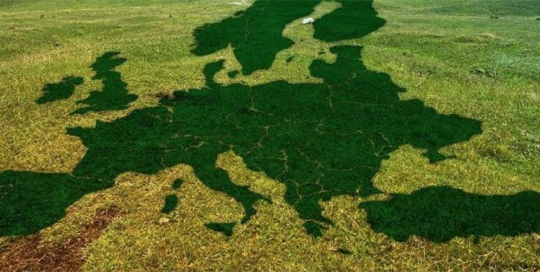
Learn about the European Green Deal policy and its effort to fight again climate change. What is the European Green Deal and carbon emissions? The Green Deal aims to make Europe the first carbon-neutral continent by 2050. The United Nations Commission launched in December the “Green Deal”, in which countries undertake to reduce emissions by 50-55% in 2030 and achieve carbon neutrality by 2050, in addition to other measures towards decarbonization. How can this be achieved? Efforts towards this goal by 2050 will be supported by the following actions: Increasing carbon credit price, which already exists in a well-developed form in the EU, especially under the EU Emissions Trading Scheme. Incorporation of a new “Carbon Border Adjustment Mechanism“, essentially a carbon border tax aimed at imports from non-EU countries with less rigorous climate policies. Revision of the Brussels state aid rules to allow governments to invest on technologies that reduce carbon emissions. The Green Deal proposes a comprehensive economy transition, which means it strives to boost decarbonisation across the EU’s socio-economic sectors. The decarbonisation of the energy system is a key factor in achieving climate targets in 2030 and 2050. Energy production and use in all economic sectors means more than 75% of EU greenhouse gas emissions. What’s next? The Green Deal roadmap is also part of the EU’s long-term strategy to be presented to the United Nations Framework Convention on Climate Change (UNFCCC) in 2020. A cornerstone of the new strategy will be the adoption of the first European ‘Climate Bill’ by March 2020. As well as introducing more ambitious emissions targets, the plan seeks to drive policy reforms to make Europe the leader in climate-friendly industries, green technologies and green finance. This commitment calls on companies, organisations, cities, states and regions to take strong, smart and innovative climate action to decarbonise the environment. We must commit … we must act together, the time is now.

difference between zero-carbon and carbon-neutral
Carbon Markets

Do you know the difference between zero-carbon and carbon-neutral?

Sustainability comes with its own terminology, and some terms are more similar than others. In this article, we explain the difference between carbon zero and carbon neutral.   Carbon Zero We speak of Carbon Zero when there is no production of carbon emissions derived from a product or service, that is, no carbon was emitted from the first moment, so it is not necessary to capture or offset the carbon. For example, a domestic or commercial building that is off the grid, runs entirely on solar energy, and uses zero fossil fuels. Carbon neutral Being “carbon neutral” means removing as much CO2 from the atmosphere as we emit, that is, having a balance between carbon emission and carbon absorption from the atmosphere. To achieve carbon neutrality, the first thing we must do is reduce our carbon footprint through a change in habits and consumption. Your company can also achieve this goal. Initially, critical points in your carbon footprint must be identified and measures taken to reduce those emissions. Some actions can be: Keep energy usage to a minimum or switch to renewable energy, which do not produce carbon dioxide. Limit travel and promote other meeting alternatives, such as video conferencing. Promote electronic communications, reduce paper use and print only when absolutely necessary and try to reuse these prints. Recycle by properly sorting the waste. However, in addition to reducing the carbon footprint, to become carbon neutral what you must do is offset the emissions that cannot be reduced. How? We can help! At Climatetrade we want to give everyone the possibility of offsetting their carbon footprint by supporting sustainable projects that help to mitigate the effects of climate change or those that directly have a positive impact on the environment. We offer you a simple way to offset your carbon footprint, through carbon credits, supporting environmental projects around the world, mainly in emerging countries, with the aim of balancing your own carbon footprints, expressed in tons of CO2 emitted to the atmosphere.   [/fusion_text][/fusion_builder_column][/fusion_builder_row][/fusion_builder_container]

What is carbon offsetting?
Carbon Markets

What is carbon offsetting?

Emission reduction and carbon offsetting are two increasingly familiar terms that are linked to wider areas. A growing number of companies, organizations and even entire countries are talking about becoming carbon neutral and there is a common denominator to this, offsetting. What is carbon offsetting? Carbon offsetting or carbon footprint is the neutralization of the CO2 emissions that any person, company or organization emits into the atmosphere with its activity. Either by legal mandate or voluntarily. How to offset CO2 emissions? The compensation of CO2 emissions consists of the contribution of an economic amount, proportional to the emissions generated, for a project that avoids or captures the same amount of CO2 emitted. These generated emissions are measured in tons of Co2 (tCO2) and the exchange currency is called a carbon credit. Equivalence: 1tCO2 = 1 carbon credit In other words, if a company emits 300 tCO2 in a year, it must purchase 300 carbon credits from a project that absorbs or avoids CO2 emissions. For example, by implementing a reforestation carbon sink project. Offsetting CO2 emissions or carbon footprint is the last step on the road to carbon neutrality. In the first instance, what we need to do is calculate the carbon footprint. To do this there are various tools, depending on whether you want to calculate the personal, family or business carbon footprint. Secondly, we must reduce the emissions generated. Last but not least, we have the offsetting of emissions. This step should be taken when we have reduced our carbon footprint but for production reasons we continue to generate and emit CO2 into the atmosphere. We are your company’s sustainability department At Climatetrade we have a wide portfolio of projects to offset emissions around the world. We help you calculate your company’s carbon footprint and advise you on your sustainability strategy.

Other Categories

financiación climática género
Climate Impact

Gender-just climate finance

This year, the United Nations has chosen February as the month to focus on SDG 5, gender equality. In this article, we dive into a key concept connecting gender issues with climate action: gender-just climate finance.

urban resilience
Climate Change News

Cities and climate change: urban resilience

Cities are currently facing countless natural or man-made disasters, from earthquakes, fires, mass migration … These types of situations are increasingly frequent due to factors such as rapid urbanization, climate change or political instability. Resilience is a concept that, in the case of cities, consists of having the capacity to prepare, resist and recover from a crisis in order to protect and improve people’s lives, ensure the benefits of development and drive a positive change. It provides a strategic framework that includes risk assessment and tools to face these economic, social and environmental challenges in our cities. “Globally, more people live in urban areas than in rural areas, with 55 % of the world’s population residing in urban areas in 2018. In 1950, 30 % of the world’s population was urban, and by 2050, 68 % of the world’s population is projected to be urban” (https://population.un.org/wup/Publications/Files/WUP2018-KeyFacts.pdf) The factors that most affect cities are those related to the consequences of climate change. These effects include devastating events such as floods, droughts or forest fires, which have generated catastrophic impacts on our planet. Generating challenges and uncertainties for society, the economy and the environment. It can affect basic public services, such as the supply of water or energy, essential for the performance of cities. Therefore, as the effects of climate change become more severe and frequent, it is necessary to adopt measures to make cities more resilient, reduce their vulnerability, and thus mitigate these changes and reduce their negative impact. “70 percent of cities are already dealing with the effects of climate change, and almost all are at risk. For instance, over 90 percent of all urban areas are coastal, which puts most cities across the globe at risk of flooding from sea level rise and powerful storms”. Climate change is a growing threat! It directly affects the ability of countries to achieve the Sustainable Development Goals and could even reverse the achievements made in recent decades. The ability of cities to adapt to crisis situations and the threats of climate change is decisive for their sustainability and future. According to the United Nations Human Settlements Programme (UN-Habitat) (https://unhabitat.org/) To be truly resilient, cities should work towards sustainability to ensure positive long-term impacts, and in the same manner, being truly sustainable entails incorporating resilience to drive and protect development goals. The time to act is NOW, we need resilient and sustainable cities! These are some of the proposals by the United Nations to achieve Goal 11 (Sustainable Cities and Communities) by 2030. Ensure access for all to adequate, safe and affordable housing and basic services and improve slums. Provide access to safe, affordable, accessible and sustainable transportation systems for all by expanding public transportation. Increase sustainable urbanization and capacity for participatory, integrated and sustainable planning and management of human settlements in all countries. Double efforts to protect cultural and natural heritage Minimize deaths from disasters, including those related to water, and those affected by them, and greatly reduce economic losses. Reduce the negative environmental impact per capita of cities. Provide universal access to green areas and public spaces. Increase the number of cities that adopt and implement integrated policies and plans to promote inclusion, efficient use of resources, mitigation of and adaptation to climate change and resilience to disasters. Provide support to least developed countries, including through financial and technical assistance, to enable them to build sustainable and resilient buildings using local materials. Innovation is part of the solution to help cities resist, adapt and quickly recover from crises. Comprehensive risk management services including monitoring of service and infrastructure networks, simulation models, action protocols and alert systems to find out the state of the city in real time. Learn about how we work with cities to build urban resilience (http://urbanresiliencehub.org/wp-content/uploads/2018/02/CRPT-Guide.pdf)[/fusion_text][/fusion_builder_column][/fusion_builder_row][/fusion_builder_container][fusion_builder_container type=”flex” hundred_percent=”no” hundred_percent_height=”no” hundred_percent_height_scroll=”no” align_content=”stretch” flex_align_items=”flex-start” flex_justify_content=”flex-start” hundred_percent_height_center_content=”yes” equal_height_columns=”no” container_tag=”div” hide_on_mobile=”small-visibility,medium-visibility,large-visibility” status=”published” spacing_medium=”” spacing_small=”” padding_dimensions_medium=”” padding_dimensions_small=”” border_sizes=”” border_style=”solid” box_shadow=”no” box_shadow_blur=”0″ box_shadow_spread=”0″ gradient_start_color=”” gradient_end_color=”” gradient_start_position=”0″ gradient_end_position=”100″ gradient_type=”linear” radial_direction=”center center” linear_angle=”180″ background_position=”center center” background_repeat=”no-repeat” fade=”no” background_parallax=”none” enable_mobile=”no” parallax_speed=”0.3″ background_blend_mode=”none” video_aspect_ratio=”16:9″ video_loop=”yes” video_mute=”yes” render_logics=”” absolute=”off” absolute_devices=”small,medium,large” sticky=”off” sticky_devices=”small-visibility,medium-visibility,large-visibility” sticky_transition_offset=”0″ scroll_offset=”0″ animation_direction=”left” animation_speed=”0.3″ filter_hue=”0″ filter_saturation=”100″ filter_brightness=”100″ filter_contrast=”100″ filter_invert=”0″ filter_sepia=”0″ filter_opacity=”100″ filter_blur=”0″ filter_hue_hover=”0″ filter_saturation_hover=”100″ filter_brightness_hover=”100″ filter_contrast_hover=”100″ filter_invert_hover=”0″ filter_sepia_hover=”0″ filter_opacity_hover=”100″ filter_blur_hover=”0″][fusion_builder_row][fusion_builder_column type=”1_1″ layout=”1_1″ align_self=”auto” content_layout=”column” align_content=”flex-start” valign_content=”flex-start” content_wrap=”wrap” spacing=”” center_content=”no” link=”” target=”_self” min_height=”” hide_on_mobile=”small-visibility,medium-visibility,large-visibility” sticky_display=”normal,sticky” id=”” type_medium=”” type_small=”” order_medium=”0″ order_small=”0″ dimension_spacing_medium=”” dimension_spacing_small=”” dimension_spacing=”” dimension_margin_medium=”” dimension_margin_small=”” margin_top=”” margin_bottom=”” padding_medium=”” padding_small=”” padding_top=”” padding_right=”” padding_bottom=”” padding_left=”” hover_type=”none” border_sizes=”” border_color=”” border_style=”solid” border_radius=”” box_shadow=”no” dimension_box_shadow=”” box_shadow_blur=”0″ box_shadow_spread=”0″ box_shadow_color=”” box_shadow_style=”” background_type=”single” gradient_start_color=”” gradient_end_color=”” gradient_start_position=”0″ gradient_end_position=”100″ gradient_type=”linear” radial_direction=”center center” linear_angle=”180″ background_color=”” background_image=”” background_image_id=”” background_position=”left top” background_repeat=”no-repeat” background_blend_mode=”none” render_logics=”” filter_type=”regular” filter_hue=”0″ filter_saturation=”100″ filter_brightness=”100″ filter_contrast=”100″ filter_invert=”0″ filter_sepia=”0″ filter_opacity=”100″ filter_blur=”0″ filter_hue_hover=”0″ filter_saturation_hover=”100″ filter_brightness_hover=”100″ filter_contrast_hover=”100″ filter_invert_hover=”0″ filter_sepia_hover=”0″ filter_opacity_hover=”100″ filter_blur_hover=”0″ animation_type=”” animation_direction=”left” animation_speed=”0.3″ animation_offset=”” last=”true” border_position=”all” first=”true”][fusion_youtube id=”https://www.youtube.com/watch?v=BsacBJpbIPQ” alignment=”center” autoplay=”false” api_params=”” title_attribute=”” hide_on_mobile=”small-visibility,medium-visibility,large-visibility” css_id=”” /][/fusion_builder_column][/fusion_builder_row][/fusion_builder_container]