
How does Blockchain actually work?

How does Blockchain work?

This post will cover how blockchain technology works, the advantages it presents, as well as its disadvantages.

It is easy for newcomers to mix up cryptocurrencies and blockchain. Although the first blockchain (Bitcoin) is a cryptocurrency, it does not necessarily mean all blockchains are (or will be) necessarily used as payment networks. Blockchain technology has unique properties without which we would not be able to guarantee such a high level of transparency, decentralization and immutability.

If you do not understand yet some of the concepts do not worry, we will explain them to you step by step. The following concepts, constitute the foundation of blockchain technology and we will go over them without getting too technical on the implementation details:

  • Distributed ledgers
  • Consensus mechanisms
  • Mining
  • Public and private blockchains
  • Blockchain platforms

Distributed ledgers

What is a ledger?

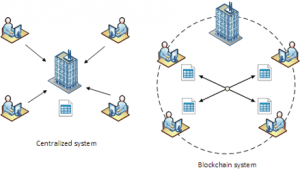
Today, vast amounts of information are controlled and managed by institutions that we trust to act honestly. Blockchain technology enables a shift from today’s centralized repositories of information to more decentralized robust fault tolerant networks. Using blockchain technology, it is possible to imagine a future where we do not rely on centralized organizations to manage our data but we, the users, have greater control of our digital lives. So how do blockchains enable this? It starts with simple accounting.

Ledgers are data sources that track accounts and balances of assets, they are fundamental to accounting and tracking value. Today most ledgers are maintained in databases run by central authorities such as banks, credit card companies or governments. Record-keeping by central authority is beneficial for several reasons:

  • A central authority can maintain data integrity by restricting access to the ledger to authorised users.
  • The data location is known and accessible to the data curators this allows for fast retrieval and regulating access to the data.


Updates to a database are known as “transactions”. The following are key properties for a database transaction  :

  • Transactions need to be atomic (where all updates are applied to the ledger or none of them are).
  • Transactions need to be durable, meaning they persist in the system and there is no chance of the change being reverted.
  • Transactions need to be consistent. Ledger data must be modified in a reliable permitted way.
  • They also need to be isolated. Transactions must be isolated one from another.

Recently, distributed ledger technology has gained popularity. Distributed ledgers do not rely on a central authority to maintain data. Maintaining agreements among the shareholders of the ledger is a difficult problem. Data integrity can be maintained using public/private key cryptography which can verify who initiates transactions and that they are authorized to do so.

Transactions in a distributed ledger must have the same properties as a centralized ledger, they must be atomic, durable and consistent. Accessing the latest data often takes longer in a distributed ledger system than a centralized one, because it takes time for the participants to agree on the ledger’s state. Therefore the latest transactions are not immediately available to every node (participant in the network).

A ledger is distributed when it has been securely replicated across geographic locations. Some features of DLT include:

  • Consensus formation
  • Peer-to-peer protocols
  • Cryptographic infrastructure

Blockchain technology is a version of distributed ledger technology. It implements these features through a specific  data structure called a “blockchain” and consensus mechanisms such as proof of work, proof of stake, delegated proof of stake, proof of authority, etc.


To know about ‘Why does ClimateTrade use blockchain technology to offset carbon emissions?’ click here.


Subscribe to Newsletter​ ClimateTrade
Subscribe to our Newsletter​
The most updated information on the climate world in your inbox

Suscribing you accept our Privacy Policy

Subscribe

The most updated information on the climate world in your inbox

Suscribing you accept our Privacy Policy

Related News

TravelX ClimateTrade
Blockchain Technology

ClimateTrade and TravelX Partner to Decarbonize Travel with NFTickets

The partnership will enable travelers to offset their carbon emissions with one click. Miami, FL – June 7, 2022 – ClimateTrade, the world’s first blockchain-based climate solutions provider, today announced a partnership agreement with TravelX, the company building the travel industry’s blockchain-based distribution and retailing infrastructure. The partnership will help decarbonize the travel industry through the integration of ClimateTrade’s API and TravelX’s NFTickets, tokenized flight tickets traded and recorded securely on the blockchain. “We are extremely excited to be a part of TravelX’s mission to evolve the travel industry, making it more sustainable, efficient, and cost-effective. This partnership signifies a giant step in the right direction towards decarbonization in the travel industry,” said Francisco Benedito, ClimateTrade CEO. Through the integration of ClimateTrade’s API, customers buying NFTickets via TravelX’s platform can easily calculate and choose to offset the emissions of their corresponding flights. Those customers will contribute to mitigation projects, such as reforestation and renewable energy, as selected by TravelX from the more than 60 verified global projects currently available on ClimateTrade’s marketplace. Upon concluding a transaction, customers will automatically receive a personalized certificate with information about the amount of CO2 they offset, as well as a blockchain key for traceability, guaranteeing a direct impact in different Sustainable Developments Goal determined by the UN.  “We really believe that a better, more sustainable travel industry is possible. We are creating the blockchain-based infrastructure and the right ecosystem to make that happen. We are happy to partner with ClimateTrade to help offset the carbon footprint of the travel industry together,” said Facundo Diaz, Co-founder TravelX. The companies will celebrate the alliance by hosting a networking event on Wednesday, June 8 at Mila in Miami after the closing of World Aviation Festival Americas.  About TravelX Led by a team of tech and travel industry veterans with a track record of pioneering change, TravelX is building a blockchain-based distribution protocol developed to create a more secure, decentralized, frictionless, transparent, and efficient travel industry. Learn more at www.travelx.io.   About ClimateTrade ClimateTrade is a blockchain-based climate pioneer, aiming to empower large-scale decarbonization through constant innovation. The ClimateTrade marketplace allows companies to offset their climate impact by purchasing carbon, plastic and biodiversity offsets, as well as renewable energy certificates directly from project developers. Learn more at www.climatetrade.com.

ClimateTrade Developers' Portal
Blockchain Technology

ClimateTrade Developer’s Portal: Carbon neutrality at your fingertips

New platform allows companies to integrate ClimateTrade’s API and Widget autonomously. ClimateTrade launches https://developers.climatetrade.com/, a developers’ portal allowing companies to integrate carbon offsetting services into their own channels autonomously. By making all API documentation available at the click of a button, this new platform streamlines and expands access to the ClimateTrade API and Widget for companies that want to give their customers the option to offset their carbon footprint. ClimateTrade’s developer solutions include: The ClimateTrade API, which helps companies calculate the carbon footprint of their products and services, and allows customers to visualize and offset it in one click by supporting climate action projects. The ClimateTrade Widget, an easy-to-integrate tool to allow the customers of small organizations to offset the carbon footprint of their purchases in just a few clicks. These solutions have already been successfully implemented by clients in sectors such as mobility, airlines, construction, e-commerce and financial services. Check out our use cases.  On top of the API and Widget readily available from the Developers’ Portal, ClimateTrade regularly works with clients to develop custom integrations for their needs. Most recently, Santander Bank integrated ClimateTrade’s carbon offsetting solution into its website and app, allowing clients to visualize and offset the carbon footprint of their card purchases and utility bills directly from their account.  ClimateTrade is a blockchain-based climate pioneer, aiming to empower large-scale decarbonization through constant innovation. The ClimateTrade marketplace allows companies to offset their climate impact by purchasing carbon, plastic and biodiversity offsets directly from certified projects. With the ClimateTrade API and Widget, clients can integrate these offsetting functionalities into their own platform, making their products climate-positive. ClimateTrade is also spearheading disruptive innovation around the digital certification of carbon mitigation projects and supporting the digitization of national carbon registries.All of ClimateTrade’s products, including the marketplace, API and Widget, are based on blockchain technology, making carbon offsetting transactions traceable and improving transparency in the famously opaque voluntary carbon market.

ESG for blockchain
Blockchain Technology

The importance of ESG for blockchain adoption

It is important for the sector to step up its game in terms of ESG for blockchain to achieve mainstream adoption without damaging the planet.  The crypto industry has been getting out of the realm of nerds and gaining traction amongst the masses for a while. Everyday, thousands of users are getting their first contact with the technology that is already shaping the future of our world, as many other technologies did before it.  A virtuous cycle is emerging as new and promising projects compete for unicorn status, getting more users and accordingly more investment, both in terms of funding projects in exchange of tokens or equity, and in the form of retail and institutional investment in so-called blue-chip crypto assets.  However Environmental, Sustainability and Governance (ESG) criteria for investment firms are ever more stringent, and they also apply to the crypto industry. It is time to leverage ESG for blockchain investment. ESG for blockchain investment While a lot of money is being poured into the industry and investment flows are growing at astonishing rates, firms that are subject to strict ESG criteria remain out of reach for crypto projects. That is why it is important that the industry moves fast towards fulfilling those requirements in order to reach the next level of financing and investment capacity. When carbon budgets started to be drawn, no one could foresee the evolution of the energy-intensive blockchain industry. Today, the crypto world is unintentionally distorting those budgets, while facing closed doors from firms that can’t invest in industries that are not “clean”.  We are now in a very delicate situation, in which the blockchain industry has the resources to bring in thousands of users even though ESG matters are not entirely solved. This is affecting the momentum of the virtuous cycle mentioned above.  SuperBowl ads about crypto and climate Let’s take the example of this year’s SuperBowl, where three prominent players of the crypto exchange industry jumped into the olympus of advertisers. Considering that a single bitcoin transaction emits one ton of CO2 to the atmosphere (according to Digiconomist), encouraging the SuperBowl’s millions of viewers to join the crypto revolution goes against global climate goals, particularly since both of the top coins in terms of market capitalization lack in environmental consciousness.  Ethereum’s footprint is not as harmful as Bitcoin’s, but a single transaction still emits 124.4 kg of Co2. Additionally, that figure grows in correlation with the energy consumption of the equipment needed to validate transactions and mine new units of the coin, as it happens with Bitcoin. Ethereum plans to change its working mechanism so that energy intensive equipment won’t be needed anymore; this would reduce its energy consumption by 99.95%, but it’s unclear when such a change would happen, since the process is highly complex and has already been delayed a few times.  In effect, the SuperBowl ads have encouraged millions of people to contribute to increasing the world’s carbon footprint – something we simply cannot afford. It’s time for blockchain to help solve the problem, not to make it bigger. First good practices in the crypto industry The first innovative initiatives to solve this problem in the blockchain industry are beginning to sprout. For instance, the alliance between ClimateTrade and Algorand has been described as the first green governance initiative in the blockchain space. Any blockchain network can become carbon-neutral thanks to ESG-driven policies, such as the ClimateTrade and Algorand’s Green Treasury initiative. By calculating carbon impact across the Algorand ecosystem and enabling immediate offsets through ClimateTrade’s blockchain-based marketplace, the Green Treasury allows Algorand to offset its own carbon impact, while seamlessly integrating the same offsetting capabilities across its ecosystem, including NFT marketplaces, payment solutions, regulated digital assets, and new economic models.  The custodian opportunity Institutional investors did not enter the crypto world until it offered well developed and secure custody services to relieve them from the high responsibility of custodying digital assets and managing the security threats that are inextricably linked to crypto asset possession.  Bunkers have been built with military grade physical security and the strictest cyber security banking industry standards to prevent the theft of crypto assets from servers. Inside those bunkers, which are blocked from all internet connectivity, hardware security modules generate, store and protect private keys, with a very limited number of people carrying out manual management of transactions. But this is only the most basic (and necessary) layer of service to secure the funds – it is definitely not enough.  Any entity subjected to ESG reporting that is willing to hold digital assets needs to go the extra mile and turn their holdings into an asset that is not only secured but also complies with ESG standards. Here lies the opportunity for custodians to provide a value-added service, not only to ensure that crypto holdings are safe but also that they have offset their CO2 emissions to fulfill ESG criteria. This would ensure the traceable application of ESG for blockchain, opening the door for more clients to be able to jump onto the crypto-investment train.  ……….. Want to know more? Complete your registration or get in touch with our team of experts.

Explore our wide range of sustainability projects, including carbon credits, biodiversity credits, and contribution initiatives.